
Guitarist Gergely Szabo has an Advanced Diploma in Music Performance from Cambrian College where he majored in the classical guitar. Over his time there, he completed 2 years of comprehensive pedagogy courses. He also gained well grounded vocal skills, as well as basic knowledge on the piano. Outside of classical music, he exhibits a repertoire of skills and knowledge in playing the genres of rock, blues, and heavy metal music. He has experience in teaching the guitar and the ukulele to a range of people aged 6 to 54.
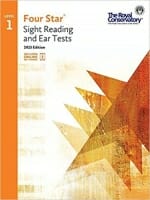
Gergely’s teaching methods include both the use of books and digital methods. The three main books he uses to teach guitar are as follows: “Guitar Method Book 1 by Will Schmid and Greg Koch,” “Four Star Sight Reading and Ear Tests RCM Level 1,” and “Classical Guitar Repertoire and Etudes RCM Level 1.” For teaching ukulele, he uses the book “Ukulele Songs for 1, 2, or 3 players by Elizabeth Ragsdale.” Aside from these, he frequently uses the Muse Score application as a play-along practicing tool.
Gergely’s passion for music and his dedication to growing the love of music in others are the biggest reasons why he teaches guitar and ukulele. His approach to teaching involves learning through play. The material he covers with his students is always delivered in a way that is highly interactive. Most of the assigned exercises he gives involve the elements of play that students can enjoy both in class and as homework.
Get to know Gergely…Beyond the Bio!
Coming soon!
Hobbies:
Musical influences:
Favourite food:
Least favourite food:
Favourite music:
Favourite album:
Favourite movie:
Favourite musical theatre/opera:
Best quote from your teacher:
Favourite quote:
Favourite book:
Latest Homework from Gergely
Is Gergely Your Teacher?
Sign up now to get your weekly assignments delivered, and never lose your homework sheet again!
Thursday, June 4
Aleksander
We worked on playing through sections of Smells like Teen Spirit today. I asked Aleksander to pay attention to musical details that can serve as checkpoints and going through the song. Try to work up the speed at home but pay attention not to rush the beat 3 and 4 of the chorus pattern. We will aim to play through with the song next week.
Zico
Zico did a great job playing The Troopers. He is now playing all the licks with the right intensity and counting the rests properly. He will still from time to time mess up licks that start from the floor tom, but I am happy to move on to Fool in the Rain with him this coming week. We first talked about the shuffle feel, how 1 is the heaviest beat, and that it should feel like dancing/galloping for the remaining 2 and 3. In the case of Fool in the Rain, it is also weighted over two beats, so beat 1 and 3 are heaviest, and everything in between is somewhat floating.
Noah
We are making good progress with Smooth Criminal, and about to be done with song as we finished up the guitar solo section. I encourage Noah to try working up the speed so we can try playing with the song soon.
Finn
We worked on Clocks briefly in preparation of recital, and worked on Otherside after. We focused on the Bridge section, which Finn is slowly mastering it. What we need now is less hesitation going from drum to drum, as we try to pick up the speed. I am also still hoping to hear Finn connect sections together, which Finn will have to devote time working on that at home.
Mateo
We worked on Babydoll today. This song seems to be right in the ballpark for Mateo, and we talked about how to play a tasteful buzz and open hihat today. Also used a superglue analogy for practising suggesting that when you are working in smaller chunks, once the smaller chunk is solidify, don’t proceed to play it in context right away at speed, but the goal should be to play everything right in the slowest speed possible, with the goal to solidify the bond.
Koel
Koel did a great job learning first page of YYZ. The goal for this week is the second page. Definitely split up the different instruments and learn the rhythm before trying to work out the coordination for some of these more complicated licks.
Efe — Jun 6th
Hi Efe!
Here’s what to look at this week.
Jimi Hendrix
You could say his creative ideas on guitar were ahead of his time. No one was doing such things on the guitar yet. He brought them to the world of guitar, where they are still alive and well, and always will be.
- Listen to this: Video 1. It’s Purple Haze, the song we discussed in class.
- See this picture. It’s of the famous “Hendrix chord,” as we talked about. — It’s officially called E7#9, but everyone knows it as the Hendrix chord, haha. See how he uses it in Purple Haze. He always knew how to play rhythmically. You, yourself called this riff catchy. See what you can do with this chord and some additional chords you wanna play with it. No particular order required. — Just have fun with it. This is a creative game for you to make your own catchy chord song :) It doesn’t have to be anything super challenging. In fact, I encourage it to be rather simple. One idea: G, G G, G G, E7#9, E7#9 E7#9, E7#9 E7#9 — This, repeated, might sound cool. Strumming Pattern: Down, Up Down, Up Down. Technically, you could do this at any speed, but I will push you to do it more slowly. I want you to be accurate when playing the guitar.

Enter Sandman
Check out the whole song on YouTube so that you know how the riffs sound.
- The same riff as last week.
- The newest riff we covered. G5, (E5 F#5 E5 F#5 G5 F#5) E5
— Everything in brackets is palm-muted.
— Strumming Pattern: Down, Up Down Up Down Up Down Down — Everything bolded is supposed to sound stronger (that is, louder).
Here is your latest video to work with. Video 2.
I’ll soon sort out all the communication issues. Aside from this: The recital is at 1pm on June 13th, at the school’s Oakwood location. I’ll see you and your family then and there!
Efe — Jun 6th
Hi Efe!
Here’s what to look at this week.
Jimi Hendrix
You could say his creative ideas on guitar were ahead of his time. No one was doing such things on the guitar yet. He brought them to the world of guitar, where they are still alive and well, and always will be.
- Listen to this: Video 1. It’s Purple Haze, the song we discussed in class.
- See this picture. It’s of the famous “Hendrix chord,” as we talked about. — It’s officially called E7#9, but everyone knows it as the Hendrix chord, haha. See how he uses it in Purple Haze. He always knew how to play rhythmically. You, yourself called this riff catchy. See what you can do with this chord and some additional chords you wanna play with it. No particular order required. — Just have fun with it. This is a creative game for you to make your own catchy chord song :) It doesn’t have to be anything super challenging. In fact, I encourage it to be rather simple. One idea: G, G G, G G, E7#9, E7#9 E7#9, E7#9 E7#9 — This, repeated, might sound cool. Strumming Pattern: Down, Up Down, Up Down. Technically, you could do this at any speed, but I will push you to do it more slowly. I want you to be accurate when playing the guitar.
Enter Sandman
Check out the whole song on YouTube so that you know how the riffs sound.
- The same riff as last week.
- The newest riff we covered. G5, (E5 F#5 E5 F#5 G5 F#5) E5
— Everything in brackets is palm-muted.
— Strumming Pattern: Down, Up Down Up Down Up Down Down — Everything bolded is supposed to sound stronger (that is, louder).
Here is your latest video to work with. Video 2.
I’ll soon sort out all the communication issues. Aside from this: The recital is at 1pm on June 13th, at the school’s Oakwood location. I’ll see you and your family then and there!
Efe — May 30th
Hi Efe! Great seeing you today!
Here’s what to look at for this week.
— Gm (G minor) “jazzy” scale
- See the picture in this Google Drive. — The closest scale to this one is the Gm natural scale.
- As discussed in class, play around in this scale for fun. The only rule is don’t stray away from these notes or frets. — The red squares are the frets you’d play. Aside from this, the open strings G, B, and the high E string are part of this scale, too.
- The section highlighted in blue is of the area on the fretboard where you would be playing this scale.
- The section highlighted in purple is of the part of the scale that’s chromatic. That’s the rather funny part. This is where you can make a particularly jazzy sound with this scale.
- Here are 2 backing tracks that you can play along with. Jazz backing track 1. Jazz backing track 2. There are jazzy sounding chords in these; you’ll see some 7th chords, like we were discussing.
— Enter Sandman
- Its first “lick,” as us guitarists call it.
- See my Unlisted YouTube video of how to play it. Enter Sandman 1st lick.
- You’ll find the PDF of this in the Google Drive.
- How to practice this: 60% of your practice should be you playing it slowly (0.75x speed). 30% of it should be done at a somewhat higher speed (0.85x speed). 10% of it at full speed (1x speed). Going in this order— slowest to fastest. Adjust the speed with the YouTube widget to the appropriate speeds.
— Make sure you show your parents these Homework Posts every time you receive them anew.
- And please talk to your Dad to see if he can access the Client Comments. If it’s linked to his email, then he should have access to them.
- I’ll iron out yours and my scheduling questions at the school as soon as possible.
- You’ll hear from me on the Client Comments page very soon. So once you have access to it, please check that page everyday.
I may or may not see you in a week. Good luck in your exams! Talk again soon!
Preferred Books for Gergely’s Students
Click to buy them here, and they’ll come right to your house! What could be easier?
Hal Leonard Guitar Method
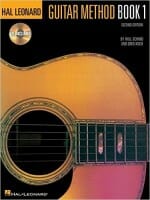
The second edition of this world-famous method by Will Schmid and Greg Koch is preferred by teachers because it makes them more effective while making their job easier. Students enjoy its easy-to-follow format that gives them a solid music education while letting them play songs right away. Book 1 provides beginning instruction including tuning, 1st position melody playing, C, G, G7, D7, and Em chords, rhythms through eighth notes, solos and ensembles and strumming.
Four Star Sight Reading and Ear Tests