
B.Mus (Humber College)
A recent graduate of Humber College, Matt has quickly established himself as a respected performer in the city’s music scene. While at Humber, Matt had the opportunity to study with some of Canada’s finest jazz and commercial musicians; Brian O’Kane, Alistar Kay, Shelly Berger and Andy Ballantyne, to name a few.
As an active member in the freelance community, Matt’s playing has taken him to such venues as Roy Thompson Hall, The Rex Hotel and the Jazz Bistro. You can find him leading his own trio in intimate venues around the city, or playing with many different jazz, funk or brass bands around the GTA and other Southern Ontario areas.
Get to know Matt…Beyond the Bio!
Hobbies: Cooking, golf, & coffee making
Musical influences: Clifford Brown, Leroy Jones, Clark Terry, Earth, Wind & Fire, and Chicago
Favourite food: Fish burrito
Least favourite food: My mom’s rice – although, everything else she makes is excellent.
Favourite music: Jazz
Favourite song: It’s Always You
Favourite movie: Spirited Away
Favourite movie music: Indiana Jones Theme
Favourite musical theatre/opera: West Side Story
Best quote from your teacher: “BLOW!” – Alistar Kay
Favourite quote: “They teach you there’s a boundary line to music. But, man, there’s no boundary line to art.” – Charlie Parker
Favourite book: Last Wish – Andrzej Sapkowski
Best thing about teaching at ABC: Sharing my passion for music with youth
Latest Homework from Matt
Is Matt Your Teacher?
Sign up now to get your weekly assignments delivered, and never lose your homework sheet again!
Homework for Nov 11
Abi:
Keep up those long tones. Doing them expanding to low F#, and the F# two octave higher will be great for your sound, endurance and stabilizing your embouchure. Then try the three octave tonguing thing we were doing! Think of the spit ball idea to see how high you can go, we will do this next lesson.
Nice job on the major scales. Those sounded a lot better with the metronome! I’d like to hear Eb, A, and E at 60 bpm for next week.
Arabian song is getting better! Work on that second phrase. Just brake it down note by note and then speed it up. Take some time to really work out what every note is on the staff and what the fingerings are to them. Check out some of the other duets just to work on sight reading!
Matthew:
Looking forward to digging into German Dance with you next week! spend some time on that so we can pick it apart more.
Mouthpiece warm up: You’re getting the hang of this. Remember when doing these to have a variety of pitch, dynamics and tongue, etc. Explore how to feel comfortable on just the mouthpieces, that will translate to comfortability on the horn. And remember… big breaths!
Major scales sounding good too. We looked at C,F,Bb and Eb & arpeggio with the alternating tonguing/ slurring articulation. Try doing these four all tongued, and slurred. Build up air speed/ momentum by crescendoing to reach the top half of the scale with ease. We’ll look at those scales again, as well at G and D major.
Russian Hymn is getting close. It’s a bummer we couldn’t get it worked out so I could hear it played together; but I trust you’re thinking about good tuning, phrasing and articulation! I think you would benefit from checking out Sacred Song as well.
Homework for Sept. 13th
Great first lesson, Lindsay. It’s nice to see that you’re excited about trumpet & willing to put in the time and effort to practice!
What to practice:
Lip Buzzing: 5 – 10 mins. This is a good one to squeeze in if you don’t have time to sit down to play. Quiet to loud buzzing, as well as moving the pitch around will help everything feel more efficient. Remember the breath!!!!!!!! Think of the glass of water & the bellows analogy.
C major scale (concert Bb): 10 mins. Do this one in chunks if the top half of the scale isn’t speaking. C-G, C-A, and so on. You can isolate spots – as we did in lesson – which will smooth everything out. Try them tongued and slurred… take your time and feel comfortable on every note!
Lip Slurs: 10 mins. This is all about air. Start on C and try to slur – no tongue – up to G. The movement in the lips is super subtle so don’t over think it! If you get that feeling comfortable, try to get the C above G. You can also try these starting on B and Bb as well, you might find it easier.
Playlists and other content:
It’s crucial to hear examples of the instrument being played at a high level. Here are some examples of my favourite trumpet players & groups with great horn sections. Also some extra youtube videos just for fun. Enjoy!
https://music.apple.com/ca/playlist/listening-examples-jazz/pl.u-V9D77GJh10WN4E
https://music.apple.com/ca/playlist/listening-examples-pop/pl.u-mJy88YPTBKA0Wy
Preferred Books for Matt’s Students
Click to buy them here, and they’ll come right to your house! What could be easier?
Technical Studies
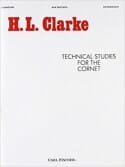
This work has been especially written to enable the cornet student to conquer any technical difficulties he or she might encounter in the literature for the instrument. By carefully following the instructions in this book, the student will build up strength and endurance without strain or injury to his embouchure. If this lips remain flexible and the tone is not forced, it will be possible to play easily any note, regardless of the register.
Arban Complete Conservatory Method
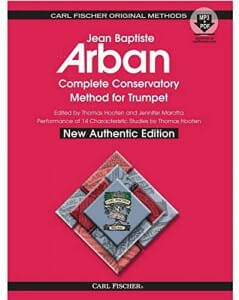
The New Authentic Edition of Arban’s Complete Conservatory Method contains the same tried and true comprehensive system of study that Arban developed over a century ago, and this completely re-engraved edition has been painstakingly edited by prominent trumpet performers and teachers Thomas Hooten and Jennifer Marotta, adding some of their own insights with respect to how trumpet is taught today. The Arban Complete Conservatory Method is the definitive must-have for all trumpet players.
BOOK TITLE
COMING SOON
BOOK TITLE
COMING SOON