
A.Dip (Vancouver Academy of Music)
B.Mus (University of British Columbia)
Diploma in Music (Kwantlen)
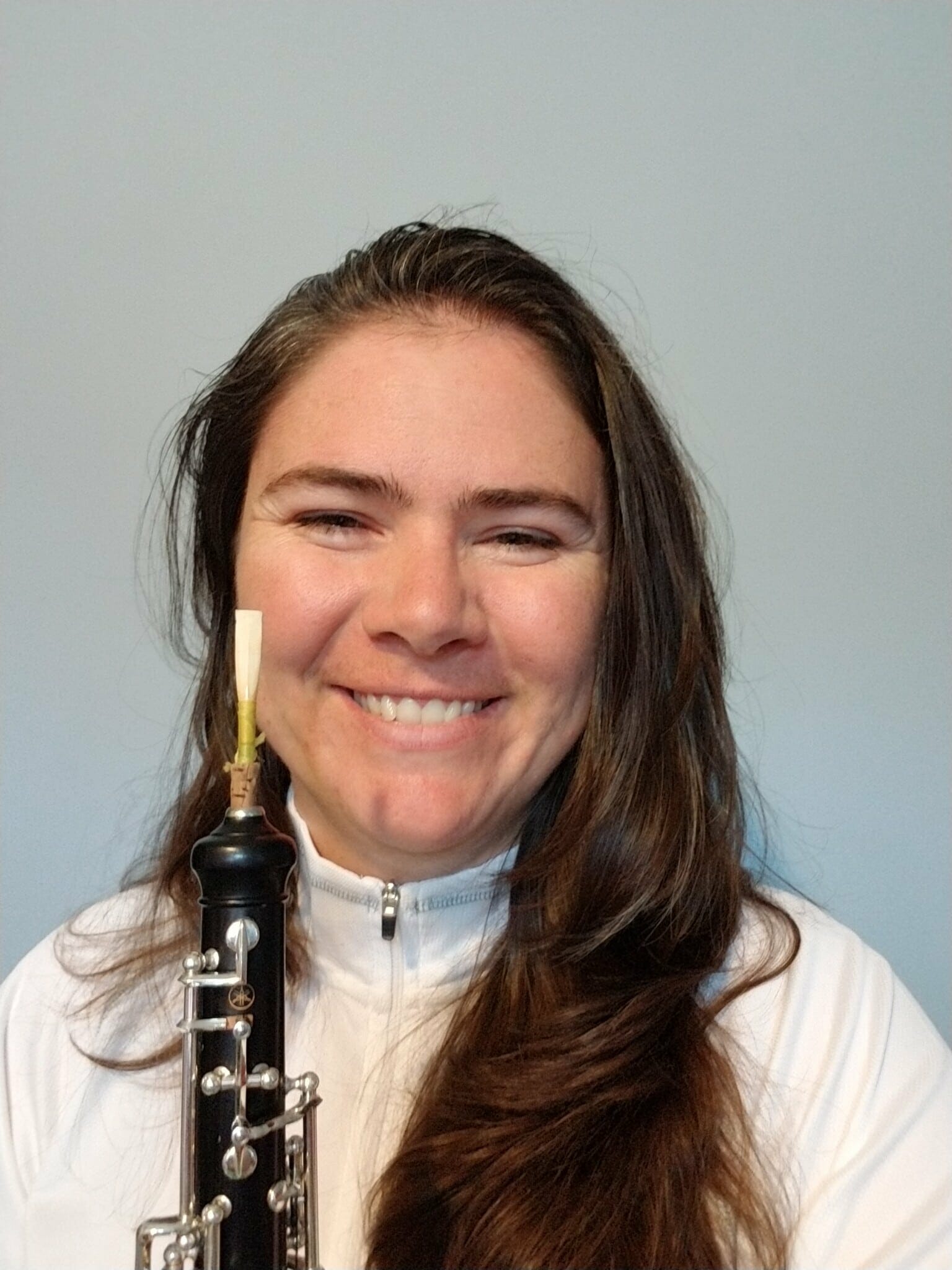
Elizabeth Brown is an oboist, flautist and gardener. Born and raised in Powell River, British Columbia, she holds a Bachelor of Music from UBC and an Artist Diploma from the Vancouver Academy of Music. She seeks out exciting music to play wherever and whenever she can.
Elizabeth enjoys teaching because of the fresh perspective students often bring to her own playing. She feels that learning music should be an enjoyable and enriching experience led by the student’s own goals and dreams.
Get to know Beth…Beyond the Bio!
Hobbies: Sailing, gardening, skiing, canoeing
Musical influences: The Ocean, Beth Orson, Albrecht Mayer, Bjork
Favourite food: sweet & sour meatballs
Least favourite food: Brussel sprouts. ew.
Favourite music: currently K.Flay
Favourite song: Possibly Maybe – Bjork
Favourite movie: Spring, Summer, Fall, Winter… and Spring
Favourite movie music: Sympathy for Mr. Vengeance
Favourite musical theatre/opera: The Threepenny Opera – Kurt Weill
Best quote from your teacher: “What makes me happy as an oboist is not necessarily what will make you happy.”
Favourite quote:
“I must not fear. Fear is the mind-killer. Fear is the little-death that brings total obliteration. I will face my fear. I will permit it to pass over me and through me. And when it has gone past I will turn the inner eye to see its path. Where the fear has gone there will be nothing. Only I will remain.”
? Frank Herbert, Dune
Favourite book: Dreams underfoot – Charles de Lint
Latest Homework from Beth
Is Beth Your Teacher?
Sign up now to get your weekly assignments delivered, and never lose your homework sheet again!
Tuesday, April 28, 2020
Cooper
Good work on the first octave of D major. This week work on the second octave up to high D – see fingerings for high C# and D below.


Pieces
The Gymnopédie No. 1 is coming along nicely:
- Remember to show separation between the phrases
- If you can, print it out or find a way to mark the beginning and end of phrases on the PDF (sometimes you can highlight parts of pdfs depending on what you are viewing them with)
- Re-articulate the F#s clearly – the same way you articulate in the Barret study, by taking the tongue away from the reed and keeping the air support going (my reed will take a lot more air, so take breaks!)
- Experiment with tonguing all the notes or slurring all the notes in each phrase – what do you prefer? Remember that this piece was originally written for piano, so the slurs are marking phrasing more than articulation.
- For next week, we will work on the second page – see if you can figure out where the phrases begin and end (the printed slurs are not always right, and it is, to a certain degree, up to interpretation)
Barret
- This is the Link to the Barret book if you need to download it: https://imslp.org/wiki/Special:ImagefromIndex/95231/pnba
- The articulation exercises start on page 46
- Notice that No. 1 is just a C major scale with 4 quarters per note. You can work all your scales this way, so whichever scale you are working on each week, you can play it while working on your articulation
- before starting, have your air and embouchure set and ready, with your tongue touching the reed – release the tongue from the reed to start the sound
- Keep your air flowing and touch the reed to re-articulate – experiment with making the notes very short or long, and with tonguing with more or less space between the notes.
- when you are getting a nice sound on the low D, keep trying to go down to the low C – make sure all your fingers are in the right place and think of dropping your jaw and saying “Ahh” while keeping the air flowing (if it doesn’t come out, don’t worry, move on to something else!
- Fingering for low C and regular (not the forked fingering) F natural below


Preferred Books for Beth’s Students
Click to buy them here, and they’ll come right to your house! What could be easier?
Gekeler Method
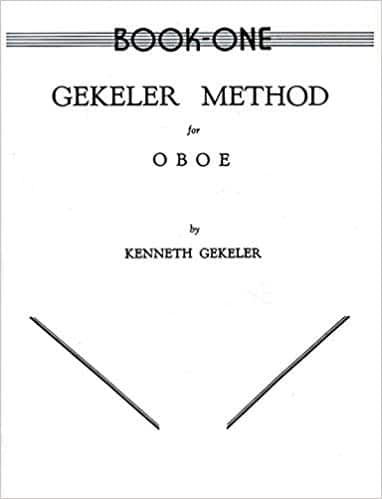
The material in the Gekeler Method for Oboe is divided in two parts. The studies in Part I are for the purpose of developing musical style and interpretation; those in Part II are for the study of scales and intervals, and for improvement of articulation.
Gekeler Method
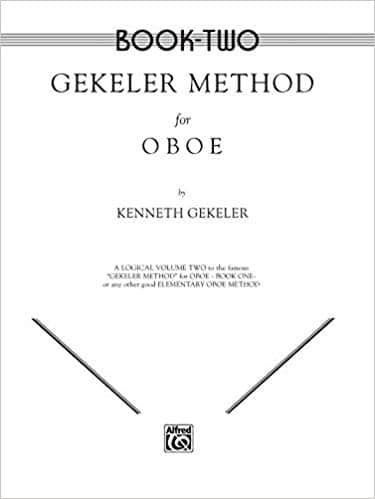
(See notes for book One)
80 Graded Studies
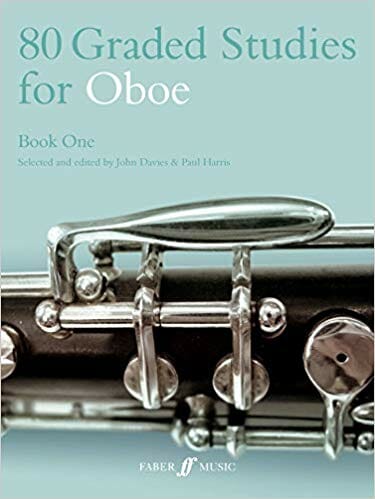
80 Graded Studies for Oboe is two books that bring together a broad selection of repertoire in a variety of styles. The studies are arranged in order of increasing difficulty, according to a carefully planned technical progression.
The Really Easy Oboe Book
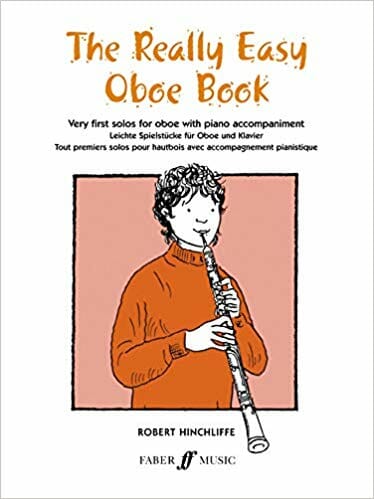
Song book including: March of the Ducks * Daydreaming * Holiday Trot * The Brook * Mellifluous Minuet * Nocturne * Spring Song * Elizabethan Lament * The Barrel Organ * Siciliana * Dance of the Scarecrows * Ballad * Jovial Jig * Berceuse * Children’s Waltz * Wistful Waltz * Chrismtas Song * Comedy * A Winter’s Tale * Country Dance.
Oboe Music to Enjoy
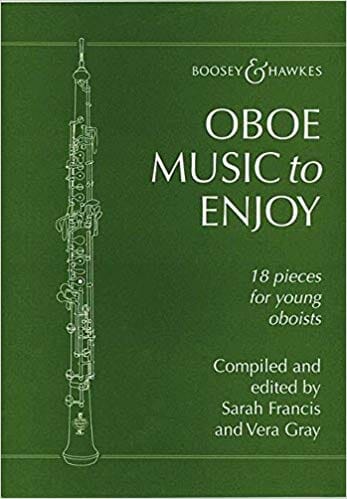
Firs Book of Oboe Solos
First Book of Oboe Solos is the oboe solo part separate from the complete score of the First Book Of Oboe Solos (0571503721) that contains piano accompaniment. This book is a collection with the true beginner in mind, arranged and edited by Janet Craxton and Alan Richardson, introducing oboe players to an unusually wide range of music. All 26 pieces have been chosen to encourage attention to the basic technical aspects of oboe playing, and are organised in approximate order of increasing technical difficulty. The book helps young students take account of both technical and musical considerations from the very beginning.