
Guitarist Gergely Szabo has an Advanced Diploma in Music Performance from Cambrian College where he majored in the classical guitar. Over his time there, he completed 2 years of comprehensive pedagogy courses. He also gained well grounded vocal skills, as well as basic knowledge on the piano. Outside of classical music, he exhibits a repertoire of skills and knowledge in playing the genres of rock, blues, and heavy metal music. He has experience in teaching the guitar and the ukulele to a range of people aged 6 to 54.
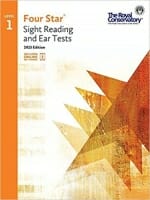
Gergely’s teaching methods include both the use of books and digital methods. The three main books he uses to teach guitar are as follows: “Guitar Method Book 1 by Will Schmid and Greg Koch,” “Four Star Sight Reading and Ear Tests RCM Level 1,” and “Classical Guitar Repertoire and Etudes RCM Level 1.” For teaching ukulele, he uses the book “Ukulele Songs for 1, 2, or 3 players by Elizabeth Ragsdale.” Aside from these, he frequently uses the Muse Score application as a play-along practicing tool.
Gergely’s passion for music and his dedication to growing the love of music in others are the biggest reasons why he teaches guitar and ukulele. His approach to teaching involves learning through play. The material he covers with his students is always delivered in a way that is highly interactive. Most of the assigned exercises he gives involve the elements of play that students can enjoy both in class and as homework.
Get to know Gergely…Beyond the Bio!
Coming soon!
Hobbies:
Musical influences:
Favourite food:
Least favourite food:
Favourite music:
Favourite album:
Favourite movie:
Favourite musical theatre/opera:
Best quote from your teacher:
Favourite quote:
Favourite book:
Latest Homework from Gergely
Is Gergely Your Teacher?
Sign up now to get your weekly assignments delivered, and never lose your homework sheet again!
Saturday, January 10th
Jack
For a long time we built beats around 7 beats as Jack is obsessed with the idea of 6 7 and somehow was very effective in keeping him actively counting while playing. Today we tried adding more beats and now making beats up to 9 beats, which is similar to our usual drumbeat, a eight beat cycle and a crash in the next bar to mark a new phrase. Jack was able to remember the beat and play it in repetition. Great progress. We will build upon that next class.
Nova
Blink Gone: today we focused on writing the rest of the drum score. Tried out two new patterns that could go with the song before we enter chorus. Practise the guitar solo more regularly on the xylophone so we can put together the song as soon as possible. Even just 10 minutes a day will make the difference.
Adam
Adam is making huge progress within his first few classes. Demonstrate strong self discipline perfecting 1a and 1b, and when showed 3a, a substantially harder beat, showed resilience as we work through the beat layer by layer. We are now also perfecting the Back in Black lick, which Adam is closer and closer to nailing it. Just got to remember every small detail of pattern in bar 6, how many times the snare into hihat/kick combination repeats, and entering the next bar with a crash hit, and practising slow so every small detail is contained. Our goal next class is to play through bar 3-6 and hopefully with the music.
Santino
We managed to play through the exam passage. A great example of practise being crucial to progress being made. Section B is a little more difficult as it requires attention to sticking, meaning how you arrange the order of which hand plays before the next. Try practising through section B and we will do sort of a mock for both brothers next class.
Nicolas
Since Nicolas is done with his exam passage, I notated the song Golden Brown for him last class, and this class Hedwig’s theme from Harry Potter, and here I tried to encourage active score reading, something that Nicolas has tried to avoid through memorisation. We will continue working on that, as this is something that takes time to build through habit. We can often seek tools with learning music in blocks so we don’t lose track with where we are on the music as well as where we are on the instrument. Believe it or not, composer often write repeating material, and as soon as we can identify those patterns, it is wayyyy easier to learn something. Also introduced the concept of mixed meter. Will continue working on the song next class.
Jonah
Jonah did a great job practising through the guitar solo this week and showed substantial improvement in focusing through online classes. He did a great job reading till the end. Bar 93 and bar 101 are two challenging licks that Jonah has now mastered, and the task now is the connect everything together. Our goal is to play the entire page 3 through and through next week and hopefully start a new song next week.
Efe – Jan 10th
Hi Efe!
Here’s the rundown of what to do for this week.
Chords
Reacquaint yourself with the E, Em (E minor), G, and B chords.
- The Google Drive provided on December 6th shows you how to play the E chord. https://drive.google.com/drive/u/0/folders/1cURXZdyFoL_6FZX5V4COTxCljwXKq8wO
- The B chord is played on frets 7, 9, 9, and 8 going from the low E string up to the G string. The fingerings are 5 (the thumb), 3, 4, and 2, respectively. Feel free to be nice and tough with gripping this. If it gets painful, rest your hand. Do some stretches (you’ll see some below), then get right back to it.
- Spend 5 minutes holding down the correct frets with the correct fingerings, and strumming them with proper posture.
- Try playing those four chords over the following backing track. Spend 5 minutes doing your best with this. Remember: no need to play fast. Em slow blues backing track
Scale
The Em pentatonic scale.
- This Google Drive has pictures of the fretboard with this scale. https://drive.google.com/drive/folders/1GMsYAiDXsew5x_4fByy4cQp8O6KXeq_6?usp=drive_link
- Please memorize this scale for next class. The shape of this scale is used all over the guitar neck for countless songs in many genres. This scale is an essential tool for most of the guitar music in the world. — Spend 5 minutes a day this week to work on memorizing this. My hope is that by next class you’ll be able to improvise on this scale without needing to look at the provided pictures.
- Experiment with playing any of this scale’s notes over this backing track. Take it as a creative game to keep getting better at. Em slow blues backing track
— Do this once a day; 10-12 minutes everyday.
— Try things like vibratos (you once called them wiggles, haha) and bends.
Song choices
Listen to the following 3 songs. Then choose the one you like best. We’ll work on that one for the spring recital.
- Boulevard of Broken Dreams by Green Day
- Smells Like Teen Spirit by Nirvana
- Rumble by Link Wray
Stretching
- Watch this video. In under 10 minutes, this famous guitarist clearly describes the types of stretching he does for his guitar playing sessions.
- What I’d like you to do with this, Efe, is to do these stretches during and after your practice sessions. He does them before his; I don’t think that’s necessary.
Additional notes
- Please get a new guitar strap.
- Please find your pick again. If you can’t then you’ll have to get a new one. My guitar lessons require the student to have a pick.
- Regarding the pain of the hand, there are 2 things to acknowledge.
— 1, this is normal. As with any physical exercise, the body and its muscles will tire and get sore. Don’t give up when this happens. But you also don’t want to overdo this, so make sure to rest during practice sessions.
— 2, everything in this practice plan can be done without days of 0 playing. I.e., no need to rest for an entire day. The aim is to keep exercising the hands so that these pains no longer occur. The day this happens will come once enough consistent practicing has been done.
Final note
I’m sorry I didn’t bring the teacher’s report today. I’ll bring it next class. One recommendation I made going forward is to practice a half hour a day, only. This should make it easier to find time to practice the guitar.
- Notice that I made today’s practice instructions so that they should span a half hour, at maximum. Most of this week’s practice should take no more than a half hour. Including the stretching I’m assigning.
- Going over a half hour this week may only happen because you must listen to each song fully and also see the full stretching video.
Good to see you again today, Efe. I’m looking forward to this new term! See you in a week!
Preferred Books for Gergely’s Students
Click to buy them here, and they’ll come right to your house! What could be easier?
Hal Leonard Guitar Method
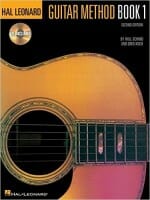
The second edition of this world-famous method by Will Schmid and Greg Koch is preferred by teachers because it makes them more effective while making their job easier. Students enjoy its easy-to-follow format that gives them a solid music education while letting them play songs right away. Book 1 provides beginning instruction including tuning, 1st position melody playing, C, G, G7, D7, and Em chords, rhythms through eighth notes, solos and ensembles and strumming.
Four Star Sight Reading and Ear Tests