M.Mus (U of T)
B.Mus (Oberlin)
Guitarist Gergely Szabo has an Advanced Diploma in Music Performance from Cambrian College where he majored in the classical guitar. Over his time there, he completed 2 years of comprehensive pedagogy courses. He also gained well grounded vocal skills, as well as basic knowledge on the piano. Outside of classical music, he exhibits a repertoire of skills and knowledge in playing the genres of rock, blues, and heavy metal music. He has experience in teaching the guitar and the ukulele to a range of people aged 6 to 54.
Gergely’s teaching methods include both the use of books and digital methods. The three main books he uses to teach guitar are as follows: “Guitar Method Book 1 by Will Schmid and Greg Koch,” “Four Star Sight Reading and Ear Tests RCM Level 1,” and “Classical Guitar Repertoire and Etudes RCM Level 1.” For teaching ukulele, he uses the book “Ukulele Songs for 1, 2, or 3 players by Elizabeth Ragsdale.” Aside from these, he frequently uses the Muse Score application as a play-along practicing tool.
Gergely’s passion for music and his dedication to growing the love of music in others are the biggest reasons why he teaches guitar and ukulele. His approach to teaching involves learning through play. The material he covers with his students is always delivered in a way that is highly interactive. Most of the assigned exercises he gives involve the elements of play that students can enjoy both in class and as homework.
Get to know Gergely…Beyond the Bio!
Coming soon!
Hobbies:
Musical influences:
Favourite food:
Least favourite food:
Favourite music:
Favourite album:
Favourite movie:
Favourite musical theatre/opera:
Best quote from your teacher:
Favourite quote:
Favourite book:
Latest Homework from Gergely
Is Gergely Your Teacher?
Sign up now to get your weekly assignments delivered, and never lose your homework sheet again!
Thursday, October 15th
Lukas
“More Than a Feeling”
This week, focus on playing the phrase beginning at bar 36 accurately. We worked through it during the lesson, and you can use the guitar line as a musical cue for how the drum phrase should be shaped.
Double-Stroke Coordination
Isolate the bar containing the left-hand double on beat 3, using bar 54 as an example.
Practise it in stages:
- Isolate the different instrument groups.
- Make sure the left-hand double is even.
- On beat 4, move your right hand quickly from the snare drum to the hi-hat.
- Repeat this movement until the transition feels smooth.
- Put the complete pattern back into context only after the coordination is secure.
Bar 90 to the End
For our next lesson, prepare the music from bar 90, following the musical interlude, through to the end of the song.
Pay particular attention to:
- Bars 99–100: Treat these as one two-bar phrase. The energy should continue beyond bar 100 and arrive on the downbeat of bar 101.
- Bar 103: Isolate and practise this bar separately.
- Bar 115: Isolate and practise this bar separately.
Finn
“Imposter”
Finn did a great job becoming familiar with the number system from 1 to 6. He was able to repeat the bass-line pattern first by reading the numbers and eventually through auditory memory.
During the lesson, Finn played the xylophone part while I accompanied him on the drums.
Finding Beat 4
Finn is still occasionally having difficulty locating beat 4. Remember that the four-sixteenth-note pickup:
- Begins precisely on beat 4 of the previous bar
- Contains four evenly spaced sixteenth notes
- Fills the entire fourth beat
- Leads directly into beat 1 of the following bar
Count steadily through the previous bar and avoid beginning the pickup early. Continue practising the bass line with Dad’s accompaniment so that the pickup becomes secure within the full phrase.
I have also written out the melody of the song, which we will begin learning next week.
Aleksander
“Smooth Criminal”
We saw major improvement in the pre-chorus pattern this week!
For the coming week, begin working from bar 40 onward. Much of this material is based on patterns from the first page, but you will occasionally encounter a more difficult fill at the end of a phrase.
We worked on examples in:
- Bar 45
- Bar 49
When approaching a new section:
- Identify the familiar groove.
- Isolate the fill at the end of the phrase.
- Learn its rhythm and sticking slowly.
- Practise entering and exiting the fill.
- Reconnect it to the surrounding music.
If possible, continue onto the third page and work through to the guitar solo. Spend some time investigating the difficult passages independently, and we will dissect any remaining trouble spots together next week.
Renaud
“Back in Black”
We had a shorter lesson today and will aim for a 45-minute lesson next week.
Our main focus was the AC/DC fill. Renaud learned the pattern quickly and played it steadily while I performed the melody on xylophone. We were even able to repeat the full phrase several times without stopping.
Next, we will:
- Play the pattern with the original song
- Listen for how many times it repeats
- Identify where the first variation appears
- Continue connecting the fill to the basic rock beat
Stick Control, Page 5
Continue working on the same Stick Control exercises assigned last week, focusing on the first column. Aim for even strokes, matching stick heights, relaxed movement and a steady pulse.
We will return to these exercises together during the next lesson.
Ronan — Oct 17th
Hi Ronan!
Here’s what to do this week.
Strumming
Keep strumming this chord. Hold down the right frets.
- You’ve done it before so you can do it again
- My Sep 19th post describes how this type of diagram works — https://www.music-lessons.ca/ronan-sep-19th/

Am (A minor) pentatonic scale
Try playing this scale. Go one note at a time.

- My Sep 19th post describes how this type of diagram works — https://www.music-lessons.ca/ronan-sep-19th/
- This diagram is horizontal, unlike the one above, but the idea is still the same as what’s described in the link^
- The furthest left circles are the string names — the B string was not written there but it’s right in between those G and E strings as always
- Don’t play the C and E notes on the farthest right
- Don’t play the open G string (bottom left corner)
- Rest and stretch your hands whenever they get too exhausted
- Callouses will build with time — for now it will hurt a bit
You’re a string young man, Ronan, so I know you can do this! I’ll see you in a week!
Ronan — Oct 10th
Hi Ronan!
Here’s what to do this week.
Strumming
Have fun playing that guitar! I loved seeing your energy and all the strumming you were doing in class today! Keep on going with that!
Chords
Keep trying to play these chords.


- I welcome you to play that^ G chord with any finger other than finger 4.
Single string picking
Play the following games on the High E string. — Repeat these melodies over and over, as shown in the pictures below.
- 0 3 5 3 — The frets. The 0 (the open string) has been added so as to give rest to your LH between the repetitions.
- 3 5 3 5 — The frets.


Have fun with this, Ronan. These things are all being assigned to you so that both of your hands get stronger. I also want you to slowly start to remember which chord is which. — Throughout our classes, you will start to get used to the shapes you’ll see on the guitar. In scales and in chords.
Thank you so much! I’ll see you in a week!
Dalia — Oct 6th
Hi Dalia!
Great work today. Your homework was well done, and you were getting better at the challenges I kept giving you in class!
Here is what to play this week.
Strumming Patterns
Play the following SP’s. Do each one over the following chords. One SP on only one chord at a time.
- The challenge with each of these is to remember to restart them with a down-strum. — Watch your RH (Right Hand) when playing these. Make sure to restart each SP with a down-strum every time!
Last week
“Pineapple Rest Rest!” — D DU rest rest
“Watermelon Che-rry!” — DUDU D D
“Apples Peaches Plums and Pears!” — DU DU DU D
This week
“Pineapple Pear Rest!” — D DU D rest
“Pineapple Rest Pear!” — D DU rest D — I named it differently in class; this name works too
- The idea is to keep learning to silence the strings. Or as we say in guitar: mute the strings
- Well done on this today!
Try all the above SP’s on the following chords.
Last week


This week

- Aim to hold down each of these frets nice and strongly
- Curl your fingers onto the frets
- When in doubt, adjust the ukulele up so that your left arm and hand have plenty of space to hold down the frets nice and strongly
- For the Am (A minor) chord: If finger 2 is too challenging, then feel free to play it with finger 1
Twinkle Twinkle Little Star
Just pick twice on each of the first 2 notes.
- Fret 0 on the E string
- Then fret 7 on the E string
- Picking is done with a smaller movement of your RH. Push down through the string with mostly your thumb
- Make sure to have the pointed part of the pick be the one plucking through the string
Additional notes
- The LH (Left Hand) nails need cutting to be able to hold down frets properly. Please do that as soon as possible. — Having RH nails is also not very good if you’re going to be using a pick, like we’re doing. This is not as important as it is for the LH. But if you’re going to be doing lessons with me for a long time, then I do recommend cutting those, too
- Remember to stretch your hands after an ukulele playing session. The 3 different ones I demonstrated today: Fingers back. Thumb down. Wrist forward
Dalia will remember these stretches from class today. The man in this video demonstrates them, too. — If she forgets, have her watch this video.
- The video starts with him showing some other ones that are really good for the arms and the back. Feel free to do these too. But it’s most important that you do the first 3 I described
- He says do them before a session. That’s not necessary. You can do them in between a playing session, if you want. But for sure do them at the end of a playing session
- Watch from 0:00-2:10
https://www.youtube.com/watch?app=desktop&v=1XsLRQFV7rY
Thank you so much, guys! See you in a week!
Preferred Books for Gergely’s Students
Click to buy them here, and they’ll come right to your house! What could be easier?
Hal Leonard Guitar Method
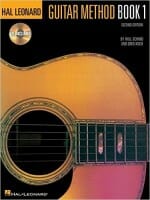
The second edition of this world-famous method by Will Schmid and Greg Koch is preferred by teachers because it makes them more effective while making their job easier. Students enjoy its easy-to-follow format that gives them a solid music education while letting them play songs right away. Book 1 provides beginning instruction including tuning, 1st position melody playing, C, G, G7, D7, and Em chords, rhythms through eighth notes, solos and ensembles and strumming.
Four Star Sight Reading and Ear Tests