M.Mus (U of T)
B.Mus (Oberlin)
Guitarist Gergely Szabo has an Advanced Diploma in Music Performance from Cambrian College where he majored in the classical guitar. Over his time there, he completed 2 years of comprehensive pedagogy courses. He also gained well grounded vocal skills, as well as basic knowledge on the piano. Outside of classical music, he exhibits a repertoire of skills and knowledge in playing the genres of rock, blues, and heavy metal music. He has experience in teaching the guitar and the ukulele to a range of people aged 6 to 54.
Gergely’s teaching methods include both the use of books and digital methods. The three main books he uses to teach guitar are as follows: “Guitar Method Book 1 by Will Schmid and Greg Koch,” “Four Star Sight Reading and Ear Tests RCM Level 1,” and “Classical Guitar Repertoire and Etudes RCM Level 1.” For teaching ukulele, he uses the book “Ukulele Songs for 1, 2, or 3 players by Elizabeth Ragsdale.” Aside from these, he frequently uses the Muse Score application as a play-along practicing tool.
Gergely’s passion for music and his dedication to growing the love of music in others are the biggest reasons why he teaches guitar and ukulele. His approach to teaching involves learning through play. The material he covers with his students is always delivered in a way that is highly interactive. Most of the assigned exercises he gives involve the elements of play that students can enjoy both in class and as homework.
Get to know Gergely…Beyond the Bio!
Coming soon!
Hobbies:
Musical influences:
Favourite food:
Least favourite food:
Favourite music:
Favourite album:
Favourite movie:
Favourite musical theatre/opera:
Best quote from your teacher:
Favourite quote:
Favourite book:
Latest Homework from Gergely
Is Gergely Your Teacher?
Sign up now to get your weekly assignments delivered, and never lose your homework sheet again!
Thursday, December 18th
Aleksander
Can’t Stop: we are almost done working through the song. Our aim for next lesson is to try playing through the song. I would like Aleksander to pay attention to the final eight bars leading up to outro. Though this passage is simple, counting all the rest is crucial to being able to play with the music. If Aleksander would like to play with the song, the time stamp is 3:18. Here the guitar is playing a short solo, and try to feel the beat through the bass solo, and note that the entrance two bars before the outro is on a backbeat. Also note that the drum pattern in outro is slightly different from the one in other section, with the crash/kick is flipped to the backbeat rather than on the beat.
Zico
Smooth Criminal: Zico has made huge progress with Smooth Criminal and we have tackle all sections individually including all the tricky fills. One fill that I would especially like Zico to pay attention to is the one in bar 93 and 101, where four groups of three 16th note pattern is played over the first three beats of the 4/4 bar. Zico was fast to understand how the pattern works, but since the kick is not on the beat, there will be an urge to rush. To fight that urge, practise with metronome, as well as subdivide to the 16th note grid. Our goal after holiday is to play through bigger sections. So far we have tried linking page 1 and page 2 together. However with page 3 being way more tricky and mentally taxing, our goal will be first piecing page 3 together and soon connect the whole song together.
Saturday, Dec 20
Happy Holidays to all, hope you are all having a restful break!
Jack
We have been building basic notation/score reading skills. In lesson we have notated several beats including the basic rock beat. Though it is simple, it does require some practising in order to play it continuously. At home, can try setting up pillows and different beating spots and see if Jack is able to read the score and recreate some of the beats we worked on during lesson. Also encourage Jack to create more.
Nova
Blink Gone: great work so far with the song. I have picked out the slightly more challenging drumbeat that is featured in th chorus for Nova to work on. If Nova is struggling to play the entire pattern, follow the step by step instructions on how to practise the beat as notated on the homework sheet. Note that the left right foot coordination and making the open hihat sound snappy will be the trickiest spots to work through. Always try to practise it with a metronome at a slower speed.
As for the guitar solo, Nova has been introduced to the notes but rolls are slightly tricky. Aim to play slower but even sounding notes first in groups of odd number (3/5) per beat and then slowly drive up the tempo. This will help loosen up the wrist and build finger strength required to play a good roll. When doing the exercise, note for how the finger is supporting the motion.
Adam
https://drive.google.com/drive/folders/1XSqHcZP_SxYA0G4XB7aF2ZJOf4uSYwAn
Please use the link above to access the necessary practise material.
Drumset Musician p.11: so far Adam has mastered 1b, and is becoming comfortable with 1a, which is the main beat being used in the song we are working on. When struggling to play it, can always try to dissect each bar as two group of four beat, and play hihat on all beats, on beat 1 play bass, on beat 3 play snare. If comfortable with that pattern, challenge Adam to try 3a or even 4a which 3a we briefly worked on during lesson.
Back in Black: the third bar of this song is basically switching the first beat of hihat from our Drumset Musician 1a combination to crash cymbal, and the other tricky part at the moment is bar 6, which after the first two eighth notes, Adam should try to subdivide and count 123 and play a combination of snare on 1, hihat and kick on 2, rest on 3, and repeat three times and on the next 123, snare on both 1 and 2. We will try to play through the intro in next lesson.
Santino
https://drive.google.com/drive/folders/18i9qi5v97IA1fkPsVCMZupfPn3Uc6FUg
We started Can’t Stop by RHCP on Saturday. We worked on mainly the first bar of the verse and I have confident that with patience Santino can work through that pattern. Just a rule of thumb in practising, is to never try running before you can walk. Do it slow even when it doesn’t sound like the beat itself. Try working through the first four bars of verse and we will see if any trouble arises.
Nicolas
We had a little Christmas excursion into holiday music and made a small recording on Jingle Bell (which is available through the drive). Nicolas is fast and systematic at learning music, but let’s try to get in the habit of learning music through reading. Pick a song for what we wish to work on after holiday.
Jonah
Jonah has been making great progress on Smooth Criminal though we briefly stopped learning the tune when preparing for Hannaford concert. Over break, try working through guitar solo section which is from bar 78 to 86. This is a section we worked on over class, but is tricky to pull off without thoroughly understanding what is going on at every layer. Encourage Jonah to carefully study the score and workout a sticking that works for himself. Look forward to working on this with Jonah in person after the holiday.
Preferred Books for Gergely’s Students
Click to buy them here, and they’ll come right to your house! What could be easier?
Hal Leonard Guitar Method
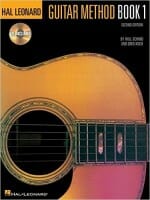
The second edition of this world-famous method by Will Schmid and Greg Koch is preferred by teachers because it makes them more effective while making their job easier. Students enjoy its easy-to-follow format that gives them a solid music education while letting them play songs right away. Book 1 provides beginning instruction including tuning, 1st position melody playing, C, G, G7, D7, and Em chords, rhythms through eighth notes, solos and ensembles and strumming.
Four Star Sight Reading and Ear Tests