
Guitarist Gergely Szabo has an Advanced Diploma in Music Performance from Cambrian College where he majored in the classical guitar. Over his time there, he completed 2 years of comprehensive pedagogy courses. He also gained well grounded vocal skills, as well as basic knowledge on the piano. Outside of classical music, he exhibits a repertoire of skills and knowledge in playing the genres of rock, blues, and heavy metal music. He has experience in teaching the guitar and the ukulele to a range of people aged 6 to 54.
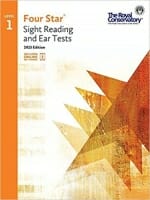
Gergely’s teaching methods include both the use of books and digital methods. The three main books he uses to teach guitar are as follows: “Guitar Method Book 1 by Will Schmid and Greg Koch,” “Four Star Sight Reading and Ear Tests RCM Level 1,” and “Classical Guitar Repertoire and Etudes RCM Level 1.” For teaching ukulele, he uses the book “Ukulele Songs for 1, 2, or 3 players by Elizabeth Ragsdale.” Aside from these, he frequently uses the Muse Score application as a play-along practicing tool.
Gergely’s passion for music and his dedication to growing the love of music in others are the biggest reasons why he teaches guitar and ukulele. His approach to teaching involves learning through play. The material he covers with his students is always delivered in a way that is highly interactive. Most of the assigned exercises he gives involve the elements of play that students can enjoy both in class and as homework.
Get to know Gergely…Beyond the Bio!
Coming soon!
Hobbies:
Musical influences:
Favourite food:
Least favourite food:
Favourite music:
Favourite album:
Favourite movie:
Favourite musical theatre/opera:
Best quote from your teacher:
Favourite quote:
Favourite book:
Latest Homework from Gergely
Is Gergely Your Teacher?
Sign up now to get your weekly assignments delivered, and never lose your homework sheet again!
Homework for March 29-April 1
Henry
Great job today Henry! Here is Tuesday’s homework:
How long to practice: 5-10 min per day
What to practice: Baseball Days, The Postman
How to practice:
-Baseball days: Do not hold keys longer than their note values. You will need them available the next time you need to play them. Practice having smooth transitions when hands switch; try not to stop in between.
The Postman: Practice counting the 3/4 pattern. The transition from RH to LH on the second line is a little tricky; think 4 on left hand!
How parents can support practice: Listen and guide him when necessary.
Assignments for the Week of March 29th, 2025
Shakira
Skating Waltz – Hands separate focus before putting hands together
- Making sure LH melody is confident on it’s own – measures 1-4 same as measure 5-8, then fingers 1 and 2 wandering down B-Bflat-A-Aflat-G
- RH chords shifting – measures 1-2 on E and G (fingers 1 and 3), measures 3-4 on F and G (fingers 2 and 3
- RH changing positions measure 11 (finger 1 on C and 4 on F)
Bartok Exercises – Reading through exercises #1-5 hands separately and together, saying note names out loud
Clara
Technical Exercises – D and A Major 1 octave scales – hands separately and hands together (trying slowly)
- Practicing as solid groups of fingerings and stepping through (legato and staccato)
- RH fingering groups of 3 and 5, LH fingering groups of 5 and 3 – Make sure you know where your sharps are in your hand position!
- D Major – 2 sharps (F#, C#)
- A Major – 3 sharps (F#, C#, G#)
Bartok Exercises – Working through #7-8, trying hands separately saying note names out loud
- Checking starting note (space notes – Bass Clef: All, Cows, Eat, Grass – Treble Clef: FACE in the Space)
- Checking starting finger number – is it the bottom finger of your hand position? The top? Somewhere in the middle?
Trampoline – Thinking about our time signature as we play through, our RH beat 3 leads to LH beat 1!
- Nice strong accents in our LH chords
- Making sure LH chord changes are comfortable – practicing going back and forth between them
- RH jumps at the end – make sure we don’t return to our beginning hand position! Staying high at the top of Treble clef for our larger chords in our last line.
Bluebottle – New piece! Finding starting hand positions and looking through for patterns. Notice how our RH and LH work with each other.
- Keeping an eye out for rests in both of our hands! Working through first only hands separately and noticing what exact beats we have rests on. Try playing through hands separately and breathing in on rests so we notice them on purpose, then try playing hands separately and just counting out loud.
- Once fully comfortable hands separately, try fitting hands together in small groups of measures – counting out loud will help us keep track of all of our rests.
Hakim
Technical Exercises – Continuing with A Major
- 1 octave scale hands together and separately, practicing as solid groups of fingerings (Rh 3 and 5, LH 5 and 3) and stepping through. Trying legato and staccato
- 1 octave triads, solid and broken – blocking out solid chords first, watch out for only using our Chord notes:
- A, C# and E (no accidental F’s!)
- Make sure you are using the same fingerings in solid and broken triads. Always using fingers 1 and 5 for outside notes, using finger 3 on every chord except for RH first inversion (C#-1, E-2, A-5) and LH second inversion (E-5, A-2, C#1)
Bartok Exercises – Reading through #6 and 7 – be prepared to play through both of them hands together while saying all note names out loud!
- Double checking and writing in starting notes for both exercises, noticing marked finger numbers
Satie – Gymnopedie #1 – Printing off for this week, only practicing hands separately for now.
- LH practice as our main focus – breaking apart into our Bass Line and Inner Chords before fully playing
- Make sure LH finger 5 can play through our Bass Line at least to the end of page 1 – writing in any low notes below bass clef that we aren’t sure of so we aren’t guessing.
- Practice moving between Middle Chords without leaping down to our Bass line. Once your hand is comfortable finding these chords, try moving back and forth between Bass line notes and Middle Chords (first by looking ahead and watching your hands, then with your eyes closed when you are feeling confident)
- RH – Working through our first page only, not hands together at all yet
- Our hand position shifts a lot, so we want to make sure we are using the same fingerings each time so we don’t get confused.
- Write in any notes you are unsure of at the moment so you can confidently try playing through, write in fingerings that feel comfortable when you are playing- we will go over these together next week.
Preferred Books for Gergely’s Students
Click to buy them here, and they’ll come right to your house! What could be easier?
Hal Leonard Guitar Method
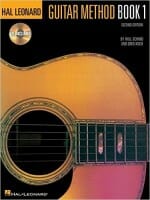
The second edition of this world-famous method by Will Schmid and Greg Koch is preferred by teachers because it makes them more effective while making their job easier. Students enjoy its easy-to-follow format that gives them a solid music education while letting them play songs right away. Book 1 provides beginning instruction including tuning, 1st position melody playing, C, G, G7, D7, and Em chords, rhythms through eighth notes, solos and ensembles and strumming.
Four Star Sight Reading and Ear Tests