
Guitarist Gergely Szabo has an Advanced Diploma in Music Performance from Cambrian College where he majored in the classical guitar. Over his time there, he completed 2 years of comprehensive pedagogy courses. He also gained well grounded vocal skills, as well as basic knowledge on the piano. Outside of classical music, he exhibits a repertoire of skills and knowledge in playing the genres of rock, blues, and heavy metal music. He has experience in teaching the guitar and the ukulele to a range of people aged 6 to 54.
Gergely’s teaching methods include both the use of books and digital methods. The three main books he uses to teach guitar are as follows: “Guitar Method Book 1 by Will Schmid and Greg Koch,” “Four Star Sight Reading and Ear Tests RCM Level 1,” and “Classical Guitar Repertoire and Etudes RCM Level 1.” For teaching ukulele, he uses the book “Ukulele Songs for 1, 2, or 3 players by Elizabeth Ragsdale.” Aside from these, he frequently uses the Muse Score application as a play-along practicing tool.
Gergely’s passion for music and his dedication to growing the love of music in others are the biggest reasons why he teaches guitar and ukulele. His approach to teaching involves learning through play. The material he covers with his students is always delivered in a way that is highly interactive. Most of the assigned exercises he gives involve the elements of play that students can enjoy both in class and as homework.
Get to know Gergely…Beyond the Bio!
Coming soon!
Hobbies:
Musical influences:
Favourite food:
Least favourite food:
Favourite music:
Favourite album:
Favourite movie:
Favourite musical theatre/opera:
Best quote from your teacher:
Favourite quote:
Favourite book:
Latest Homework from Gergely
Is Gergely Your Teacher?
Sign up now to get your weekly assignments delivered, and never lose your homework sheet again!
Tuesday, February 18th
Josh
Warm-ups:
–Hand and foot coordination (see handout): playing steady beats on the bass drum, play singles, doubles, and paradiddles with your hands on the snare drum. There should be two snare notes (ti-ti; eighth notes) to every bass drum note (ta; quarter notes)
Groove Essentials Rock Groove 5
–This week, add drum fills in every fourth measure
–See handout for fill examples
The Beatles: Ticket To Ride
–Your job this week is to learn where the beat STOPS. Ringo plays a crash, and lets it settle for a moment before picking back up with the song…
Myles
Drumset Musician p83 Twelve Bar Blues playalong
–We used this as a way to learn drum fills
–Next week let’s learn about the 12 bar blues as a form
==Xylophone==
Warmups (Three keys):
–Scale, one octave, ascending and descending, saying the note names as you play them
–Arpeggio
–Broken thirds, ascending and descending
Cirone Book: “Step Six” ex. 5-8
Eartraining: identifying thirds and fifths
Tones and I: Dreaming
–See Worksheet in google drive PLEASE PRINT
Finn
Warmups (30sec each, counting aloud):
–Single Strokes
–Double Strokes
–8 on a hand
Visual Drummer: p17 ex. 13-15***
Nickelback: How You Remind Me
–Use the webplayer for the Visual Drummer book to help you get the right tempo. Play along with the ex. 2 backing track, and adjust the speed in the bottom left corner of the webplayer to adjust. Gradually build up to our goal tempo (160).
–This week we’re adding in the “apple apple watermelon watermelon” fill. Try to learn where it happens in the song (just before the chorus) using cues from the rest of th band
Francisco
Warmups:
–Stick Control first page ex. 14-18 (4x each, 120bpm goal tempo)
–Play eighths ca. 120-160 bpm (gradually building up the speed) using accents on the beats to help with the push-pull strokes
Tommy Igoe Groove Essentials book: Groove 1 FAST
–Use small fills to smooth the transition between eighths on HH and quarters on the ride
–This week, come up with four fills you can use to fill the space in between the pushes and shots in that section. We’ll begin to develop this as a kind of solo
Aviva
Warmups (1min ea) goal tempo = 120bpm, playing two notes per beat (aka eighth notes)
–Single strokes (LRLR…)
–Double Strokes (LLRR…)
–Paradiddles (LRLL RLRR…)
Drumset Musician p11 ex. 1-7 b)
–Three speeds: 70, 100, 130
Drumset Musician p12, ex. 8-15*** a)
–learn these :)
Igoe Groove Essentials Groove 1 Slow (backing track and chart in Frequently Used Resources folder)
–Play variation A
–Add in drum fills from the handout every four bars
Hole: Celebrity Skin
–This week, learn the main groove on the handout I gave you
Homework for Feb 18-25
Henry
Fantastic work today Henry! Here is your homework for this week:
How long to practice: 5-10 minutes per day
What/How to practice:
Heart and Soul- amazing work on swing rhythms! Keep playing with Zaidie :)
Birthday Party- Review line 2; step-wise down and up from D, fingering: 2-1-2-3. Play loud.
Sandman’s Near- Review line 2; repeat each bar twice. Bar 2 is same notes and same fingering as bar 1 (2-1). Play soft. Do not slow down because it is soft, soft doesn’t mean slow.
How parents can support practice: Continuation of playing with family members is great. For the pieces in Teaching Little Fingers to Play, guide him in the speed and dynamics (loud vs soft). Remind him that the pieces should be the same speed, but one is loud and the other is soft.
See you on March 4 :)
Preferred Books for Gergely’s Students
Click to buy them here, and they’ll come right to your house! What could be easier?
Hal Leonard Guitar Method
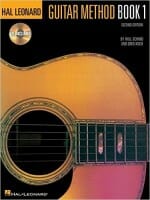
The second edition of this world-famous method by Will Schmid and Greg Koch is preferred by teachers because it makes them more effective while making their job easier. Students enjoy its easy-to-follow format that gives them a solid music education while letting them play songs right away. Book 1 provides beginning instruction including tuning, 1st position melody playing, C, G, G7, D7, and Em chords, rhythms through eighth notes, solos and ensembles and strumming.
Four Star Sight Reading and Ear Tests