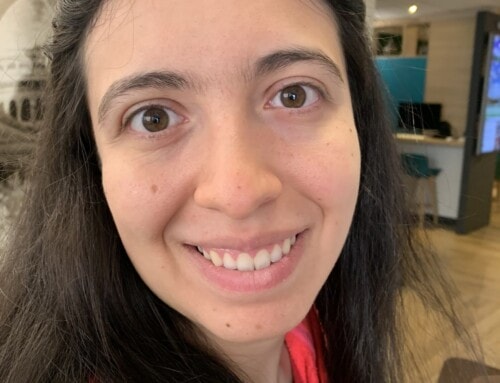
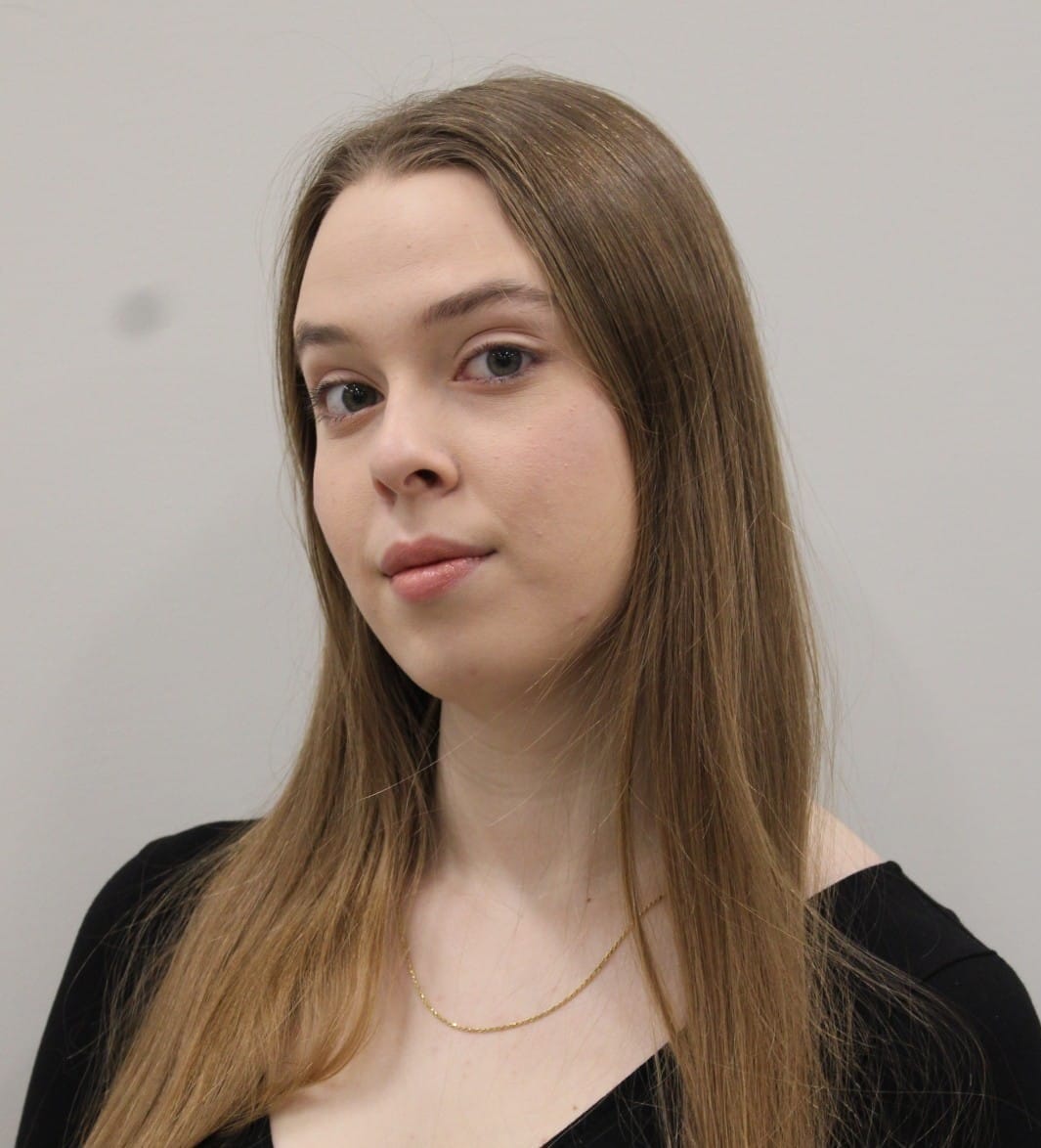
Mezzo-Soprano Emma Berube (she/her) showcases a range of repertoire in art song, opera, and music theatre. From Bach to Debussy and Sondheim to Schwartz, she has an appreciation and expertise for a wide range of music that tells a story.
Emma achieved her Bachelor of Music from the Don Wright Faculty of Music at Western University in 2023. During her time at Western she was involved in several theatrical, music theatre, and choral productions. Emma’s goal during her time at ABC is to connect with students through music and help them become proficient and confident musicians and humans.
Get to know Emma…Beyond the Bio!
Hobbies: Reading, Writing, Spending time with friends and family
Musical Influences: Stephen Sondheim, Jason Robert Brown, Taylor Swift
Favourite Food: Strawberries
Least Favourite Food: Olives
Favourite Song: Evermore – Taylor Swift
Favourite Movie: Little Women – Greta Gerwig
Favourite Movie Music: Peter Pan – James Newton Howard
Favourite Musical Theatre/Opera: Company – Stephen Sondheim
Best Quote from your Teacher: “Run as Fast as You Can”
Favourite Book: The Secret to Superhuman Strength – Alison Bechdel
Latest Homework from Emma
Is Emma Your Teacher?
Sign up now to get your weekly assignments delivered, and never lose your homework sheet again!
Assignments from February 19th
Hello Everybody!
Great lessons this week!
Georgia:
If you find time to practice between games this week, please have Georgia review The Rainbow, playing hands separate. Encourage her to name the notes out loud to support her sight reading. Remind her to play all notes for their full written value.
Benji:
Today we focused on playing scales. At home, Benji can practice playing the C Major scale hands together slowly. Remind him to pay close attention to which finger he should be using for each note in both hands as the fingering patterns between the two hands are mirrored, even though they play the same notes at the same time. Remember, the first finger in piano is the thumb! Benji can also practice the G Major scale hands separate. This scale has one sharp! Benji should pay close attention to the keys to make sure he skips over F natural (the white key) and plays F# instead (the black key) Be careful not to play both as F natural does not belong in this scale! Please help Benji to review the notes in the first two phrases of Young Hunter in his book as well. We will continue with this next week.
Clara:
This week, continue to work on Musette in D Major. focus on bridging the gaps between bars in the A section. Use the technique we learned in class to help teach your hands how to navigate repositioning on the piano; at the end of one phrase play the right hand part and start the continuing phrase with the left, then switch. This will help make it clear to your ear how the two phrases are supposed to connect and make it more clear to your hands how they are to work together. Try playing the two phrases together after and record yourself so that you can listen to whether the lines flow together or if there is still a break in the line. Continue to review the B section hands separate. Practice that tonicization of e minor extra slow and name the notes out loud to help you navigate the chromatic line confidently. Choose a new song to start next week.
Thank you eveyone!
Looking forward to more great work next week!
Assignments from January 22nd
Hello Everybody:
I hope you’re all staying warm this weekend!
Georgia:
For this week, Georgia is to continue practicing “Waltz Time”. The song is in good shape, Georgia is playing the phrases smoothly and accurately, but sometimes needs clarification on certain notes. To help Georgia connect the names of the keys to the names of the notes on the page, please ask her to practice the song slowly and to name the notes out loud as she plays the keys. Practicing the song this way will also challenge Georgia to watch the sheet music as she plays instead of her hands. She also has worksheet on the page after “Waltz Time” that she is to fill out for class next week. The sheet asks her to assign a tempo marking to each line of music, add the missing bar lines to each phrase, and play all three lines. Georgia should reread the definitions of each tempo marking on the previous page to help inform her choices. We will review this next week.
Noreet:
This week we reviewed the rhythms in I Am the King. When practicing this song this week, please have her use a metronome to help clarify how the various rhythms fit into each beat. Encourage Noreet to review this song at a slow tempo so has time to hear and feel how the rhythms fit together. She can also record herself playing the song. When she is done, have her play the recording back and read along with the sheet music as she listens to confirm if all the rhythms sound correct. If she notices an error, circle it, and practice that section on its own before trying to play the whole song again. Noreet is also to continue practicing “Moonlight Melody” now that we have clarified where fingers start in the song. Please practice the first and third phrase hands together, and the right hand of the second phrase only. We will look at the left hand of the phrase as well as the end in class together next week.
Eva:
Today we reviewed the notes in the first phrase of “Young Tiger” and reviewed the definition of a tie, what it does, and where it is used in “Young Tiger”. Please encourage Eva to play this phrase for you at home and to count out loud as she does to help solidify her understanding of the rhythms in the phrase including the tie. Please also help her read the second phrase of the song. You can use the flashcards if Eva wishes. We will review this next week.
Benji:
This week Benji can continue to practice “Classic Dance”. Please help Benji by reminding him that this song is played in “C Position” where the thumb of his right hand and fifth finger of his left hand rest on C. He should review this song hands separately before attempting to play it hands together as there are some tricky fingerings at the end of the first and last phrase. When practicing hands together, please help Benji by reminding him that even though the notes in the right and left hand are different at the end of the first and last phrase, he used the same fingers on both hands to play them (4,3,2). Practicing this fingering will help Benji to play the two different phrases at the same time. He should also pay close attention to the dynamic markings he sees in the sheet music. Please encourage him to circle these.
Clara:
For this week Clara should continue to practice “Barefoot on the Beach”. In class we worked on brining the song up to speed. The tempo marking in this piece is 96-116 BPM. Encourage Clara to practice with a metronome this week to help increase her tempo slowly. Remember; this song is in cut time, which means metronome will be indicating the half note. Please encourage Clara to review the section we focused on in class before either adding onto the section or backtracking to the beginning. She should work on bringing the song up to tempo in sections to make this more manageable. Only when Clara has practice each section of the song and has been able to play these sections at her chosen tempo should she then attempt to play the whole song from start to finish. When she is ready, please encourage her to record herself playing at different tempos and to listen back to help her determine which tempo she likes playing at best, and which tempo she likes listening to best (these could be two different tempos). We also sight-read the A section of Andante in G minor from the RCM level 1 book. Here is a copy of Andante in G minor for Clara to review and read if she wishes.
Thank you everyone!
Looking forward to seeing you all next week!
Assignments from January 15th
Hello Everyone!
I hope you all stayed warm during the snow storm! I was happy to see some of you online via FarPlay this week. If anyone has any questions or needs help navigating the software, please let me know!
Georgia:
I hope you had a great snow day! Please continue to practice “Waltz Time” and we will review this next week.
Noreet:
Great digital lesson today! For this week please review the left hand of the first and third phrases of Moonlight Melody and the right hand of the second phrase. Remember, this song has some accidentals in it including sharp and natural signs. Noreet knows that one she sees an accidental in a bar, the accidental is applied to all notes on the same line or space until either corrected with another symbol, or until the bar line resets the note quality. We will review this concept next week in class. To ensure rhythmic accuracy as Noreet practices, please ask her to count out loud to ensure notes are played for their full value. But remember; this song is in 3/4 time! This means there are only 3 beats in each bar, so she should count like so: “1 and 2 and 3 and”. Resist the urge to add a fourth beat on the end! If there are any tricky rhythms during practice, please ask Noreet to cover the page to reveal one bar at a time to help her zero in on challenging moments in the music. We will review these in class next week.
Eva:
Today we reviewed the first phrase of Young Hunter! Eva learned that the lines underneath the 3 notes at the end of the phrase is called a Tie and is asking her to add the vale of all three notes together. Please encourage her to count out loud when playing this phrase to ensure she plays the Es at the end for their full combined value. For now, Eva is permitted to count this as a 10 beat long note. We will review this in class next week and learn the proper counts as dictated by the bar lines.
Benji:
I hope you had a great snow day! Please continue to practice “Classic Dance”. Remember, the first and third phrases of the song are identical. We will review the specific fingering for the end of both phrases next week in class.
Clara:
Get well soon Clara! If you feel well enough to practice this week, you can continue with Barefoot on the Beach. Remember; this song is in cut time! So each note will feel faster than it looks. We will review this next week. If you need more repertoire this week you can feel free to choose another song to start and we can juggle both Barefoot on the Beach and your other chosen song.
Andrew:
I hope you stayed warm during the snow storm! For this week, continue to practice the lip-roll technique and play around with the various colours and sounds different vowel shapes create in your voice as you practice Empty Chairs at Empty Tables.
Thank you everyone!
I’m looking forward to seeing you back in the studio next week!
Assignments from January 8th
Hello Everybody!
Happy New Year everyone! I hope you all had a great holiday!
Georgia:
Today we reviewed “Waltz Time”. To help Georgia feel the flow of the song, please remind her when practicing that often in the song the last beat of one phrase ends up being the first beat of the next phrase. So these two phrases will feel more like one long phrase. I have marked in pencil where this happens in the music. Georgia should focus her practice on these areas to make sure they are smooth and connected when she plays. She can play these phrases hands separate when practicing if this helps her focus on the fingerings and enables her to play more smoothly. We will try to put these phrases hands together next week.
Noreet:
Today we started “Moonlight Melody”. There are some accidentals in this piece (sharps and flats). Please help Noreet by reminding her that in order to sharpen a note she must raise the note by one semitone, and lower the note by one semitone to flatten it. We played through the entire song together in class, but if she struggles to play the whole phrase, ask her to focus on one bar at a time. We even covered up the surrounding bars so that the only one Noreet could see was the bar she found challenging. She can continue this method at home. Remember that once she feels confident with the one bar, she is to uncover the bar that comes before it and play the two together. This will help thread the bar back into the whole phrase. Should Noreet use this method at home, please mark the bars she zeroed in on by circling them or drawing in a star above the bar so that we can come back to these moments in the song next week.
Eva:
Today Eva chose a song from her new K-Pop Demon Hunters Book! This semester we will continue learning songs in Eva’s method book as well as work towards playing “Your Idol”. For this week when practicing “Your Idol” have Eva review the right hand of the first phrase on her own first and then play the song and encourage Eva to play along to what she hears. Remember; this song is in e minor so it has an F sharp. Please help Eva by reminding her that in order to sharpen a note, she needs to raise the note one half-step to the right on the piano. You can help guide her through a little bit more of this song if Eva wants. We will continue exploring this song next week. Please also review “Young Hunter” with her as we will review this next week as well.
Benji:
Today we reviewed “Haunted Mouse”. Please help Benji by reminding him that all of the quarter notes in the song should be played at the same speed. If he needs to slow down the quarter notes in the beginning of the song to ensure they match the quarter notes in the last phrase he is allowed and encouraged to do so. We also started “Classic Dance” This song is in C-Position. Benji learned today that this is when the 5th finger of his left hand and his 1st finger of his right hand are both resting on a C, one octave apart, and his other fingers line up with the notes above it up to G. When practicing this song encourage Benji to use the labelled fingerings for the last two bars of the first phrase. These two bars are played in contrary motion which means Benji’s hands will move towards each other as he plays. While the notes for both hands are different here, the fingering is the same for both hands. Benji’s left hand starts this section on a D and his right hand starts on an F. He should practice playing the following notes with his fourth, third, and second fingers in both hands. We will review this technique next week.
Clara:
Today we reviewed the William Tell Overture. We also listened to different version of the piece for Clara to compare. Please find links to these videos here and here. We will further discuss their differences next week. We also started “Barefoot on the Beach”. This song is in cut time! Clara learned that “cut time” is 2/2 time. This will mean the half notes are worth one beat and the quarter notes are worth half a beat. Overall, everything on the page is faster than it looks. Please remind Clara of this when she is practicing, especially if she chooses to practice with a metronome! We will review this next week.
Thank you everyone!
Great first week back! I’m looking forward to seeing what you all bring to class this semester.
Assignments from December 11th
Hello Everybody!
I hope you’re all staying warm and well this winter season!
Georgia:
This week for warm up Georgia can start playing her C Major scale hands together slowly. Review the fingering and pattern hands separately before trying hands together. When playing Purple Cow this week, Georgia should count out loud (1 + 2 + 3 + 4 +) to help her see when the right and left hands line up. This will also help her see the “pick up” in the melody of the B section. We also started reading the Waltz in class. Please encourage Georgia to sight-read this on her own at home and we will continue to learn this piece in class next week!
Noreet:
This week Noreet performed all of Ode to Joy with note and rhythm accuracy! She can continue to play this song as a part of her repertoire at home if she wishes. In class we focused on rhythmic accuracy when playing I Am the King. Noreet is encouraged to count out loud (1 + 2 + 3 + 4 +) when playing to help highlight the rhythms as she sees them on the page and to help her accuracy when playing them. Should she find a certain bar or rhythm challenging, encourage her to say and/or clap the rhythm out loud before trying to play it again on the piano. Noreet can also feel free to draw lines to indicate the MACRO beat ( 1 2 3 4) in any challenging bar for clarity. Please use Pencil when doing this so we can correct in class if necessary.
Eva:
Eva can play each phrase of Classic Dance with tonal, rhythmic, and technical accuracy! When playing this song at home, encourage her to play all three phrases connected so that there is no gap or pause in the song where there shouldn’t be. If this is challenging, encourage Eva by asking her to play the end of one phrase and the beginning of the next phrase so that she can see where the two phrases connect. Eva can also continue to work on Young Tiger. We reviewed the first phrase of this song together in class. When practicing this song at home pay close attention to the staccato symbols and the tie at the end of the phrase. The line between the three ‘Es’ at the end of the first phrase is a tie. Eva should play the E for the combined value of all three notes! We will review this concept in class next week. Finally, please bring Eva’s notebooks next week so that we can correct them and add onto them.
Benji:
Hope you’re well and looking forward to seeing you next week! Please continue to practice The Haunted Mouse hands together, paying close attention to where the right and left hands overlap!
Clara:
Clara can continue to play the Rossini hands together. Encourage Clara to record this song so she can hear if there are areas where she would like to improve. Please also find a professional recording online of this song for Clara to hear. Having a musical comparison of the song should help Clara say more about what she likes about her own playing and which techniques she would like to learn or improve upon. In class we dictated Joy to the World together! I have uploaded a digital copy of Joy to the World as well as Silent Night in Clara’s student folder on google drive. You can find those here! Clara can continue to dictate Angels We Have Heard on High and Hark the Herald Angels Sing on her own using the blank staff paper provided to her. Please bring this back next week and we will correct it together.
Thank you everyone!
Looking forward to seeing you all next week for our last lesson of 2025!
Assignments from December 4th
Hello Everyone!
Great work all around this week!
Georgia:
This week we reviewed time signatures, note values, and rhythms. Please have Georgia fill out page 21 in her Alfred’s Method book for homework. We will correct this next week. We also discussed how the staff is continuous from the bottom line of the bass clef to the top space of the treble clef. When practicing Purple Cow, if Georgia is confused about which notes are where, please remind her that the notes written in the treble clef are all above middle C on the piano while the notes in the bass clef are below middle C on the piano. Georgia should review the notes for Purple Cow hands separate and then slowly try playing the song hands together. When playing hands together please remind her that the rhythm in the right hand is slower than she thinks it is.
Noreet:
Today we reviewed I am The King. When practicing this song at home, please help Noreet by reminding her to start the song with the 5th finger of her left hand on G as this song is played in G position. Noreet should practice playing this song hands together while being mindful of the rhythm of the song. If there is a bar or a phrase she struggles with while practicing this week, remind her to slow down and count out loud to help her hear where the shorter or longer notes fit in the song. Noreet can also review Ode to Joy. Please help her when practicing this song by reminding her that the right hand of the 5th phrase should be played an octave higher than the rest of the song.
Eva:
Eva has a new notebook specifically for the notes in “Young Hunter”. Please have her answer the questions in the book and bring it back next week so that we can correct it together. We also reviewed Classic Dance and staccato playing. When practicing Classic Dance, please help Eva with the last 2 bars of the first and third phrase by reminding her that she needs to use the 4th, 3rd, and 2nd fingers of both hands to play the notes. These two bars should also be played staccato. Feel free to try the duet this week to encourage Eva to practice.
Benji:
Today we reviewed The Haunted Mouse. Benji can confidently play all the notes in this song. I have added numbers above some notes in a few phrases. These numbers refer to Benji’s fingers! When practicing this week please ensure Benji uses the correct fingerings as labelled to play the song. (1 is Benji’s thumb, 2 is his index finger ect..). I’ve also highlighted the first two bars of The Haunted Mouse to help Benji visualize the rhythm. The first note of the song is an A played by Benji’s right hand. Benji has to hold this note for 4 beats. However, the phrase in the right hand starts on beat 2. So these sounds should overlap – while Benji plays the A in the left hand for 4 beats, he should also play the quarter notes at the same time. Refer to the highlighted bars in the music to see how these phrases fit together.
Clara:
Today Clara learned that Dominant 7th chords are built on a Major 3rd, Perfect 5th, and minor 7th. There is a dominant 7th chord in the first bar of the second phrase of the song Clara is working on. Together we analyzed most of the chords in the song, identifying and labeling them so that Clara understands which chord she is playing when, and the function the chord plays in the song. This week Clara should practice playing the song hands separately so that she can focus on building the chords she sees in the music. You can help reinforce some of the concepts that we discussed in class by asking her to name the chords she is playing.
Andrew:
When practicing this week try warming up with a lip roll! Remember this technique is focused on air flow. While making the buzzing sound with your lips (you can press your cheeks together with your hands if this helps you create that sound) think of saying “oo” while breathing out. You can also warm up with a hum before trying some vowels. Refer to your voice recording for scales to practice. When practicing Empty Chairs this week, try singing the 5th verse on “V-Aye”. (Refer to recording if necessary). Use this exercise to focus on brightness in your tone and an openness in the palate. Practice the 3rd verse on a light and airy “oo” to help track the air support needed to sing the higher parts. If you can successfully do the lip rolls, use this technique for the whole song to train the air support needed. Remember to breathe and if you feel light headed take a break!
Thank you everyone!
I’m looking forward to our last few classes before the winter break!
Assignments from Saturday, September 13th
Hello Everyone!
I hope you all enjoyed your summer breaks!
Vida:
Continue to practice “March of the English” guard this week. Focus on connecting each phrase so that Vida can play the whole song start to finish without pausing. Encourage Vida to play each phrase out of order as we did in class to help her become more familiar with each individual phrase. When Vida can play all of “March of the English Guard” at a comfortable tempo, she can record herself and listen back. Ask her to identify one thing she likes about how she plays the song and if there is anything she wants to sound different. Challenge her to start reading “Coconut Shuffle” at home. Remember; this song introduces the Tie! The tie in this song will combine to value of two eighth notes resulting in the next sounded note to come in on an off beat. Focus on reading the notes first so that Vida feels more comfortable navigating each phrase before practicing the timing of the tied eighth notes. You would use a metronome to help count this rhythm. We will review this specific rhythm and “Coconut Shuffle” next class.
Berke:
This week we reviewed Beethoven’s Ecossaise in E Flat Major. Berke should continue to practicing this song hands separate in 2 chucks: the first 2 lines and then the second 2 lines (the A section and the B section). Remember, most of the song uses intervals that build the E flat Major chord (Major 3rds, and Perfect 5th), and the second phrase of the B section is the same as the first, only an octave higher. Either in your book, or by printing the Ecossaise, you can write in the intervals between notes to help you map the song. When practicing the left hand of the Ecossaise, focus on the fingering. Do your best to keep your wrists and forearms flat when rocking back and forth between the B Flat and the descending 3rds to ensure you do not injure your wrists. You can help keep your wrists flat by pressing down in the middle of the keys as opposed to the ends of the keys. When practicing “Clair de Lune” this week, please focus on the left hand from measures 5-8. When you feel confident with the notes in the left hand we can work towards playing the first 2 phrases hands together.
Thank you everyone!
I look forward to seeing how everyone progresses this fall!
Assignments from June 14th
Hello Everyone!
Friendly reminder that summer lesson registration is open! If you are interested in continuing through the summer you should be able to register through Opus, otherwise Barnaby would be happy to help fit you into my summer schedule. Fall registration is also open! If you are taking the summer of, but would like to keep your time slot for the fall, register ASAP!
Vida:
I missed you today! Continue to practice Under the Sea, the Lochness Monster, and the chords for Ed Sheerhan’s I Don’t Care. I look forward to seeing you next week.
Berke:
For this week try practicing the entirety of Mozart’s Minuet in F Major hands together! As you put this together remember to isolate any bars you struggle with or phrases that have problem areas. Review these sections hands separately before going back and trying the phrase again hands together. I’ve also uploaded a sight-reading worksheet for you. Using coloured pencils, crayons, or markers, colour code the notes you see in the two phrases. Your starting note is a D! Choose a colour for D and circle or colour in every D that appears in the two phrases with that chosen colour. Repeat the process with the other to notes. After you have colour -coded the notes, you can write in the letter names underneath in the corresponding colour. We will review our lesson on the circle of 5ths and different key signatures next week. You can find the sight-reading worksheet here.
Thank you everyone!
I’m looking forward to hearing how you will progress in our final few classes of the spring semester!
Happy Practicing!
Assignments from May 31st
Hello Everyone!
Vida:
Continue to practice Under the Sea, working towards playing the first two pages hands together! Use the metronome if this helps Vida. Start at 60BPM then slowly increase the tempo. The ideal tempo for Under the Sea is 120BPM. Review any tricky or challenging spots hands separately when necessary. Review Green Frog Hop, Home on the Range, and Mr. McGill’s Boop Sha Bop specifically to highlight the difference in staccato phrases and legato phrases. Mr. McGill’s Boop Sha Bop asks Vida to do both. Continue to read Lochness Monster hands separately. We will review this in class next week. Finally, Vida can review the F# Major, D# minor, B, and C# chords as these will be used in Ed Sheeran’s “I don’t care”. When Vida feels comfortable building and playing these chords, add in the rhythm pattern from the song. We can add some of the melody next week.
Berke:
Today we read a new song! I’ve uploaded the sheet music for “Burlesque in G Major” to the google drive. Review this hands separately, when you feel confident playing both the right and left hands separately, you can try playing this hands together. Do the same for the minor section of Mozart’s Minuet in F Major. Focus specifically on the minor section. Only when you can confidently play the minor section hands separately should you go back and add the major section we have already learned. At that point, play the song from the beginning hands together and continue playing into the minor section with the right hand only so that you can hear how the song changes. Practice the Major section and minor section hands together separately. We can try to play the whole thing together in class next week. For Moonlight sonata, focus on building the chords in bars 7, 8, and 9 while holding down the upper note. Play these chords very slowly to build and practice this technique in your fingers. You can find Burlesque in G Major here.
Great work today! I look forward to hearing how both of you progress in June!
Happy Practicing!
Assignments from May 17th
Hello Everyone!
Vida:
It was great to see you at Lawrence Park today! Now that you are confident with both the right and left hands of “Under the Sea” work towards playing the whole song hands together. Play slowly to allow your hands the time to line up in the music. Pay close attention to the macro beat of the song. Write this in like we did with the first bar if the visual helps you to see which hand moves first. Remember that the left hand is twice as slow as it is mostly half notes – your right hand will move faster than your left. Once you can confidently play the whole song with both hands, we can learn Ed Sheeran’s “Under the Tree” or another song from your list. Focus on playing the first phrase hands together, reviewing the song hands separate in between if necessary. Once you feel confident playing the first phrase hands together, you can work on the second phrase hands together. Repeat this process for the whole song. For Mr. McGill’s Boop Sha Bop, focus on the highlighted bars (sticky notes). Isolate these bars, follow the instructions on the sticky note (faster eighth notes, slower quarter notes, play through the bar to the next bar), then go back and play the song again with these corrections in mind. Practicing with the metronome will help highlight some of these challenges. Aim for a tempo of 100BPM. Finally, sight read Loch Ness! We will review this together in class next week.
Berke:
Sorry we missed you this week! For practice this week, review Clair de Lune. Focus specifically on the fingering in the first 4 bars. Practice these eighth note figures slowly and focus on using the proper fingers. This will ensure your fingers don’t get tangled on their way down the keyboard and that we can reach the lower keys. Using the proper fingering will also help you play the phrase smoothly when we play at a faster tempo. When you feel confident and comfortable in the fingering of the first phrase, you can slowly increase the tempo. Challenge yourself this week to sight read 4 more bars of the song. The suggested fingering is written above each note. Give this a try when practicing and we can review this next week in class. When practicing Moonlight Sonata, try playing the first 6 bars hands together. Focus on reading bars 7-9 hands separately. You will have to play the upper notes of the right hands with your 5th finger! The upper note is played on each macro beat (the first beat of each chord). Pay close attention to when the notes in the chords change as they all look similar by change slightly every two beats. Finally your left hand for bars 7-9 is still playing in octaves so remember to use your 5th and 1st finger to play these notes. We will review both songs next week.
Have a great long weekend everyone!
Assignments from May 10th
Hello!
I have a few reminders and updates for you all. First, Berke has informed me that he does not have access to his chrome book this week! So if you could kindly remember to share this email with him that will be super helpful for Berke’s practice this week. Second, while I know the in person recital was cancelled, we are still going ahead with the digital concert! Berke and I record Minuet in F today to be added to the concert! Thank you Berke for your hard work on this piece, I am very much looking forward to seeing everyone’s performances!
Berke:
For this week please review Moonlight Sonata and practice the first 8 bars of Clair de Lune. Practice the fingerings as follows for the 3 alternating eighth note “motifs”. Eighth note group 1: 3/5 – 1/4 – 3/5 – 1/4. Eighth note group 2: 2/4 – 1/5 – 2/4. Eighth note group 3: 1/3 – 2/4 – 1/3. Please practice these bars slowly. This requires meticulous fine motor skills in the hand and fingers so pay attention to how this feel in your hand when you play these 3 bars. Use the metronome to help you stay in time, but start at 45BPM, switching chords with each tick of the metronome. Once your hands feel comfortable with this technique, you can slowly speed up to your desired tempo. Please review the upper notes only of the melody in bars 5 and 6 and continue to sight-read the second chunk of that melody in bars 7 and 8 on your own. Practice the eighth note groups and melody separately, put the two sections together only when both feel comfortable in your hands. Review what we have learned in Moonlight Sonata (bars 1-9). Review the chords in bars focusing specifically on bars 7-9 as this is newer material. Play these bars hands separate until you can confidently build and play the chords in the left hand. Review bars 5 and 6 slowly, playing close attention to which notes are played together and when. We will review and learn more Moonlight Sonata next week.
Excellent work today! I look forward to hearing more next week.
Assignments from May 3rd
Hello!
Berke:
You can choose to either video record Minuet in F Major at home and upload the recording to the google drive for me to submit. Or we can wait until next class to record together. For this week, when practicing Moonlight Sonata, focus specifically on bars 7-11. Please practice this section hands separately to start. Remember that this phrase moves in octaves in the left hand! Please sight-read the right hand of this phrase on your own; its very similar to bars 5 and 6, but pay close attention to where the triad changes. You can practice bars 5-11 hands together when you feel confident with the phrase in both hands. You also have a new song from this week – Clair de Lune! Please review the first 3 bars of this piece only. Pay close attention to the fingering markings and be sure to practice playing that 1/3 – 2/4 motion of the fingers in the right hand. When you feel comfortable with this technique, you can add in the left hand. I’ve also uploaded “Lost” for you to sight-read. You can use this as a warm up. Play this piece hands separately, we will revisit this song next week. You can find Clair de Lune and Lost here.
I’m looking forward to seeing your performance video! Happy Practicing!
Preferred Books for Emma’s Students
Click to buy them here, and they’ll come right to your house! What could be easier?
RCM Piano Repertoire
RCM Technical Requirements for Piano
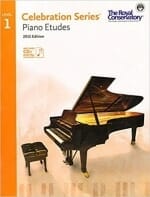
RCM Celebration Series Piano Etudes
Faber & Faber Piano Adventures
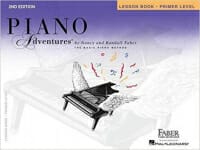
The 2nd Edition Primer Lesson Book introduces the keyboard, note values, and the grand staff. Students play in C 5-finger scale patterns, develop recognition of steps and skips, and learn letter names independent of finger number. Musicianship is built through the use of dynamics and coloristic experimentation with the pedal. The book is organized into units which represent the major concepts and skills. As new units are introduced, earlier concepts and skills are constantly reviewed.
Faber Piano Adventures
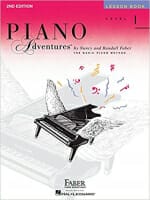
The 2nd Edition Level 1 Lesson Book introduces all the notes of the grand staff, elementary chord playing, and the concept of tonic and dominant notes. Students play in varied positions, reinforcing reading skills and recognizing intervals through the 5th. Musicianship is built with the introduction of legato and staccato touches. This level continues the interval orientation to reading across the full range of the Grand Staff. The 5-finger approach is presented here in a fresh, musically appealing way.
Belting - A
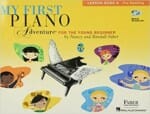
Written for ages 5 and 6, My First Piano Adventure captures the child’s playful spirit. Fun-filled songs, rhythm games and technique activities develop beginning keyboard skills.
The Brown Scale Book
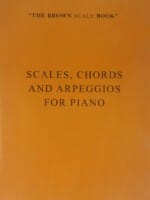
This essential resource includes all major and minor scales, triads, arpeggios, dominant sevenths, and chromatic scales organized by key. A favorite for decades, The Brown Scale Book belongs in every student’s library.