M.Mus (U of T)
B.Mus (Oberlin)
Percussionist Thomas Li is active as a chamber musician and performer of new music. A recent Master’s graduate from University of Toronto, he studied under the tutelage of Aiyun Huang, Beverley Johnston, Ryan Scott and Charles Settle. He has attended multiple summer festivals including Banff Centre’s Evolution: Classical and the Nief-Norf Summer Festival where he worked with members of Kronos Quartet and Mark Applebaum respectively. As an avid contemporary performer, Thomas was a member of University of Toronto’s Contemporary Music Ensemble as well as Toronto-based percussion quartet Kairos Quartet. He also took part in the recording of Elizabeth Ogonek’s chamber concerto, where are we now, released in an album on the Oberlin Music Label.
Thomas is also interested in integrating visual media with his playing, and aspires to dedicate his artistic voice to expressing personal emotions and preserving the collective narratives of his home city, Hong Kong. In his multiple Multimedia project, he is dedicated to understanding how cinematic language can help communicate contemporary musical gestures when the two art forms are paired together.
Get to know Thomas…Beyond the Bio!
Hobbies: bouldering, photography, pour-over coffee, art films
Musical influences: Leonard Cohen, Bob Dylan, Leslie Cheung, Nicole Lizée, John Cage, Matthew Lau
Favourite food: Cantonese BBQ Pork on Rice
Least favourite food: Chicken Breast
Favourite music: contemporary percussion, math rock, R&B, orchestral, folk rock
Favourite album: Dance, No One’s Watching by Ezra Collective
Favourite movie: Cinema Paradiso, Ashes of Time, A Brighter Summer Day, Star Wars
Favourite musical theatre/opera: Wicked
Best quote from your teacher: “Let the drum sing!”
Favourite quote: “Do or Do Not, There is No Try” – Yoda, Star Wars
Favourite book: The Rest is Noise by Alex Ross
Latest Homework from Thomas
Is Thomas Your Teacher?
Sign up now to get your weekly assignments delivered, and never lose your homework sheet again!
Saturday, October 10th
Jonah
“Triplets”
Jonah played more of Triplets and continues to make progress with his note reading. Although he feels that he is not reading quickly enough, I have already seen a clear improvement.
When reading:
- For notes using ledger lines, use a familiar A or C as a reference point.
- Find the highest and lowest notes in each passage first. Treat these as the boundaries so you are not searching beyond the necessary range.
- Look for repeated notes and recurring shapes.
- Ragtime melodies often contain repeated broken chords or arpeggios. Recognizing these patterns will make the passage much quicker to read.
- Mark any patterns you discover directly in the music with a pencil.
Goal for next class: Begin working into the next page.
Timpani
I marked Jonah’s Hannaford timpani score and explained how to follow the markings and time the tuning changes while playing.
Please review the score and bring any questions to our next lesson. If needed, we can eventually dedicate a lesson to working through the part on a full set of timpani.
Sam
“Holiday” by Green Day
This week, we focused on the eight-bar verse of “Holiday.”
Learning from the score seems to be adding some stress for Sam. Because he learns grooves quickly through listening and auditory memory, the score may sometimes feel unnecessary or distracting. However, developing comfort with drum notation will make it easier to understand larger structures, notice small variations and learn music independently.
The score does not need to remain in front of Sam at all times. Instead, use it to:
- Identify repeated patterns
- Mark sections that require extra attention
- Confirm details that may be missed when learning from a recording or cover video
- Review the structure before attempting to play from memory
Verse Structure
Think of the verse as an A–B structure.
In the A section:
- Bars 1 and 3 are the same.
- Bars 2 and 4 share the same rhythm but are orchestrated slightly differently.
In the B section:
- Bar 3 repeats bar 2.
- Bar 4 is a fill reminiscent of the sextuplet fill from the introduction.
Goal for this week: Learn all eight bars of the verse and become comfortable playing them without the music in the background.
Sam can also practise easier grooves from the Drumset Musician book while using the accompanying online recordings. This will allow him to use his strong ear while gradually strengthening his reading skills.
Dylan
Basic Rock Beat
Today, Dylan learned her first drum pattern: a basic eighth-note rock beat.
The parts are assigned as follows:
- Right hand: Hi-hat
- Left hand: Snare drum
- Right foot: Bass drum
Keep the right hand moving steadily on every eighth note. When counting the pattern as four evenly spaced notes:
- Play the bass drum on 1.
- Play the snare drum on 3.
Practise slowly and aim to keep every hi-hat note evenly spaced.
“Opalite” by Taylor Swift
We also began “Opalite.” Its groove is a variation of the basic rock beat:
- Play the hi-hat on every second eighth note.
- In the third bar of each four-bar phrase, add an extra bass-drum note on the fourth eighth note.
Practise the basic beat first, then add the variation once the coordination feels comfortable.
Please also work on the warm-up exercises written at the top of the handout.
Jack
“Enter Sandman” by Metallica
We have been working on the introductory groove from “Enter Sandman.” In class, we used Star Wars characters as a way to remember the drum pattern.
The groove is played mainly on the floor tom, which Jack knows as Tom 3.
Its structure is:
- Repeat the same main pattern for three bars.
- Play the short cymbal fill in the fourth bar.
Focus on remembering where you are within the four-bar phrase so that the fill always arrives in the correct bar.
Jack and Dylan can both practise their patterns on pillows before the family commits to getting a drum set. I would also like the siblings to perform their patterns for one another and support each other’s progress.
Saturday, October 3rd
Jonah
“Triplets”
Jonah played up till the fifth line with a strong musical feel, and it is clear that he is beginning to understand the groove of the piece.
Double-Sticked Leaps
Practise the double-sticked leaps that appear throughout the piece. One example is the D-to-B leap played R R in bar 11.
To develop this movement:
- Choose any two notes that form a major sixth.
- Play the leap using two consecutive strokes in the same hand.
- Keep the hand relaxed.
- Aim for two clear, even notes despite the distance between them.
- Practise with both hands when possible.
Learning Goal
Learn through to the end of the page.
The four-bar phrases in this section are constructed differently from those in the previous section. I have bracketed the phrases and labelled them A or B to make their patterns easier to identify.
As you practise:
- Notice which phrases share the same structure.
- Identify where the A and B patterns differ.
- Follow the written sticking.
- Continue shaping the music with the ragtime groove rather than focusing only on the notes.
Sam
“Smells Like Teen Spirit”
We began the lesson with a complete play-through of “Smells Like Teen Spirit.” Sam did a fantastic job holding down a steady beat while playing all the flashy fills cleanly.
“Holiday” by Green Day
We have now moved on to “Holiday.” Sam has already learned most of the song by ear and from memory. This week, use the score to clarify the smaller details that may have been missed while learning it by rote.
Bar 6
Pay attention to the left-hand stroke near the end of beat 2. This sticking allows the seven-note pattern to flow correctly into the following bar.
Follow the written sticking carefully and practise the transition into the next bar until it feels natural.
Verse Structure
Although the bars in the verse sound similar, their rhythms vary slightly. Read the score closely rather than assuming that every bar uses the same pattern.
The verse is organized into repeating four-bar phrases:
- Bars 1 and 3 are almost the same, with the main difference being the change from crash cymbal to hi-hat.
- Bar 4 contains the most important variation.
- Its kick-and-snare shuffle creates momentum leading into the next four-bar phrase.
Keep track of which bar you are playing so that each variation happens in the correct place.
Stick Control, Page 8
Begin working on the triplet variations on page 8, with particular focus on the second column. This column introduces some new triplet stickings.
Practise slowly and aim for:
- Even spacing between all three notes
- Accurate sticking
- Relaxed movement
- A clear pulse
- Smooth transitions between sticking patterns
Thursday, October 8th
Lukas
“Hotel California”
Congratulations on a beautiful and controlled play-through of “Hotel California.” The next step is to play everything with a lighter touch so that the drums support rather than overshadow the other instruments.
You did an excellent job coming to the surface during your solo moments in the guitar-solo section. With that, we are ready to begin our next song.
“More Than a Feeling” by Boston
You already have a solid foundation with this song. Our main technical focus will be the sixteenth-note bass-drum doubles and the doubles on the snare.
Whenever you play a double—with either the stick or bass-drum pedal—think toward the note that follows it. This will help:
- Even out the two notes of the double
- Generate the second rebound
- Keep the phrase moving forward
Practise the following exercise:
- Play L L R, with the left-hand notes on the snare and the right-hand note on another surface.
- Play a bass-drum double together with the two left-hand strokes.
- Place a slight emphasis on the first note of each double.
- Imagine the bounce moving toward the following right-hand note, almost like a small crescendo.
- Listen to the left-hand double and try to match that sound and spacing with the bass drum.
You can remove either the foot or the left hand whenever you need to practise one part separately.
Goal for this week: Learn through bar 39. Listen carefully to how the two-bar phrase beginning at bar 36 is shaped. Next class, we will work on recognizing musical cues and using them to guide your playing.
Finn
“Imposter”
The “band practice” with Dad clearly helped Finn maintain focus and keep time over multiple repetitions. Please continue this exercise, aiming to repeat the four-bar phrase more than four times without becoming lost.
Bass-Line Exercise
I have notated the bass line for Finn to learn on xylophone. It can also be practised at home using a keyboard or piano.
The notes are written:
- On the staff in treble clef
- As numbers from 1 to 6
The number system is:
- 1 = C
- 2 = D
- 3 = E
- 4 = F
- 5 = G
- 6 = A
Use the numbers to become familiar with the notes and their locations on the keyboard.
Dad can also call out four random numbers between 1 and 6 for Finn to find and play. This will help develop quicker note recognition without relying only on the memorized bass line.
From there, we may also learn the melody and eventually build a recording from scratch in which Finn performs all the musical layers.
Aleksander
“Smooth Criminal”
Continue working on the same material as last week, through bar 41.
Our main goal is to bring the pre-chorus pattern up to speed. Begin by isolating only the foot pattern:
- Keep the pulse steady.
- Open and close the hi-hat evenly with the eighth-note subdivision.
- Make sure each opening and closing happens at the correct rhythmic point.
- Add the hands only after the feet feel consistent.
I have also written a sticking for bar 33. Follow the sticking carefully and learn the rhythm accurately before increasing the tempo.
Koel
“YYZ”
You did a good job playing from the sixth repeat through to the end of the bridge. Your understanding of the bridge pattern has improved, but there are still a few details that require careful practice.
Bridge
In the dotted rhythm on the second line of the bridge:
- Play five floor-tom strokes leading into the crash.
- The crash should land on the “e” of beat 3.
- If helpful, use your left hand for the first crash stroke. The sticking can serve as a reminder of where the crash belongs within the subdivision.
A Section
Make sure you play the correct pattern every time. Some details tend to disappear when the tempo becomes faster, so practise slowly enough to confirm each bar before bringing it back up to speed.
Outro
Pay attention to the following areas:
- In the bar before the outro, begin the triplet with the left hand.
- Practise the second repeat of the outro carefully.
- Review the second-last line.
- Count the quarter-note rest for its full value.
- If helpful, play each beat with the bass drum while practising the lick so that the pulse remains clear.
Goal for next class: Prepare a complete play-through of the song.
Renaud
“Back in Black”
Welcome back, Renaud! Thank you for practising the rhythm of the AC/DC fill. We will now assign the different parts of that rhythm to the instruments of the drum set.
The fill appears every four bars.
Beginning of the Fill
For the first two eighth notes:
- Continue playing the hi-hat.
- Add the bass drum to the first eighth note.
“1–2–3” Groups
For the next three groups:
- 1: Snare drum
- 2: Hi-hat and bass drum together
- 3: Rest
Repeat this pattern three times.
For the final “1–2–3” group:
- 1: Snare drum
- 2: Snare drum
- 3: Rest
The three bars before the fill use the basic rock beat we have already studied. Practise combining three bars of the basic beat with the fill in the fourth bar.
Stick Control, Page 5
Continue working on the first column of page 5. Focus on even strokes, matching stick heights, relaxed movement and a steady pulse. We will study these exercises together during the next lesson.
Thursday, September 30th
Lukas
“Hotel California”
Our main focus was the guitar-solo section, where the drums have a call-and-response relationship with the guitar.
When the guitar is playing its riff:
- Bring down your dynamics.
- Support the guitar rather than competing with it.
- Listen carefully so you know when it is your turn to respond.
When the drums respond, play with “main-character energy”:
- Play confidently.
- Allow the phrase to breathe.
- Build gradually from beat 3 into beat 4.
- Aim for a strong landing on beat 1 of the following bar.
We also discussed choreographing your body movement for fills that travel across the drum set. Practise the waist movement by itself. Allow the movement of your waist to lead your arms naturally from one surface to another, rather than reaching with the arms alone.
At our next lesson, we will begin with a complete play-through of the song and then move on to a new song.
Finn
“Imposter”
The four-bar phrase is now quite solid. Our next goal is to maintain focus while repeating it continuously.
The first time through is usually secure, but during the second repetition, the bass drum sometimes lands on the wrong beat and disrupts the phrase. Try to keep track of where you are within each bar, even if you make a mistake. Rather than stopping, continue counting and find your place again.
For the final bar:
- Practise with a metronome.
- Pay close attention to beat 3.
- Make sure beat 3 is played as sixteenth notes rather than eighth notes.
- Loop the bar until the subdivision feels natural.
I also encourage Finn to practise the phrase repeatedly with his father this week, treating it like a band rehearsal. This will help Finn become familiar with what is happening around him while also receiving immediate feedback whenever an issue appears.
I look forward to hearing how the “band rehearsal” goes!
Aleksander
“Smooth Criminal”
Learn the music through bar 41.
Focus on making the pre-chorus feel fluid and connected. A useful two-bar phrase to loop is:
- Bar 20
- Bar 21
As you move into the chorus, aim for a lighter sound on the ride cymbal. Let the cymbal support the groove without becoming too heavy.
Pay particular attention to:
- Bar 27: Play the dotted rhythm accurately.
- Bar 33: Learn and understand the rhythm first before trying to play it at speed.
Keep the tempo slow enough that every rhythm and transition remains clear.
Zico
“Drum Corps on Parade”
Learn the piece through the end of the first page, with particular focus on the final three lines.
Follow the phrasing marked on the screenshot:
- An upward-pointing arrow indicates a pickup leading into the next phrase or grouping.
- Treat the pickup as movement toward the beginning of the phrase.
- Try to play each grouping in one breath.
- Use the accents to create a clear underlying melody.
Continue practising the previously assigned rudiments.
Also work on:
- Five-stroke rolls
- Nine-stroke rolls
Practise these rolls at a variety of tempos, with special attention given to slower tempos. Playing slowly will make it easier to hear whether the spacing and rhythm of each roll are accurate.
Koel
“YYZ”
This week, practise everything at a slower tempo and allow more space between the quarter-note beats.
Using the sixth repeat leading into the guitar solo as an example:
- Establish beats 1 and 2 clearly.
- Make sure the pulse is secure.
- Then move into the paradiddle pattern.
- Even when “going rogue,” the pattern should remain controlled and grounded in the beat.
I also challenged Koel to play the bridge without making a mistake. Although the material appears simple, a mistake immediately occurred in the second bar. This is a reminder to study and understand every pattern—even the simplest ones.
When playing through the song, the goal is not to sight-read each bar as it arrives. You should already understand how each pattern works so that you can play it confidently and recover if anything goes wrong.
Goal for this week: Try to learn through to the end of the song.
Preferred Books for Keshav’s Students
Click to buy them here, and they’ll come right to your house! What could be easier?
STICK CONTROL
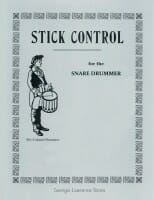
George Lawrence Stone’s Stick Control is the bible of drumming. In 1993, Modern Drummer magazine named the book one of the top 25 books of all-time. In the words of the author, it is the ideal book for improving: control, speed, flexibility, touch, rhythm, lightness, delicacy, power, endurance, preciseness of execution and muscular coordination, with extra attention given to the development of the weak hand.
RCM Technical Requirements for Piano
The Visual Drumset Method