
Guitarist Gergely Szabo has an Advanced Diploma in Music Performance from Cambrian College where he majored in the classical guitar. Over his time there, he completed 2 years of comprehensive pedagogy courses. He also gained well grounded vocal skills, as well as basic knowledge on the piano. Outside of classical music, he exhibits a repertoire of skills and knowledge in playing the genres of rock, blues, and heavy metal music. He has experience in teaching the guitar and the ukulele to a range of people aged 6 to 54.
Gergely’s teaching methods include both the use of books and digital methods. The three main books he uses to teach guitar are as follows: “Guitar Method Book 1 by Will Schmid and Greg Koch,” “Four Star Sight Reading and Ear Tests RCM Level 1,” and “Classical Guitar Repertoire and Etudes RCM Level 1.” For teaching ukulele, he uses the book “Ukulele Songs for 1, 2, or 3 players by Elizabeth Ragsdale.” Aside from these, he frequently uses the Muse Score application as a play-along practicing tool.
Gergely’s passion for music and his dedication to growing the love of music in others are the biggest reasons why he teaches guitar and ukulele. His approach to teaching involves learning through play. The material he covers with his students is always delivered in a way that is highly interactive. Most of the assigned exercises he gives involve the elements of play that students can enjoy both in class and as homework.
Get to know Gergely…Beyond the Bio!
Coming soon!
Hobbies:
Musical influences:
Favourite food:
Least favourite food:
Favourite music:
Favourite album:
Favourite movie:
Favourite musical theatre/opera:
Best quote from your teacher:
Favourite quote:
Favourite book:
Latest Homework from Gergely
Is Gergely Your Teacher?
Sign up now to get your weekly assignments delivered, and never lose your homework sheet again!
Assignments for the week of January 15th, 2025
Hakim
Technical Exercises – Continue practicing D Major scale
- 1 octave hands together, especially focusing on stepping down in the scale
- Practice as solid blocked hand positions, and stepping legato, staccato, and detached
Bartok Exercises – Working through #7 and 8
- Make sure you are confident of starting notes/hand positions
- Watch out for changing hand positions and new key signature in #8
The Calico Cat – Practicing hands separately to the end
- aiming to have measures 1-9 somewhat comfortable hands together already
- make note of the pattern in our hand position changes, our RH is focusing on an A minor hand position throughout the entire piece!
- Counting through dotted quarter rhythms in measures 9-14
Bizville – Continue practicing our LH “groove” in the first phrase, watching out for large leaps between B flat and F!
- Practicing our rh on its own, making sure you can confidently clap and count our RH rhythm in the first two measures
- Try fitting our first two measures hands together – watch out for when our hands line up when we count through
Clara
Technical Exercises – Continue practicing our C Major 1 octave scale
- Hands separately and together
- Practicing with legato, staccato, and detached articulations
- See how quickly you are able to comfortably play through this scale hands separately, and hands together. Check with a metronome to see what your top speed is!
Lesson Book
- Allegro in C Major
-
-
- Continue slow hands separate practice all the way through, watching for patterns and things that repeat
- Once you are fully comfortable hands separate, break our music into smaller chunks (2-4 measures) and practice slowly hands together
-
- The Juggler
-
- Practice playing all the way through hands separately
- Counting out loud to keep track of all of our rests! This will make fitting hands together even easier for us
- If we are feeling comfortable hands separately while counting out loud, practice hands together while counting out loud very slowly
Lesson Notes, January 16th 2025
Hello!
Lesson notes are as follows:
Eva
Great job with the King and Queen’s Cat this week! Nice work on counting and dynamic contrast.
Recommended minutes to practice:
- 10-15 minutes, 4 to 5 days a week
What to practice:
- Matching notes on the staff with notes on the keyboard, see image attached
- Tub Time!: this piece will focus on middle C, D, and the lowest F on the piano. Aim to see how comfortably you can jump from the middle C all the way to low F
- Gliding Goldfish: This piece tells the story of a goldfish swimming around! Read the words for the piece and see if you can perform the story on the keyboard. You are also welcome to use the pedal during this piece
- *(Pumpkin Party is a bonus piece if there’s time/interest to look through); the highlight of this piece is playing C+E in different areas of the piano.
How to practice efficiently:
- Remember your anchor points on the keyboard (C, F, and D in the “dog house”)
- Approach the piece in different ways: sing the words, clap the rhythms, name the note names.
How can caregivers support practice:
- Note recognition on keyboard: practice finding notes together on the keyboard, goal is to be able to recall them quickly but it will take time and practice to get locked in.
- Double check fingerings in pieces, make sure that we’re taking the time before we start to see which fingers are playing which notes.
- Hands/Wrists: reminder of how to position hands while playing (gently curved fingers, wrist is not collapsed), remember not to pop the “paint balloons”
Have a great week! Happy practicing
Preferred Books for Gergely’s Students
Click to buy them here, and they’ll come right to your house! What could be easier?
Hal Leonard Guitar Method
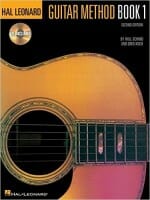
The second edition of this world-famous method by Will Schmid and Greg Koch is preferred by teachers because it makes them more effective while making their job easier. Students enjoy its easy-to-follow format that gives them a solid music education while letting them play songs right away. Book 1 provides beginning instruction including tuning, 1st position melody playing, C, G, G7, D7, and Em chords, rhythms through eighth notes, solos and ensembles and strumming.
Four Star Sight Reading and Ear Tests