M.Mus (U of T)
B.Mus (Oberlin)
Guitarist Gergely Szabo has an Advanced Diploma in Music Performance from Cambrian College where he majored in the classical guitar. Over his time there, he completed 2 years of comprehensive pedagogy courses. He also gained well grounded vocal skills, as well as basic knowledge on the piano. Outside of classical music, he exhibits a repertoire of skills and knowledge in playing the genres of rock, blues, and heavy metal music. He has experience in teaching the guitar and the ukulele to a range of people aged 6 to 54.
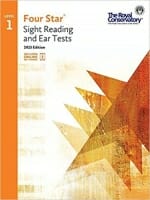
Gergely’s teaching methods include both the use of books and digital methods. The three main books he uses to teach guitar are as follows: “Guitar Method Book 1 by Will Schmid and Greg Koch,” “Four Star Sight Reading and Ear Tests RCM Level 1,” and “Classical Guitar Repertoire and Etudes RCM Level 1.” For teaching ukulele, he uses the book “Ukulele Songs for 1, 2, or 3 players by Elizabeth Ragsdale.” Aside from these, he frequently uses the Muse Score application as a play-along practicing tool.
Gergely’s passion for music and his dedication to growing the love of music in others are the biggest reasons why he teaches guitar and ukulele. His approach to teaching involves learning through play. The material he covers with his students is always delivered in a way that is highly interactive. Most of the assigned exercises he gives involve the elements of play that students can enjoy both in class and as homework.
Get to know Gergely…Beyond the Bio!
Coming soon!
Hobbies:
Musical influences:
Favourite food:
Least favourite food:
Favourite music:
Favourite album:
Favourite movie:
Favourite musical theatre/opera:
Best quote from your teacher:
Favourite quote:
Favourite book:
Latest Homework from Gergely
Is Gergely Your Teacher?
Sign up now to get your weekly assignments delivered, and never lose your homework sheet again!
Homework for Jan 21-28
Henry
Great job today Henry! Here is your homework for this week:
How long to practice: 5-10 min a day
What to practice:
Theory workbook pgs. 32, 33, and 36
Stepping up Stepping Down- Review in all keys
Heart and Soul- Review
How to practice:
Theory- remember the placements of notes, e.g. C has its own line in the middle, D and B are in the “big space” above and below the top and bottom lines of treble and bass clef, E is the bottom first line of treble, G is the second, F is in the space between, etc. Check the little piano at the top of the page for reference.
Heart and Soul- Continue with the “swing” rhythm
Stepping up- Review and be mindful of steps, skips, and repeats in each key
How parents can support practice:
Playing- Continue to listen and provide guidance if he needs
Theory- Do not let him simply copy from the book; get him to try to figure out the exercises on his own first and only refer to the book as a “last resort” and to check accuracy at the end
See you next week! :)
Saturday, January 18th
Great to see you again everyone! I’m back from England and had a great time subbing for the Royal Shakespeare Company’s production of Midsummer Night’s Dream at the Barbican. Click here to see some onstage concert footage! You’ll see me and Harriet Riley, the two percussionists on the show, following along with the actors on stage, and playing all kinds of instruments. I’m on bass drum, Roland SPD, vibraphone, and vibratone, while Harriet plays timpani, xylosynth, and trine.
Here’s this week’s notes:
Jack
Benny Greb Rhythmic Alphabet
–Practice four letter words (See the handout from today for two examples), try to come up with some of your own! 1) spell the word and write it out with enough space for the dots and dashes 2) add in the dots and dashes 3) play from your newly assembled word cheat sheet!
–Play the resulting words along with “In Too Deep”
Tragically Hip: 50 Mission Cap
–Learning the beat (Bass-Snare-Bass-Snare) and playing along with the song while I play piano
Xylophone
–Learning the musical alphabet (ABCDEFG)
–Visually identifying C on the keyboard
–Spelling “Dad” and “Egg” on the keyboard
Nova
Benny Greb’s Rhythmic Alphabet (in google drive):
–CODE and MOON
–Keep experimenting with two-letter words
Tommy Igoe’s Groove Essentials: Groove 1 SLOW
–Playing eight-bar phrases, add in fills in the eighth measure. For some inspiration, review Drumset Musician p27 (in google drive) to see examples of four-beat fills
–Do the same with the Variation A groove
Groove 1 FAST
–working up to speed on this one
Aleksander
Warmups (30 sec each) goal tempo 80bpm playing four notes per beat****:
–Single strokes (R L R L…)
–Double Strokes (R R L L….)
–Paradiddles (RLRR LRLL…)
–RLLR LRRL
–FLAMS*** pay close attention to the stroke setup: one hand high, one low. After the stroke, set up the opposite way
Drumset Musician p39, introducing sixteenth-notes
–Learn the different rhythms on this page (especially the three examples at the top of the page). Once you have the first three, can you think of how to play the others?
Drumset Musician p14 ex. 7-8 (2min ea.)
Lenny Kravitz: Are You Gonna Go My Way
–everything up until the chorus
–drill speaking that syncopated fill from before the chorus with only your voice and clicking the beat with your sticks, then apply that to the drums
Tracie
Warm-ups:
–Triplet ex. (85bpm)
–Rhythmic Alphabet
Groove Essentials: Groove 1 (find chart and backing track in the Freq. Used folder)
–Basic beat with “Chad Kroeger” drum fill in measure 8
Montell Fish: Don’t you Love Me
–drill the main groove for this song. You were getting it today! But let’s make sure it’s second-nature by next time
Jonah
Xylophone Warmup exercise (Eb maj) see video in google drive:
1) Scale, one octave, ascending and descending
2) arpeggio
3) Scale in broken thirds, one octave, ascending and descending
Reading exercises: please make sure to READ when we’re working on reading
Ear training:
–Identifying 3rds and 5ths
–Playing simple melodies back by ear
Jared
Warmups:
–Stick Control ex 14-23 (70bpm)
—-Play each exercise 4 times
Igoe’s Groove Essentials – Groove 1 slow (track 1)
–Alternate between the two groove variations, with fills (max. 4 beats long) to set them up
Cold Sweat by James Brown
–Learn the first two measures as the standard beat for this song
Mario
Warmups (1min/ea)
–8 on a hand
–Single Stroke Roll (R L R L…)
–Double Stroke Roll (R R L L…)
–Imagine the playing surface is a hot burner on the stove…get the stick down and up fast or you might get burned! Really quick contact–jump off the drum (piston/full strokes)
MGMT: Kid
–Building consistency will be key for this song. Play with your metronome (goal tempo ca. 126) to help develop this
Drumset Musician p27 (in google drive) – 8th-note Fills, ex. 4-6
–This week, focus on keeping the 8th-note
Mateo
Warmups (30 sec each):
–8 on a Hand
–Single Stroke Roll (RLRL…)
–Double Stroke Roll (RRLL…)
**Think more skin on the stick (but not squeezing)
**Let the stick bounce off the drum
**Remember to dribble the basketball
Drumset Musician p27, ex. 1-3 (in Freq. Used Res. google drive folder)
–Three times through the beat, play the fill, then end with a crash
–Aim to keep the flow of the eighth-note pulse STEADY
–try looping these exercises, so that the crash after the fill becomes beat 1 of the beat again
Tommy Igoe’s Groove Essentials, Groove 1 SLOW
–Find the chart and backing track for this in the Freq. Used Resources folder
–Practice playing the basic beat along with the song. Make sure to listen carefully to stay on pace
Queen: Another One Bites the Dust
–I’m unable to scan the chart for this today, but I will try to remember to do so when I’m back in on Tuesday or else next week!
–This week, we’re just working on the material from p. 1 (basic beat, bass drum on all four beats, and the “e+a4e” drum fill
Preferred Books for Gergely’s Students
Click to buy them here, and they’ll come right to your house! What could be easier?
Hal Leonard Guitar Method
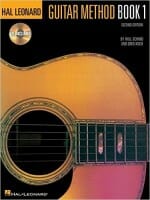
The second edition of this world-famous method by Will Schmid and Greg Koch is preferred by teachers because it makes them more effective while making their job easier. Students enjoy its easy-to-follow format that gives them a solid music education while letting them play songs right away. Book 1 provides beginning instruction including tuning, 1st position melody playing, C, G, G7, D7, and Em chords, rhythms through eighth notes, solos and ensembles and strumming.
Four Star Sight Reading and Ear Tests