M.Mus (U of T)
B.Mus (Oberlin)
Guitarist Gergely Szabo has an Advanced Diploma in Music Performance from Cambrian College where he majored in the classical guitar. Over his time there, he completed 2 years of comprehensive pedagogy courses. He also gained well grounded vocal skills, as well as basic knowledge on the piano. Outside of classical music, he exhibits a repertoire of skills and knowledge in playing the genres of rock, blues, and heavy metal music. He has experience in teaching the guitar and the ukulele to a range of people aged 6 to 54.
Gergely’s teaching methods include both the use of books and digital methods. The three main books he uses to teach guitar are as follows: “Guitar Method Book 1 by Will Schmid and Greg Koch,” “Four Star Sight Reading and Ear Tests RCM Level 1,” and “Classical Guitar Repertoire and Etudes RCM Level 1.” For teaching ukulele, he uses the book “Ukulele Songs for 1, 2, or 3 players by Elizabeth Ragsdale.” Aside from these, he frequently uses the Muse Score application as a play-along practicing tool.
Gergely’s passion for music and his dedication to growing the love of music in others are the biggest reasons why he teaches guitar and ukulele. His approach to teaching involves learning through play. The material he covers with his students is always delivered in a way that is highly interactive. Most of the assigned exercises he gives involve the elements of play that students can enjoy both in class and as homework.
Get to know Gergely…Beyond the Bio!
Coming soon!
Hobbies:
Musical influences:
Favourite food:
Least favourite food:
Favourite music:
Favourite album:
Favourite movie:
Favourite musical theatre/opera:
Best quote from your teacher:
Favourite quote:
Favourite book:
Latest Homework from Gergely
Is Gergely Your Teacher?
Sign up now to get your weekly assignments delivered, and never lose your homework sheet again!
Lesson Notes, January 23 2025
Hello all,
Your lesson notes are as follows:
Eva
Recommended minutes to practice:
- 10-15 minutes, 4 to 5 days a week
What to practice:
- Tub Time: finish this piece off! After reviewing notes, finger numbers, and counting, try performing the piece (playing start to finish with dynamics)
- Gliding Goldfish: Read the words for the piece and see if you can perform the story on the keyboard. Think of making your sound smooth and gliding like a fish
*(Pumpkin Party is a bonus piece if there’s time/interest to look through); the highlight of this piece is playing C+E in different areas of the piano.
How to practice efficiently:
- Remember your anchor points on the keyboard (C, F, and D in the “dog house”)
- Approach the piece in different ways: sing the words, clap the rhythms, name the note names.
How can caregivers support practice:
- Note recognition on keyboard: practice finding notes together on the keyboard, goal is to be able to recall them quickly but it will take time and practice to get locked in.
- Double check fingerings in pieces, make sure that we’re taking the time before we start to see which fingers are playing which notes.
- Hands/Wrists: reminder of how to position hands while playing (gently curved fingers, wrist is not collapsed), remember not to pop the “paint balloons”
Chris
Topics we discussed during lesson (diagrams/images are attached):
- Note+Rest values, how eighth and sixteenth notes fit into a quarter
- Marching the quarter note beat and clapping the rhythms (while counting out loud)
Recommended time to practice:
- 20-30 minutes 4 or 5 days of the week
What to practice:
- Bartok sight reading, exercises 9-12
- Note the title of the exercises, especially 11-12
- If you have the resources, cover your hands while you play through the exercise (typewriter technique!)
- 5 note scales and chords (out lining the fifth [1 and 5], playing the third [note under finger 3, and then the full triad [notes under finger 1, 3, 5]); C position and G position
- As mentioned during the lesson: you can also try playing the 5-note cluster using fingers 1-5. This can help engage/bring attention to the larger muscle groups in our back
- Midnight Ride (p.29): Elements to focus on in this piece will be your accents, legato phrasing (notes flowing into each other without “smearing”), and dynamic contrasts
- Bus Stop Boogie (p.30): This piece is our first piece to have skips in addition to steps! Keep a close eye to what’s written on the page for note accuracy
How to practice efficiently:
- Marching/stepping to a quarter note beat and either clapping or speaking the rhythm. Understanding the rhythm on its own will set you up for playing it on the keys
- 5 note scales
- Practicing one hand at a time
- In either a C or G position, try playing the scale in contrary motion (beginning the scale with finger one and working outwards and back in).
Happy practicing! Have a great week
Tuesday, January 21st
Lila – Great first lesson today! Congratulations.
Warmups:
–8 on a Hand
–Single strokes
–Double strokes
–Paradiddles
Technique: the grip and playing position (V-shape, dribbling the basket ball, backs of hands facing up)
Basic Beat Level 1
Step 1) Count “1 2 3 4”
Step 2) Play the Hihat with your Right Hand (RH) on all the counts
Step 3) Add in the Bass Drum with your Right Foot (RF) on “1” and “3”
Step 4) Add in the Snare Drum with your Left Hand (LH) on “2” and “4”
Required Materials:
–Sticks
–Metronome
–Notebook, binder, etc for handouts and notes (please bring to lessons)
Recommended Materials:
–Hearing protection
–Practice
–Method Books
Visual Drumset Method p.14: exercises 1 and 2
–You can find this in the google drive>Frequently Used Resources (please bookmark for future use)
Myles
Drumset Musician p81 ex. 9-12
–Polish these off this week
Weezer: My Name is Jonas
–Drill the intro and main groove on p.1
–See worksheet for additional exercises on Bass drum variation
–For next time, we’ll learn the other two prominent fills in this song
==Xylophone==
Warmups (***G Major):
–Scale, one octave, ascending and descending, saying the note names as you play them (G-A-B-C-D-E-F#-G’)
–Arpeggio (G-B-D-G’-D-B-G)
–Broken thirds (G-B A-C B-D…)
Cirone Book: “Step Six” ex. 5-8
–Flashcards for note identification
–Next time we’ll do eartraining
Finn
Warmups (30sec each, counting aloud):
–Single Strokes
–Double Strokes
–8 on a hand
Joan Jett: I Love Rock and Roll
–begins with “watermelon watermelon” on the snare
–Play the main beat (1+2 3+4)
Fruit Salad game
–Four fruits: pear, apple, blueberry, watermelon
–Each fruit has a rhythm. Experiment mixing up to four fruits together to create your own rhythms!
Visual Drummer: Drum Beats ex. 7-9
–Try to play these without any extra bass drum notes!
[Like a stone or one headlight]
Francisco
Warmups:
–Stick Control first page ex. 14-18 (4x each, **120bpm goal tempo)
Tommy Igoe Groove Essentials book: Groove 1 Slow (in google drive)
–Drill the three groove variations
–practice playing along with the track, 8mm of variation A and 8mm of variation B
–As a bonus, add in drum fills (to taste) to signify each transition
–As a further bonus, go ahead and look at the next section (Groove 1 Fast)
–Please speak to your father about buying this book – it is something that we can use a lot in your lessons and for years to come.
Noah
Warmups (1min each per practice session):
–Paradiddle combo exercise with bass drum on quarter notes
Paul Simon: Late in the Evening
–You’ll find the chart for this song in your google drive folder
–Good work with this one. The biggest challenge right now is making sure you stay in time with the song. Try playing the feet only for a long time with the recording until you lock in, and then add the hands.
–This week, begin trying to figure out the drum fills found throughout the song
Jonah
Warmups:
–Paradiddle combo exercise with bass drum playing quarters. Accent the beginning of each paradiddle
NEW SONG Paul Simon: Late in the Evening
–You can find the chart for this song in your google drive personal folder
–This week we learned the main beat. Continue getting it clean and up to speed
Xylophone Warmup exercise (Eb maj) see video in google drive:
1) Scale, one octave, ascending and descending
2) arpeggio
3) Scale in broken thirds, one octave, ascending and descending
Reading exercises: please make sure to READ when we’re working on reading
Ear training:
–Identifying 3rds and 5ths
–Playing simple melodies back by ear
Preferred Books for Gergely’s Students
Click to buy them here, and they’ll come right to your house! What could be easier?
Hal Leonard Guitar Method
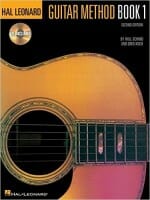
The second edition of this world-famous method by Will Schmid and Greg Koch is preferred by teachers because it makes them more effective while making their job easier. Students enjoy its easy-to-follow format that gives them a solid music education while letting them play songs right away. Book 1 provides beginning instruction including tuning, 1st position melody playing, C, G, G7, D7, and Em chords, rhythms through eighth notes, solos and ensembles and strumming.
Four Star Sight Reading and Ear Tests