M.Mus (U of T)
B.Mus (Oberlin)
Guitarist Gergely Szabo has an Advanced Diploma in Music Performance from Cambrian College where he majored in the classical guitar. Over his time there, he completed 2 years of comprehensive pedagogy courses. He also gained well grounded vocal skills, as well as basic knowledge on the piano. Outside of classical music, he exhibits a repertoire of skills and knowledge in playing the genres of rock, blues, and heavy metal music. He has experience in teaching the guitar and the ukulele to a range of people aged 6 to 54.
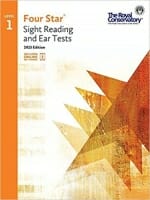
Gergely’s teaching methods include both the use of books and digital methods. The three main books he uses to teach guitar are as follows: “Guitar Method Book 1 by Will Schmid and Greg Koch,” “Four Star Sight Reading and Ear Tests RCM Level 1,” and “Classical Guitar Repertoire and Etudes RCM Level 1.” For teaching ukulele, he uses the book “Ukulele Songs for 1, 2, or 3 players by Elizabeth Ragsdale.” Aside from these, he frequently uses the Muse Score application as a play-along practicing tool.
Gergely’s passion for music and his dedication to growing the love of music in others are the biggest reasons why he teaches guitar and ukulele. His approach to teaching involves learning through play. The material he covers with his students is always delivered in a way that is highly interactive. Most of the assigned exercises he gives involve the elements of play that students can enjoy both in class and as homework.
Get to know Gergely…Beyond the Bio!
Coming soon!
Hobbies:
Musical influences:
Favourite food:
Least favourite food:
Favourite music:
Favourite album:
Favourite movie:
Favourite musical theatre/opera:
Best quote from your teacher:
Favourite quote:
Favourite book:
Latest Homework from Gergely
Is Gergely Your Teacher?
Sign up now to get your weekly assignments delivered, and never lose your homework sheet again!
Saturday, September 28th
Jack
Puss in Boots drills (30sec each):
1) Playing the beat with your LH
2) playing along with the sticking L-R-L-rest, repeatedly
3) playing along alternating between “L-R-L” and “R-L-R”
Jack has really been enjoying watching the Montreal drummer Max Sansalone on Youtube (Channel: dimsunk)! He might like to watch more of his videos at home.
Playing cowbell on different counts: all the beats, all the ands, improvising
Next week, let’s revisit the Benny Greb rhythmic alphabet
Nova
Warmups:
–Stick Control first 13 exercises
Remi Wolf: Photo ID
–Intro fill (3e a4e+ )
–Main beat: Like basic beat level two, with some Bass drum variation (handout)
–Verse: drums drop out, bass drum pattern
–Using what you know already (above) try getting through the entire song. Does everything match up with what you already know? If not, identify where it changes.
Xylophone:
–C Major Scale and Arpeggio (C-E-G-c-G-E-C)
–Piano Adventures p 46-47 (counting in 3)
Cirone Book: “Step 6” (pdf in Nova’s personal gdrive folder)
–Review note reading using the Step 6 melodic exercises
–If you need help or a reminder about which notes are which, look back at lesson 5 (Amw PDF)
–Be careful to follow the correct stickings and rhythms!
==PLEASE BOOKMARK:==
==Nova’s google drive folder==
==The “Frequently Used Resources” folder==
Aleksander
Warmups (30 sec each):
–Single strokes (R L R L…)
–Double Strokes (R R L L….)
–Paradiddles (RLRR LRLL…)
–Basic Beat level 2–Good!
–Thinking about POSTURE: relaxed, neutral, not raising right elbow or rounding right shoulder
First song!!! ACDC: Back in Black
–Main beat is BB lvl 2
–Drum fill in unison with the guitar
–Play everything along with the recording (on youtube or elsewhere) up to 1:00
–For now, continue working on this relying on rote memorization. Next week we’ll begin looking more at notation, and I’ll give you the sheet music for this song
Koel
Warmups (1min each):
–Triplet Ex. 125bpm**
–Ride pattern exercise with sixteenth exercise on the cymbal (goal tempo 90)
Van Halen: Jump (scan of chart in your personal folder)
–Drill counting out the into to make sure your opening fills land at the right time
–Working on Pre-Chorus: you learn the next two measures (up to the first beat of measure two on line 4 of page 2) (a.k.a. the first 6 measures of the Pre-Chorus section)
–Go slow, sound it out, stitch the quilt together
Jared
20240928
Warmups:
–Stick Control ex 1-13 goal tempo: 70bpm
—-Play each exercise 4 times, one measure rest before moving on
Bruno Mars: Uptown Funk (chart in your personal folder–please print)f
–Entire song
–Interlude section: make sure the transition between “don’t believe me” and the flams is smooth
–Outro Section: make a big contrast between accented and non-accented snare drum notes: the “ghost notes” should be super quiet, accented backbeats should be very loud
==PLEASE BOOKMARK:==
==Your personal folder==
==The “Frequently Used Resources” folder==
Homework For September 24-October 1
Hi Henry and Noreet! Great lessons this week! Here is what I want you to work on for next week’s lesson. Please set aside practice time each day so that we can progress week to week. I am so excited to see you in October! :)
Henry
Recommended minutes to practice:
5 minutes a day
What to practice:
Itsy Bitsy Spider 1st line or more
How to practice it most effectively:
Keep fingers on the correct keys the whole time (i.e.; right hand and left hand 1 on middle C, RH 2 on D, 3 on E, 4 on F, 5 on G, LH 2 on B, 3 on A, 4 on G, 5 on F)
How parents can support practice:
When he is practicing, make sure that he is sticking to the correct fingering corresponding to the keys.
**Piano Theory Workbook:
Mark white keys under black keys on pages 6 and 7.
Noreet
Recommended minutes to practice:
Piano: 10 minutes a day; Singing: 5-10 minutes a day
What to practice:
Piano:
- C major scale, 2 octaves, hands separate
- Adventure Warmup in C with correct fingering
- Start Adventure Warmup in G
Singing:
- Practice yawning and feel when soft palette lifts
- Practice Pinacolada
How to practice it most effectively:
- Scales: Be aware of when you are changing fingering, make sure you make the switches at the right keys: RH 12312341231234543213214321321; LH 54321321432132123123412312345
- Adventure warmup: Follow the fingering in music and keep fingers on the correct keys
- Pinacolada: Practice with lifted soft palette
How parents can support practice:
When she is practicing, make sure she is sticking to the correct fingering written in the music and in the scale fingering that I wrote out.
Preferred Books for Gergely’s Students
Click to buy them here, and they’ll come right to your house! What could be easier?
Hal Leonard Guitar Method
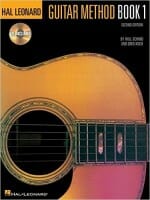
The second edition of this world-famous method by Will Schmid and Greg Koch is preferred by teachers because it makes them more effective while making their job easier. Students enjoy its easy-to-follow format that gives them a solid music education while letting them play songs right away. Book 1 provides beginning instruction including tuning, 1st position melody playing, C, G, G7, D7, and Em chords, rhythms through eighth notes, solos and ensembles and strumming.
Four Star Sight Reading and Ear Tests