M.Mus (U of T)
B.Mus (Oberlin)
Guitarist Gergely Szabo has an Advanced Diploma in Music Performance from Cambrian College where he majored in the classical guitar. Over his time there, he completed 2 years of comprehensive pedagogy courses. He also gained well grounded vocal skills, as well as basic knowledge on the piano. Outside of classical music, he exhibits a repertoire of skills and knowledge in playing the genres of rock, blues, and heavy metal music. He has experience in teaching the guitar and the ukulele to a range of people aged 6 to 54.
Gergely’s teaching methods include both the use of books and digital methods. The three main books he uses to teach guitar are as follows: “Guitar Method Book 1 by Will Schmid and Greg Koch,” “Four Star Sight Reading and Ear Tests RCM Level 1,” and “Classical Guitar Repertoire and Etudes RCM Level 1.” For teaching ukulele, he uses the book “Ukulele Songs for 1, 2, or 3 players by Elizabeth Ragsdale.” Aside from these, he frequently uses the Muse Score application as a play-along practicing tool.
Gergely’s passion for music and his dedication to growing the love of music in others are the biggest reasons why he teaches guitar and ukulele. His approach to teaching involves learning through play. The material he covers with his students is always delivered in a way that is highly interactive. Most of the assigned exercises he gives involve the elements of play that students can enjoy both in class and as homework.
Get to know Gergely…Beyond the Bio!
Coming soon!
Hobbies:
Musical influences:
Favourite food:
Least favourite food:
Favourite music:
Favourite album:
Favourite movie:
Favourite musical theatre/opera:
Best quote from your teacher:
Favourite quote:
Favourite book:
Latest Homework from Gergely
Is Gergely Your Teacher?
Sign up now to get your weekly assignments delivered, and never lose your homework sheet again!
Playing a musical instrument has a positive effect on teenagers
Let’s discover together the positive effect of music on teenagers, physically, psychologically, and emotionally. Whether you are a teenager or your kids are in their teens, this information is right for you!
Teenagers often experience a whirlwind of emotions and face various challenges as they navigate the transitional phase between childhood and adulthood. During this time, it’s crucial to find healthy outlets for self-expression and emotional regulation. One such avenue that can have a profoundly positive impact on teenagers’ dispositions is playing music. In this blog post, we will explore how drum lessons for teenagers, guitar, piano, violin or music lessons in general can contribute to the emotional well-being and overall development of adolescents.
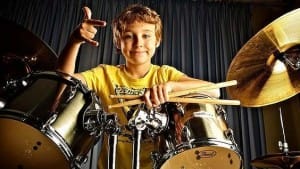
Drums are often associated with rhythm, energy, and catharsis.
Picture from Pinterest.
Drum lessons for Teenagers: rhythmic release
Drums are often associated with rhythm, energy, and catharsis. For teenagers, who may grapple with stress, frustration, or anxiety, drum lessons can be a fantastic way to release pent-up emotions. The physical act of hitting drums, cymbals, and other percussion instruments can provide a healthy channel for teens to let out their feelings. Music classes deffinitely has a positive effects on teenagers general health.
When teenagers immerse themselves in drumming, they experience several emotional benefits:
- Stress Reduction: Drumming has been shown to reduce stress levels and increase relaxation. The rhythmic patterns in drumming can help synchronize brain waves, promoting a state of calm.
- Improved Mood: The act of drumming releases endorphins, which are natural mood boosters. It can help teenagers combat feelings of sadness or frustration.
- Enhanced Self-Esteem: Learning a musical skill like drumming and seeing improvement over time can boost self-esteem and confidence in teenagers.
Guitar lessons: expressing emotions through melody
The guitar is a versatile instrument that allows teenagers to express their emotions through melody and harmony. Learning to play the guitar not only develops musical skills but also encourages self-expression.
Here are some ways in which guitar lessons can positively affect teenagers’ dispositions:

Playing the guitar can serve as a creative outlet for teenagers. Picture from Pinterest.
- Emotional Outlet: Playing the guitar can serve as a creative outlet for teenagers to channel their emotions, whether it’s writing songs about their experiences or simply strumming away to release tension.
- Stress Relief: Playing the guitar requires focus, which can take teenagers’ minds off their worries and anxieties. It’s a form of mindfulness that can promote relaxation.
- Social Connection: Joining a band or playing with friends can foster social connections and a sense of belonging, which are crucial for teenagers’ emotional well-being.
Let your teenager spirit get the most of music lesson at ABC academy of music visit us at https://www.music-lessons.ca/toronto/instruments/
Piano lessons: cognitive and emotional development

Besides the fun when learning to play the piano it also involves: hand-eye coordination and memorization.
Picture from Pinterest.
Piano lessons offer a unique combination of cognitive and emotional development for teenagers. Learning to play the piano involves reading sheet music, hand-eye coordination, and memorization – all of which stimulate the brain. Moreover, the piano’s versatility allows teenagers to explore a wide range of musical genres, from classical to contemporary.
Here are some ways in which piano lessons contribute to positive emotional development:
- Emotional Expression: The piano’s wide range of tones and dynamics enables teenagers to convey a wide spectrum of emotions through their music, promoting emotional intelligence.
- Improved Concentration: Learning to play the piano demands focused attention, helping teenagers develop better concentration skills that can be applied to other aspects of life.
- Sense of Achievement: As teenagers progress in their piano studies and master challenging pieces, they experience a sense of accomplishment that can boost their self-esteem and overall disposition.
In conclusion, playing music has a profound and meaningful impact on the emotional well-being of adolescents. These musical pursuits offer various benefits, from stress reduction and emotional expression to cognitive development and enhanced self-esteem.
ABC academy of music encourages teenagers to explore music as a hobby or a serious pursuit, it can be a valuable investment in adolescents’ emotional health and overall development during these formative years. Discover more about music lessons at ABC on https://www.music-lessons.ca/
“P-S Section”:
Did you find this interesting? Check out our post:
“Music reduce stress and tension”
Additional Reading for Your Interest:
Thursday May 9th Lessons – Erin P
See you THIS Sunday at 12:30 or 1:30, if you’re signed up :)
Liam
Sonatina in G major – Sounding great! 3rd line is what we want to give the most focus this week, getting those little sequences down. As they go higher and higher, we can get louder and louder, and then quiet back down to re-enter the A section beautifully.
Walk the Talk – Great. Fix the 3 quarter notes I put in square boxes. They should be at the exact same time as your steady LH quarter notes, right on beat 4.
Minuet in G – I’ll ask my mentor if we can do *some* of the ornaments. Eliminate the “coffee break” in the second half between the repeated A’s
Witches and Wizards – Beauty! The middle is sounding super even, likely because you’ve focused a lot on it. Now let’s make sure the beginning is also even and not collapsing into some rushed moments. The G minor/Eb major ascending triad part you should practice “beat to beat”, meaning play a full group of triplets and then stop right on the first note of the next collection, it should be very precise and metric.
Prelude VII – BIG improvement!! Keep doing what you’re doing, you fixed all the rhythmic issues. Remember this is like a soundtrack song, so tell a beautiful story through your performance.
Technique – B minor harmonic scale – RH fingering is normal 123 12345. Resist the urge to put thumb under on D!!!!
Katarina
Wunderkeys “Hide and Seek” unit – all 4 pieces. Today in lesson we read the 1st one. We identified that they are ALL in C position with both hands. The 3rd one is in 3/4 time (count 1-2-3) and all the rest are in 4/4 (count 1-2-3-4).
When practicing, you don’t have to play from beginning to end, you should repeat 1 line of a piece until you can play it correctly 5 times in a row, and then do that to another line of music.
Pick 1 of these pieces each day to repeat until you can play it 1. STEADY 2. CORRECT NOTES 3. CORRECT DYNAMICS (piano = quiet, forte = loud).
I will ask to hear all 4 next week :)
Warmup with your C and G major scales, both hands seperately. Then do your C major triads, both hands seperately.
Parental support: Sit in on the first lesson session of the week to ensure she knows what pieces to practice and is counting steady. “Hollow” notes (half notes) are worth 2 beats, and she tends to short change them.
Marita
Sunset in San Pedro – up until the star *. Watch your Bbs! The LH rhythm is very repetitive but sooooo important to creating the Latin groove. The RH uses an A minor triad to start, but then all the other triads are major (Ab, G, Gb, F). Count slow and steady for HT.
Before playing, play A minor, Ab major, G major, Gb major, F major root position triads solid descending with the RH to get used to them.
Parental support: Ask that she has the Sunset in San Pedro paper before beginning her first practice session this week.
Sara
Air in Bb – Bigger forte! Use your crescendos to “go TO” a target note that is the peak, always know what your peak is.
Sonatina in C – Bigger forte on the opening repeat. Stay bigger after the F in the final line, we don’t want to drop off and have the climax be unsatisfying.
Nighttime – Really nice. I like the crispness of your staccatos. Bigger dynamic range yet again.
Cloud Dance – Next week.
Ballade – Next week.
https://www.rhythmrandomizer.com?s=34020608403010205060d0e10
Marco
Minuet – Before playing, hear the 8th notes inside your head. This is so lovely and steady, just you need to “know” what the 8th notes will sound like before you get to them. 6th measure of the A section you hesitate before playing F in the RH, work to eliminate this coffee break. Practice m6 vs. m14 and getting in and out of those both seamlessly to ease your confusion.
The Snake – Lovely dynamics!!! Steadiness and fluency dropped off a bit in the 2nd to last line, up until there was perfect. Give the ending some more love.
Song of the Dark Woods – Great dynamics! Do not bump the last LH note of each descending line, it should feel and sound just like the others, not be staccato just because it’s the “end” of the line. This piece is smooth and mysterious and beautiful, staccato or bumpy notes have no place here.
Morning Fanfare – When the hands begin to overlap, release your RH pinky on G a little sooner so you can easily replay the two G 8th notes without rushing to catch up with the LH. Great work!
Superman – SO PROUD! For the ending, use the C found within your R 6th, and you can use the C that’s already under your LH.
Technique – Minor scales need more love, though you know which is the relative major super easily which is AWESOME! Here are some resources.
Daniel
Periwinkle – Very nice! Bigger forte where written. I know you can play loud ;)
Breezy – Great 2 note slurs. Nice progress on the overlapping 8th note ending!
Entree – Loop beats 3 and 4 of the 2nd to last bar of each section, where the mordent (trill) is. The issue is not the trill, but getting the LH octave on beat 4 *on time*. Listen to it here, you’ve got this!
The Wind – This piece is soooo fun to get to use the entire keyboard, whole dynamic range + time signature changes. It really paints a picture. Ensure your muscle memory learns the 1235 LH fingering that lets you play the triads legato. Listen to it here.
Technique – Great! Big improvement! Good careful fingering.
Greta
Minuet in F – Nice! Watch your B flats. Make sure the rhythms are even 1 + 2 3/run-ning walk walk. Give the RH some solo practice while keeping your eyes on the page.
Follow the Leader – Listen to it. Keep your eyes on the page to notice all the staccato quarter notes. Mostly, only 8th notes are smooth in this piece.
Red Satin Jazz – Really great! Again, watch the page for staccatos. For example the opening RH melody, bounce off the G, and then the next two notes are also staccato. Really nice staccato 6ths.
Detectives – Sounding good! Watch the key signature. No B and E naturals!! only flats! Continue getting used to it hands seperature. The scale at the end is Descending and is a C minor scale (Bb and Eb).
Technique – We didn’t do scales today, but this still rings true:
A minor natural and harmonic – relative major is C. Natural will be C scale notes, but starting on A. harmonic will be that PLUS a raised 7th note.
D minor natural and harmonic – relative major is F. Natural will be F scale notes (including Bb), but starting on D. harmonic will be that PLUS raised 7th.
E minor natural and harmonic – relative major is G. Natural will be G scale notes (including F#), but starting on E. harmonic will be that PLUS raised 7th.
Preferred Books for Gergely’s Students
Click to buy them here, and they’ll come right to your house! What could be easier?
Hal Leonard Guitar Method
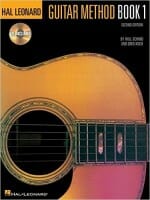
The second edition of this world-famous method by Will Schmid and Greg Koch is preferred by teachers because it makes them more effective while making their job easier. Students enjoy its easy-to-follow format that gives them a solid music education while letting them play songs right away. Book 1 provides beginning instruction including tuning, 1st position melody playing, C, G, G7, D7, and Em chords, rhythms through eighth notes, solos and ensembles and strumming.
Four Star Sight Reading and Ear Tests