Guitarist Gergely Szabo has an Advanced Diploma in Music Performance from Cambrian College where he majored in the classical guitar. Over his time there, he completed 2 years of comprehensive pedagogy courses. He also gained well grounded vocal skills, as well as basic knowledge on the piano. Outside of classical music, he exhibits a repertoire of skills and knowledge in playing the genres of rock, blues, and heavy metal music. He has experience in teaching the guitar and the ukulele to a range of people aged 6 to 54.
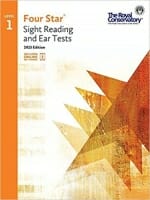
Gergely’s teaching methods include both the use of books and digital methods. The three main books he uses to teach guitar are as follows: “Guitar Method Book 1 by Will Schmid and Greg Koch,” “Four Star Sight Reading and Ear Tests RCM Level 1,” and “Classical Guitar Repertoire and Etudes RCM Level 1.” For teaching ukulele, he uses the book “Ukulele Songs for 1, 2, or 3 players by Elizabeth Ragsdale.” Aside from these, he frequently uses the Muse Score application as a play-along practicing tool.
Gergely’s passion for music and his dedication to growing the love of music in others are the biggest reasons why he teaches guitar and ukulele. His approach to teaching involves learning through play. The material he covers with his students is always delivered in a way that is highly interactive. Most of the assigned exercises he gives involve the elements of play that students can enjoy both in class and as homework.
Get to know Gergely…Beyond the Bio!
Coming soon!
Hobbies:
Musical influences:
Favourite food:
Least favourite food:
Favourite music:
Favourite album:
Favourite movie:
Favourite musical theatre/opera:
Best quote from your teacher:
Favourite quote:
Favourite book:
Latest Homework from Gergely
Is Gergely Your Teacher?
Sign up now to get your weekly assignments delivered, and never lose your homework sheet again!
7 Reasons why music lessons really pay back!
Are you wondering about affordable Music lessons in Toronto, GTA and if they really pay back?
Well, Music goes beyond a monetary investment!
Never the less, whether music lessons in Toronto are worth it and if they pay back in terms of benefits, largely depends on your personal goals and interests. Let’s explore together about the reasons why music lessons pay back, and also why it might be so rewarding.
Understanding that mastery requires consistent practice and dedication, is crucial for maximizing the benefits of music lessons. Besides assess the qualifications, and expertise of potential instructors. A skilled and experienced teacher can significantly impact the effectiveness of your learning journey.
Music Lessons and programs in Toronto that suit your needs, additionally contributes to preserving and appreciating the cultural heritage associated with music.
Here are some factors to consider about Music classes costs, whether in person or online:
The decision to invest in music lessons is a personalized endeavor (attempt) that hinges on careful consideration of individual preferences, goals, and resources. By thoughtfully weighing these factors, you can enhance the likelihood of a rewarding musical education experience.

The value you gain from Music lessons can extend far beyond financial returns. Picture from Pinterest
Skill Development
Engaging in music lessons can be a transformative journey, fostering the development of a valuable skill set. Whether you choose to master an instrument or refine your vocal abilities, the satisfaction derived from becoming proficient in music often becomes a reward in itself. The technical prowess (value) acquired through music lessons can extend beyond the realm of music, influencing various aspects of your life.
Personal Growth and Discipline
Learning music requires more than just talent; it demands patience, consistent practice, and dedication. These qualities contribute to musical proficiency, it could be transferred into improved focus, and work ethic in other areas of life. The discipline cultivated through music education becomes a transferable skill with long-lasting benefits.
Emotional Expression
Music serves as a powerful form of self-expression, allowing individuals to convey (transmit) emotions that might be challenging to articulate otherwise. Whether playing an instrument or composing, the process of creating music becomes a therapeutic outlet, positively impacting psychological well-being and emotional resilience.
Social Benefits
Music often thrives in collaborative settings. Be it through group lessons, bands, orchestras, or individual collaborations. Engaging in musical activities creates opportunities for building new friendships and social connections. Uniting people through a shared passion for expressive art.

Music practice improve skills: discipline, patience, and dedication. Picture from Pinterest.
Cognitive Enhancement and Joyfulness
Numerous studies highlight the cognitive benefits of learning music, demonstrating improvements in memory, problem-solving, and mathematical skills. Beyond the intellectual advantages, music has the unique ability to evoke positive emotions, bringing joyfulness and a sense of fulfillment to our life.
Stress Reduction
The act of playing or listening to music is well-documented for its stress-reducing effects and mood improvement. Music lessons equip individuals with the tools to create their own stress-relief through the art form, contributing to overall well-being and mental health.
Career Opportunities
For those who attain a high level of proficiency in music, a range of career opportunities awaits. From pursuing a career in performance to teaching, composing, or music production, the skills acquired through music lessons can open doors to a fulfilling array of professional paths. As such, investing time and effort in music education, not only enriches personal growth but also opens doors to potential career avenues in the music industry.

Picture from Pinterest.
Pro tips about Music Classes
However, it’s important to note that the personal, or even financial “payback” from music lessons may not always be monetary, and is certainly not instant. While some musicians make a successful career out of it, many others pursue music as a hobby or a side passion. Therefore, the return on investment should not solely be measured in financial terms.
In summary, drum classes, piano, guitar, violin, singing lessons, or any other kind of music lessons, can be deeply satisfying in terms of personal growth, skill development, and emotional well-being. You can ask for Music lessons prices, and affordable programs according to your budget.
Whether they “pay back” or not depends on your goals and how you define success in your musical journey. If you have a passion for music, the value you gain from lessons can extend far beyond financial returns, and it is incredibly rewarding. Isn’t it awesome?
ABC academy of music offers programs that suit your needs, learn more at https://www.music-lessons.ca/toronto/adults/
Follow us in our social channels to know more about the benefits of music lesson for adults
“PS SECTION”:
DID YOU FIND THIS INTERESTING? Check out our post
“Thinking of Music lessons as an Adult? 12 tips to enhance your lifestyle with Music”
Follow us on our Social and don’t miss out the newest about ABC Academy of music
Next are some other sources you might be interested too:
How does music affect society?
Four Ways Music Strengthens Social Bonds
Thursday May 2nd Lessons – Erin P
It was a fun candy filled day today! Yay!
Liam, Sara, Marco and Danny you will be performing this Sunday – see you then!
Katarina and Marita – we implore you to come cheer on and be inspired by your peers! There will be guitar, drums and violin students there too!
Liam
Sonatina in G major – Really nice! I liked your dynamics and your balance between hands is really improving. Memorize now.
Walk the Talk – Beauty! Think dynamics dynamics dynamics these next few days so you can really wow Sunday’s audience. Memorize now.
Minuet in G – Big improvement! Great work. Let’s not do the ornaments. Memorize now.
Witches and Wizards – We did it to 108bpm and it was awesome! The only part you tend to miss an 8th note is transitioning out of the middle part and into the descending RH scale. Watch the B and A in the LH at the very end!
Prelude VII – 1. Pedal – you can practice the pedal with just the LH to get it easier, think as soon as your LH pinky plays, raise and lower the pedal. Try and do it only enough that the sound breaks, and not big enough that the actual pedal mechanism makes a clunk. 2. Rhythm of dotted half note and then quarter note, just play on beats 1 and 4. 3. Fix the RH rhythm at the end, quarter note needs its full time. Listen here.
***Technique – Today we did a candy challenge by reviewing alllll the technical requirements. The only things that needed work and did Not earn you candy were as follows:
F major scale – under tempo. Work to get to 8th notes at 80 bpm.
B minor harmonic scale – fingering was goofing you up. LH is 4321 4321. RH is normal.
D formula pattern – fingering was messing you up
G minor triads
Katarina
Today we played C and G major scales a bunch AND you learnt the F major scale. It is all white keys except for Bb. LH is normal fingering. RH goes 1234 1234.
We sightread a ton of stuff together too.
Next week we’ll play the game that concludes the current unit in your Wunderkeys book.
Marita
Today we played a jazzy blues piece in a high level piano adventures book.
You also played ALL 12 MAJOR SCALES!!! And won candy because of it. Congrats!
Sara
Air in Bb – Great! I would start slightly louder so when it comes back, you can play it softer. “Go to” the bubbles in the A section a bit more (grow to them).
Sonatina in C – Yes repeats and yes dynamic variation. Isolate beat 3 of m7 (where the trill is, and where I wrote beat to beat) to ensure you are exiting the trill at the same time with both hands. Balance is sounding a lot better.
Nighttime – I’ll hear next week.
Cloud Dance – Great. Find a way to make the opening line and final line different dynamics, one is mp, one is p.
Ballade – LOVELY! You also were able to self reflect and course correct your own balance while playing! :)
Technique is all great, you got candy for everything today because it was all accurate and you could play it immediately after I specified what to do.
https://www.rhythmrandomizer.com?s=34020608403010205060d0e10
Marco
Minuet – LOVE the steady and slow work you’ve put in! SO helpful. This week, when you get to line 2, remember that the quarter notes are still the SAME tempo, just now the RH is playing 8th notes. It will switch from walk-walk-walk to run-ning-run-ning-run-ning to fill one measure. It is only going to go about 10 bpm faster than you are currently playing so don’t stress.
The Snake – I’ll hear this next week! eliminate hesitation between when one hand stops and the other ends. LH line I circled some notes you forgot to play.
Song of the Dark Woods – I’ll hear this next week! LH fingering in the 3rd line is necessary for legato. Do not bump the last LH note of each line, float off beautifully. Start quiet so you have somewhere to grow.
Morning Fanfare – Great job! As far as the dotted rhythm goes, you eliminated it from over half of the LH spots! Yay! Remember the 16th note in the RH is ALWAYS alone.
Superman – Watch this video of me to see the one thing you need to practice these next few days, otherwise you’ve got this!
*** Technique – Great! Today the things that did NOT earn you candy and need more practice are:
F major scale – LH is normal fingering (Bb, otherwise all white keys), RH is 1234 1234.
E minor harmonic scale – Remember what it’s relative major is = G major. Therefore, always F#. Then we raise the 7th note to make it harmonic and snake sounding.
D minor natural scale – Remember what it’s relative major is = F major. Therefore this is just an F major scale starting on D. DEFBA Bb CD.
Daniel
Periwinkle – OH heck yeah! This is great. Be a little more dramatic with the getting quieter each time dynamics, and then SPOOK the audience with the big “rest, DA DUM!” ending,
Breezy – I’ll hear this next week. Attention to detail.
Entree – Nice job with everything, just be sure you are not late to LH quarter notes when doing the trill, or the final repeated RH notes. LH must always be on time.
The Wind – Nice job getting the LH fingering. For the last line, each hand and each clump of 8th notes is in a different octave, they do not “overlap” or “repeat” each others positions.
*** Technique – Great! Big improvement! Today the only things that did NOT earn you candy and need more practice are:
Bb major scale – fingering. RH is 4123 1234. LH is 321 4321 3. Cues are Don’t start with thumbs, fingers 3 and 4 on the black keys.
D minor melodic scale – always has a minor 3rd, but the top portion of the scale going UP will be major, and then get lowered when going DOWN.
Greta
Minuet in F – Nice! This week, play through it once and then lightly circle all the places that you have to hesitate to find the next note. Then, just practice going between those 2 or 3 notes without hesitating. Loop it multiple times until it’s easy. Then do that to the other circles.
Follow the Leader – I’ll hear this next week.
Red Satin Jazz – This week let’s pay close attention to the rests. I like to see what note IS played when my other hands rest begins, and coordinate it like “when I play that note, I stop holding down this note”. Keep your eyes on the page.
Detectives – Nice reading! Practice the opening line RH by itself. 42 13 42 35. You can also practice doing this on your lap/desk and you want the two notes to go down at the same time, not “split”.
***Technique – Today you did great in the candy challenge. The things you did NOT earn candy for and need more practice are the minor scales. Before playing all scales, think, what black keys will I play?
A minor natural and harmonic – relative major is C. Natural will be C scale notes, but starting on A. harmonic will be that PLUS a raised 7th note.
D minor natural and harmonic – relative major is F. Natural will be F scale notes (including Bb), but starting on D. harmonic will be that PLUS raised 7th.
E minor natural and harmonic – relative major is G. Natural will be G scale notes (including F#), but starting on E. harmonic will be that PLUS raised 7th.
Preferred Books for Gergely’s Students
Click to buy them here, and they’ll come right to your house! What could be easier?
Hal Leonard Guitar Method
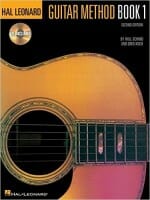
The second edition of this world-famous method by Will Schmid and Greg Koch is preferred by teachers because it makes them more effective while making their job easier. Students enjoy its easy-to-follow format that gives them a solid music education while letting them play songs right away. Book 1 provides beginning instruction including tuning, 1st position melody playing, C, G, G7, D7, and Em chords, rhythms through eighth notes, solos and ensembles and strumming.