M.Mus (U of T)
B.Mus (Oberlin)
Guitarist Gergely Szabo has an Advanced Diploma in Music Performance from Cambrian College where he majored in the classical guitar. Over his time there, he completed 2 years of comprehensive pedagogy courses. He also gained well grounded vocal skills, as well as basic knowledge on the piano. Outside of classical music, he exhibits a repertoire of skills and knowledge in playing the genres of rock, blues, and heavy metal music. He has experience in teaching the guitar and the ukulele to a range of people aged 6 to 54.
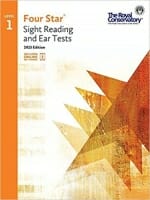
Gergely’s teaching methods include both the use of books and digital methods. The three main books he uses to teach guitar are as follows: “Guitar Method Book 1 by Will Schmid and Greg Koch,” “Four Star Sight Reading and Ear Tests RCM Level 1,” and “Classical Guitar Repertoire and Etudes RCM Level 1.” For teaching ukulele, he uses the book “Ukulele Songs for 1, 2, or 3 players by Elizabeth Ragsdale.” Aside from these, he frequently uses the Muse Score application as a play-along practicing tool.
Gergely’s passion for music and his dedication to growing the love of music in others are the biggest reasons why he teaches guitar and ukulele. His approach to teaching involves learning through play. The material he covers with his students is always delivered in a way that is highly interactive. Most of the assigned exercises he gives involve the elements of play that students can enjoy both in class and as homework.
Get to know Gergely…Beyond the Bio!
Coming soon!
Hobbies:
Musical influences:
Favourite food:
Least favourite food:
Favourite music:
Favourite album:
Favourite movie:
Favourite musical theatre/opera:
Best quote from your teacher:
Favourite quote:
Favourite book:
Latest Homework from Gergely
Is Gergely Your Teacher?
Sign up now to get your weekly assignments delivered, and never lose your homework sheet again!

Build your kids positive emotions, self-esteem, and logical thinking through music practices
Enhance your child’s emotional well-being, self-esteem, and logical thinking with Music Practices. Fun music curriculum boost kid’s positive emotions. Did you know that music lessons can also be a powerful tool for enhancing logical thinking and problem-solving skills?
In this blog post, you’ll explore how fun music lessons for adults, and music lessons for children can help build positive emotions and boost your little one’s logical thinking abilities.
Positive Emotions through Music Practices- the Connection
Before diving into the world of logical thinking, let’s first understand the emotional impact of music. Music has an incredible ability to influence our emotions. When kids listen to catchy tunes or play a musical instrument, children’s brains release dopamine, a neurotransmitter associated with gladness and reward. This is why music can instantly lift kids’ spirits and make your children feel happier.
Emotions in Harmony
From the moment they hear a catchy tune, children c

Music is a powerful tool for nurturing positive emotions
an’t resist moving to the beat. Music elicits an emotional response, bringing joy, excitement, and even calmness. Encouraging kids to explore these emotions through music helps them learn to recognize and express their feelings.
Fun activities like dancing, clapping, or playing musical instruments in a group setting foster a sense of togetherness and emotional connection. This early social interaction contributes to the development of empathy and communication skills, which are essential for emotional intelligence.
Music as a Stress Reliever
One of the ways music contributes to positive emotions is by reducing stress. Playing an instrument or even just listening to soothing music can lower cortisol levels, the hormone responsible for stress. As stress levels decrease, feelings of happiness and relaxation increase.
Learn more about private music lessons, and fun music curriculum, programs tailored for all ages at https://www.music-lessons.ca/toronto/contact-us/
Logical Thinking and Music: the Connection
- Pattern Recognition: music is full of patterns. When children learn to play a musical instrument, your kids are essentially decoding complex patterns. This practice can translate into improved pattern recognition skills, which are essential for logical thinking and problem-solving.
- Sing-Alongs: engage in sing-along sessions with catchy, age-appropriate songs. Encourage your toddler to sing along with you, teaching them new words and melodies.
- Mathematical Thinking: many aspects of music, such as rhythm and timing, are deeply rooted in mathematics. Learning to read music creates an understanding of its mathematical underpinnings and sharpens your children’s analytical skills and mathematical thinking.
- Creativity and Problem Solving: music encourages creativity. When kids are enrolled and involved in music programs tailored for their age, or they improvise during a performance, children are engaging in creative problem-solving. A lot of these processes are done with others which means they are also developing valuable collaborative and cooperation skills. This process can help preschoolers to think outside the box and come up with innovative solutions in other areas of life, which they will need as professionals and in their personal interactions for the rest of their lives.
- Concentration and Focus: Learning a musical instrument requires, and actively develops concentration and focus. These skills can be transferred to other tasks, improving little one’s ability to concentrate on tasks, or challenges and find logical solutions.
Check out our fun music curriculum at ABC Academy of Music (Music School at)
https://www.music-lessons.ca/toronto/contact-us/ and get your free demo class that suits your busy lifestyle.

Let your child experiment with sounds and rhythms.
Making Music even More Fun
Try these tips to get more out of your family’s musical journeys and experiences:
- Musical Story time: combining storytelling with music by reading books that include songs or using musical instruments to enhance the story’s atmosphere.
- Dance Parties: having spontaneous dances, where you and your toddler can move to the rhythm of different songs. Dancing promotes physical activity, coordination, and emotional expression, and bonds the whole family.
- Instrument Exploration: provide your toddler with simple musical instruments like maracas, drums, or xylophones and let them experiment with sounds and rhythms.
- Music Classes: enroll your toddler in a music class designed for their age group. ABC Academy of music classes and programs incorporate singing, dancing, and playing instruments in a well-structured and educational environment, according to your little one’s age.
Music is a powerful tool for nurturing positive emotions and logical thinking in children. Through fun music practices, music lessons, and tailored music programs for kids of all ages. They can explore their emotions, boost their confidence, and sharpen their cognitive skills. So, why not make music a part of your children’s daily routine and watch them grow into more emotionally intelligent and logical thinkers?
Private music lessons for children, and tailored music programs for babies and toddlers, is a journey filled with joy, learning, and harmony.
Contact us to enroll your child and embark on a melodic adventure, book your free demo class today https://www.music-lessons.ca/toronto/classes/ Abc Academy of Music (Music School), looking forward to seeing you!
“PS SECTION”:
DID YOU FIND THIS INTERESTING? Check out our post
“Music an enjoyable way to boosting memory, attention, and social skills in preschoolers”
**Link is in Progress**
Additional Reading for Your Interest:
Child development and early learning (4)
Musical Storytelling with Children Literature
Thursday January 4th Lessons – Erin P
Happy 2024!! This year is going to be so musical and amazing. Everybody came back sounding like they hadn’t even spent time away from the piano, so cool! Congrats to 4 of you that completed BINGO <3
Grace
Sonatina Bureaucratique – Detach between octaves in last line of page 1. Top line of page 2, 3rd measure. Practice between 2nd and 3rd chord a bunch, then between 3rd and 4th chord.
Beethoven Sonatina – break line when written if you agree it sounds good. Listen to recordings to see how you want to play grace notes.
Liam
Russian Medley – page 1 HT. There is lots of tied notes used here and as a result, the melody rarely begins on beat 1, be aware of this. Take a few practice sessions of hands seperate and then put it together.
*New* Harlequinade – HS. This is in Eb major. Detach all 8th and quarter notes unless they are explicitly marked legato. Break the line where written (I have added arrows). Go slow and focus on the details:) Listen here.
Harmonic and melodic scales – Bm, Dm, Gm. Harmonic means to raise the 7th note. Melodic minor is different each direction: Up is raised 6 and 7 like a major scale, going down lowers 6 and 7.
P.S You CRUSHED Walk the Talk. Give yourself a pat on the back. Sounded so cool.
Jadon
Avengers Endgame – HS practice from after star on page. The 4 bar chord progression of E minor / E minor / A major / C C D D repeats three times. However the 2nd time it goes to B major instead of C and D.
**Bring Fired Up! next week**
Sara
Maple Leaf Rag – nice work trying to bring out top note. Melodic shape is really coming along. Very very proud of this one.
Cloud Dance – dynamics and shaping. Picture the story we made of the sunset in your mind as you play and try and put it into the listener’s mind.
Jupiter – fix dotted rhythm. Think of top notes to project the melody further.
Marco
On Your Mark – full first page hands seperate. When that is learnt, you can definitely do the first 3 lines HT. Keep your hand in G minor position as much as possible, it will be easier for your fingers to remember their patterns.
Indiana Jones – HT measures 5-12 every single time. Remember the LH comes in on the 3rd note of each melodic fragment. Then the LH plays again on beat 3 in the space between the melody.
C F G scales. They all use the same fingering except for RH F is an exception. It goes 1234 1234 because of the Bb. ***Try and put them hands together slowly this week*
Daniel
Home Run – great syncopation!! Work to lighten up everything except the accented notes. Add in the B section hands together now. I have drawn arrows to show the syncopation. Notice the tied notes. Chord progression stays the same. It should have a fun carefree vibe to it.
*New* Etude in F Major. Listen here. This piece is beautiful and the opening melody reminds me of Silent Night! LH is legato. I have drawn little half circles over the LH to show the motion the wrist should be doing, like painting a rainbow or driving a hot wheel car over a small hill over and over again. Let your wrist and arm help you play the LH with zero effort. Next week we will go through and identify all the chords used.
Greta
Swan Lake – we added in fingering that makes playing the melody legato possible! Great job with the rhythms and syncopation between hands.
*New* Into the Waves – careful reading is necessary here because not every collection of notes is a triad. Many patterns repeat in different octaves so notice that. When a single line is marked legato and played with two hands, the goal is for the listener to not be able to tell it is split between hands. This can be achieved by having a similar volume and tone between notes, as well as even and consistent timing. Listen here.
C F and G major scales. All use the same fingering except for RH F has to use 1234 1234 because of the Bb. F Major only has one black key, Bb. G only has one black key, F#.
Preferred Books for Gergely’s Students
Click to buy them here, and they’ll come right to your house! What could be easier?
Hal Leonard Guitar Method
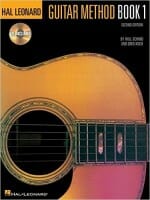
The second edition of this world-famous method by Will Schmid and Greg Koch is preferred by teachers because it makes them more effective while making their job easier. Students enjoy its easy-to-follow format that gives them a solid music education while letting them play songs right away. Book 1 provides beginning instruction including tuning, 1st position melody playing, C, G, G7, D7, and Em chords, rhythms through eighth notes, solos and ensembles and strumming.
Four Star Sight Reading and Ear Tests