M.Mus (U of T)
B.Mus (Oberlin)
Guitarist Gergely Szabo has an Advanced Diploma in Music Performance from Cambrian College where he majored in the classical guitar. Over his time there, he completed 2 years of comprehensive pedagogy courses. He also gained well grounded vocal skills, as well as basic knowledge on the piano. Outside of classical music, he exhibits a repertoire of skills and knowledge in playing the genres of rock, blues, and heavy metal music. He has experience in teaching the guitar and the ukulele to a range of people aged 6 to 54.
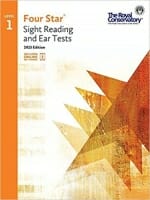
Gergely’s teaching methods include both the use of books and digital methods. The three main books he uses to teach guitar are as follows: “Guitar Method Book 1 by Will Schmid and Greg Koch,” “Four Star Sight Reading and Ear Tests RCM Level 1,” and “Classical Guitar Repertoire and Etudes RCM Level 1.” For teaching ukulele, he uses the book “Ukulele Songs for 1, 2, or 3 players by Elizabeth Ragsdale.” Aside from these, he frequently uses the Muse Score application as a play-along practicing tool.
Gergely’s passion for music and his dedication to growing the love of music in others are the biggest reasons why he teaches guitar and ukulele. His approach to teaching involves learning through play. The material he covers with his students is always delivered in a way that is highly interactive. Most of the assigned exercises he gives involve the elements of play that students can enjoy both in class and as homework.
Get to know Gergely…Beyond the Bio!
Coming soon!
Hobbies:
Musical influences:
Favourite food:
Least favourite food:
Favourite music:
Favourite album:
Favourite movie:
Favourite musical theatre/opera:
Best quote from your teacher:
Favourite quote:
Favourite book:
Latest Homework from Gergely
Is Gergely Your Teacher?
Sign up now to get your weekly assignments delivered, and never lose your homework sheet again!
How Music Lessons for Kids Boost Social Skills
Music boost children’s social skills and it’s a universal language that has the power to connect people, evoke emotions, and foster creativity. While the benefits of music education are well-documented, one often overlooked aspect is its impact on social skills, especially when it comes to children.
In this blog post, we’ll explore how music lessons for kids can significantly enhance your kids social skills and why you as a parent should consider enrolling them in music lessons programs in person or online.
Communication and Collaboration
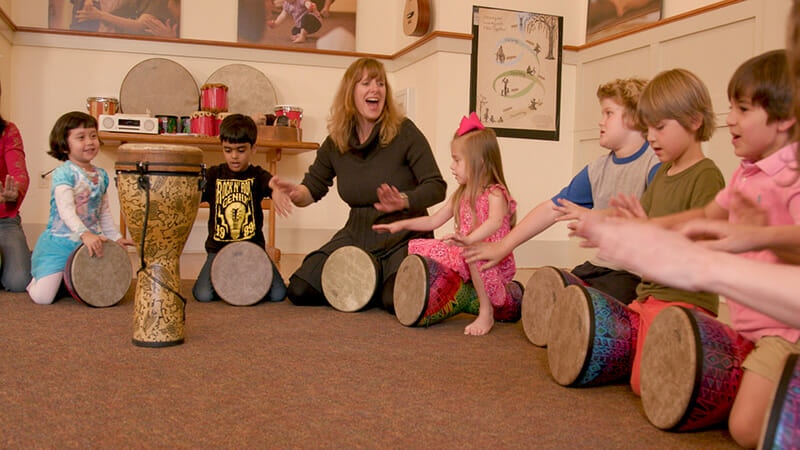
One of the most apparent ways in which music lessons benefit kids’ social skills is through communication and collaboration. Music requires children to work together with a teacher or coach, as part of an ensemble, whether it’s a choir, orchestra, or band. These group dynamics teach kids to listen, express themselves, and respect the contributions of others.
Through playing in harmony and synchronizing their efforts, children learn valuable lessons in teamwork that are transferable to various social and professional situations.
Increased Empathy and Connection
Music has the unique ability to convey emotions and stories without words. When kids engage with music lessons at any age, they often immerse themselves in the feelings and stories the music represents.
This can lead to an increased sense of empathy as they learn to understand and appreciate the emotions conveyed in music, as well as a listener. Developing empathy is a crucial skill in building healthy and meaningful relationships.
Learn more about ABC Academy, music lessons for kids, https://www.music-lessons.ca/
Building Confidence
Confidence is a key component of useful social and professional skills. Music lessons provide kids with opportunities to perform in front of others, whether it’s in a recital, school assembly, or even just playing for family and friends.
These experiences help kids build self-esteem and confidence in their abilities, making them more comfortable in social situations where self-assuredness is essential. It also provides a practice opportunity for the kinds of presentations they will likely need to make professionally, whether in an interview, or at a conference.
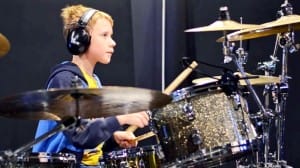
Improved Communication Skills
Learning to play a musical instrument or sing involves understanding and interpreting notation, which can be likened to learning a new language. Through music, children develop stronger linguistic and analytical skills, which can boost their confidence in verbal communication.
Enhancing one’s communication skills through musical learning can lead to more effective interactions with both peers and adults. This is because the ability to listen, consider, and respond in a structured and collaborative manner is a fundamental aspect of musical education.
Patience and Persistence
Music lessons for kids often require them to practice regularly, which instills patience and persistence. These qualities are not only beneficial for mastering musical skills but also for handling interpersonal relationships. Kids learn that achieving success in any endeavor, whether musical or social, often requires and builds dedication and resilience.
Incorporating music lessons into your children’s education can be a powerful tool for enhancing their social skills. Communication, collaboration, empathy, confidence, improved communication skills, and the ability to persist and be patient are all valuable lessons that your kids can carry with them throughout their lives.
Playing an instrument (taking Piano, Guitar, Drums, Violin lessons, or any other musical instrument lessons), not only enriches their quality of life but also equips your children with the tools they need to navigate the complexities of human interaction. So, if you’re a parent or guardian looking to give your child a head start in developing strong social skills, consider enrolling them in music lessons – the benefits will resonate long after the final note has been played.
Get to know us ABC Academy of music
PS – Did you find this interesting? Check out our post:
“FEELING THE BEAT: How Rhythm Enhances Kids’ Motor Skills, Timing, and Coordination”
**Link in progress**
Follow us on our Social and don’t miss out the newest about ABC Academy of music
Additional Reading for Your Interest:
Thursday December 14 Lessons – Erin P
Enjoy the last week of school and we’ll have some fun next week to finish 2023 with a bang! I’m very proud of you all.
Liam
Walk the Talk – hands together slowly. We colour coded the 4 different repeating LH phrases, be sure you are playing the right one. Listen to the recording to ensure you have counting accurate. Don’t rush the HT dotted quarter note part!
*New* Russian Medley – Find some cool recordings of this pieces/ask your parents what they know and report back to me! Watch the tied notes in Polvetsian and use the written fingering. The first is in 4/4 and the second is in 3/4 but they share the same key signature.
Silent Night – Remember to use F power chord at the very beginning in the RH. Great work on the middle part of the piece, tricky putting that hands together! You identified the ending part as being tricky, so start there when you practice! The LH pinky stays rooted around bass C for almost this entire ending part, so keep that in mind.
Up on the Housetop lead sheet – Great job! Play it more to get more comfy with it and maybe even vary how/when you play the LH chords.
Jadon
Rudolph – texture shift for the bridge (“then one foggy”) is a great idea. You don’t need to keep the same rhythm or feel going for that part, but return to the same vibe when the A section comes back to create unity. The bridge begins at 0:39 in the video. I figured out why the person in the recording uses a C# on “Christmas Eve” in the bridge, because sometimes when people add more chords to add to the jazziness, an A chord is placed there (m21 below). A major has C#.
Bring your book next week and I’ll also be prepared with Avengers Endgame :)
Katarina
We had a fun time in lesson together! You are starting to remember note names consistently! I’m proud of you :D
This week when you are reunited with your Wunderkeys book (see here) you can do the “Practice on the Pathway” and “Catch the Catfish“. Those were what we had assigned for homework. ALL of the pieces on these two pages with many little pieces use the same notes and are the same level of difficulty, so I encourage you to practice another one too for fun!
C Major scale – LH and RH seperately. RH fingering is 123 12345, you know this one well. LH fingering from the bottom going up goes 54321 321. Here is a video to watch.
Sara
Maple Leaf Rag – so exciting as always. On the final page, in the passage I circled, “bring out” those top notes so we can hear what the melody is. This can be achieved by a combo of things = 1. you mentally trying to make it stand out will make it stand out 2. you lining up your right arm more with your pinky to give it the power it needs to be loud enough 3. LH being even quieter so the melody can float over top.
*New* Cloud Dance – Listen here. The 2 note slurs are very important to this piece, as is the rhythmic groove. It only needs a bit of hands seperate work I think, it comes to life mainly hands together. Take your time and really “place” the notes on the keys with care and beauty.
Sonatina in C – You’re doing all the right stuff! Continue to ensure you are doing 2 note slurs when notated and with accurate wrist movement. I can hear the phrases start to come to life. Great job with the trills and their rhythmic placement.
Holly and the Ivy lead sheet – I really like what you did with this!!! Here is a beautiful version on piano and you can see how he doesn’t play it the same every repetition and varies both the melody and the accompaniment to keep interest.
Marco
Up on the Housetop lead sheet – Great start. Continue to add in the chords on the latter half. Use finger 4 to start on C because most of this piece is in F position (with a D on top that your pinky will play).
Joy to the World – let’s do it hands together until the C major section ends. A lot of power chords or triads you recognize, so you’ve got this. Arrangements like this create listener interest by changing which part of the piano/hand has the melody so it sounds different and exciting. Make sure you are paying attention to *where* on the piano you are meant to be playing, because you’ve got the notes right.
By My Side – YEAH! Sounded really beatiful and mature today. I would start your practice on page 2 a lot of the time to build up comfort on that page. Really great work.
Daniel
Winterstorm – Great dynamics, now that I know you can play with this beautiful of variety of sound, you can never escape it !! Fix the RH fingering on page 1, it will help. Do some practice at a slightly slower tempo than you “perform” it at and you’ll make some big fluency progress.
Waltz that Floated Away – whole page. Let’s divide this into two halves, which I’ve labelled with a circled 1 and 2. Section 1 is what you’ve been working on, fix the F# in line 1 and the LH goes down to E in line 2 (written on sticky note). Section 2 is the new part that has Linkin Park vibes, it uses this same phrase 2.5 times different places around the piano with a simple bass line that also repeats. Start from both parts equally this week.
O Christmas Tree lead sheet – since it’s in 3/4, some chords last 2 beats, some only 1, and some the whole bar. Play this hands together this week,
Marita
Sending love and good vibes! Next week I’d love to hear a little Prelude V and some Bird in the Bebop and we’ll have fun holiday stuff to do too! I look forward to seeing you, my friend.
Greta
*New* Wild West – this piece is in D minor. Staccato is very important. Notice the accents as well. At the beginning there are 2 different endings – play from the beginning through the 1st ending, go back to the beginning and then play the 2nd ending and continue on throughout the piece. If you wanted to shorten the piece, you would just play the 2nd ending and keep going.
C Major scale RH – the fingering is 123 12345. Your thumb tucks under your hand quickly, but evenly. The hand should move smoothly and without tension. Here is a video to watch. If you feel confident, learn the LH one too. You may notice that if you started both hands at middle C and went in opposite directions (RH ascending, LH descending) the same fingers would be playing in both hands at the same time, and the thumb under motion would also be synchronized.
Up on the Housetop lead sheet – very very good job! You can experiment with different rhythms to play the LH or you could try playing the accompaniment one note at a time if you wished. What if it was a lullaby, or a rock song… something to think about.
Preferred Books for Gergely’s Students
Click to buy them here, and they’ll come right to your house! What could be easier?
Hal Leonard Guitar Method
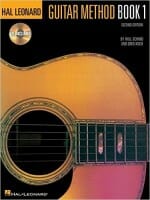
The second edition of this world-famous method by Will Schmid and Greg Koch is preferred by teachers because it makes them more effective while making their job easier. Students enjoy its easy-to-follow format that gives them a solid music education while letting them play songs right away. Book 1 provides beginning instruction including tuning, 1st position melody playing, C, G, G7, D7, and Em chords, rhythms through eighth notes, solos and ensembles and strumming.
Four Star Sight Reading and Ear Tests