
Guitarist Gergely Szabo has an Advanced Diploma in Music Performance from Cambrian College where he majored in the classical guitar. Over his time there, he completed 2 years of comprehensive pedagogy courses. He also gained well grounded vocal skills, as well as basic knowledge on the piano. Outside of classical music, he exhibits a repertoire of skills and knowledge in playing the genres of rock, blues, and heavy metal music. He has experience in teaching the guitar and the ukulele to a range of people aged 6 to 54.
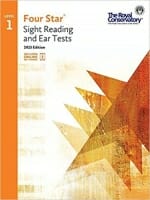
Gergely’s teaching methods include both the use of books and digital methods. The three main books he uses to teach guitar are as follows: “Guitar Method Book 1 by Will Schmid and Greg Koch,” “Four Star Sight Reading and Ear Tests RCM Level 1,” and “Classical Guitar Repertoire and Etudes RCM Level 1.” For teaching ukulele, he uses the book “Ukulele Songs for 1, 2, or 3 players by Elizabeth Ragsdale.” Aside from these, he frequently uses the Muse Score application as a play-along practicing tool.
Gergely’s passion for music and his dedication to growing the love of music in others are the biggest reasons why he teaches guitar and ukulele. His approach to teaching involves learning through play. The material he covers with his students is always delivered in a way that is highly interactive. Most of the assigned exercises he gives involve the elements of play that students can enjoy both in class and as homework.
Get to know Gergely…Beyond the Bio!
Coming soon!
Hobbies:
Musical influences:
Favourite food:
Least favourite food:
Favourite music:
Favourite album:
Favourite movie:
Favourite musical theatre/opera:
Best quote from your teacher:
Favourite quote:
Favourite book:
Latest Homework from Gergely
Is Gergely Your Teacher?
Sign up now to get your weekly assignments delivered, and never lose your homework sheet again!
Assignments from January 15th
Hello Everyone!
I hope you all stayed warm during the snow storm! I was happy to see some of you online via FarPlay this week. If anyone has any questions or needs help navigating the software, please let me know!
Georgia:
I hope you had a great snow day! Please continue to practice “Waltz Time” and we will review this next week.
Noreet:
Great digital lesson today! For this week please review the left hand of the first and third phrases of Moonlight Melody and the right hand of the second phrase. Remember, this song has some accidentals in it including sharp and natural signs. Noreet knows that one she sees an accidental in a bar, the accidental is applied to all notes on the same line or space until either corrected with another symbol, or until the bar line resets the note quality. We will review this concept next week in class. To ensure rhythmic accuracy as Noreet practices, please ask her to count out loud to ensure notes are played for their full value. But remember; this song is in 3/4 time! This means there are only 3 beats in each bar, so she should count like so: “1 and 2 and 3 and”. Resist the urge to add a fourth beat on the end! If there are any tricky rhythms during practice, please ask Noreet to cover the page to reveal one bar at a time to help her zero in on challenging moments in the music. We will review these in class next week.
Eva:
Today we reviewed the first phrase of Young Hunter! Eva learned that the lines underneath the 3 notes at the end of the phrase is called a Tie and is asking her to add the vale of all three notes together. Please encourage her to count out loud when playing this phrase to ensure she plays the Es at the end for their full combined value. For now, Eva is permitted to count this as a 10 beat long note. We will review this in class next week and learn the proper counts as dictated by the bar lines.
Benji:
I hope you had a great snow day! Please continue to practice “Classic Dance”. Remember, the first and third phrases of the song are identical. We will review the specific fingering for the end of both phrases next week in class.
Clara:
Get well soon Clara! If you feel well enough to practice this week, you can continue with Barefoot on the Beach. Remember; this song is in cut time! So each note will feel faster than it looks. We will review this next week. If you need more repertoire this week you can feel free to choose another song to start and we can juggle both Barefoot on the Beach and your other chosen song.
Andrew:
I hope you stayed warm during the snow storm! For this week, continue to practice the lip-roll technique and play around with the various colours and sounds different vowel shapes create in your voice as you practice Empty Chairs at Empty Tables.
Thank you everyone!
I’m looking forward to seeing you back in the studio next week!
Thursday, January 15th
Francisco
We did a play through of Smooth Criminal and I must say I am beyond proud of Zico for his effort learning this song. There were so many advanced concepts and challenging licks on this tune and Zico mastered them through very discipline practising. Though we did a play through, I would still encourage Zico to spend a bit of time smoothen up some of the transitions and pay attention to the feel of time. I mentioned to him that there is a tendency to rush when the music is sparse (e.g. material predominantly laying out eighth notes) and when things become dense, he tends to drag. With the rushing tendency, I suggest that he try to feel the big beats more and with the dragging, also try to group the 16th notes to the main beats. This applies to any song we learn in the future. Next class we will start a new song. At the moment I suggest Zico to try Fly as Me by Silk Sonic, but I welcome any new ideas if he has any songs he would like to play.
Noah
We continued working on Bulls on Parade. First of all, Noah is fast to pick up the song, but always play things slow when we are just going through the details of a pattern, so we don’t miss anything and end up practising the wrong things. First bar of line 4 at first poses a challenge for Noah, with things sounding little uneven. We tackled that by firstly practising the stroke of bouncing directly from snare to the cymbal and back (so Noah is not late to play each instrument) and secondly grouping to the big beat (for the fourth beat). Though the pattern does sound like it should be group to the eighth note, over doing it will lead to unevenness, and its better to play it grouped to the big beat and let the bass drum spell out the small grouping. Another thing I would like Noah to pay attention to is the first bar in the last line of page one. Feel it like a boomerang. The next big challenge is the 32nd notes lick on line 5 of page 2. Try to decipher it at home and we will see if we can play through big sections together in person next week.
Finn
We worked on DARE by Gorillaz together and Finn did a great job focusing through the online lesson. We played his version of the beat but also tried tackling the original version. Note the original version is actually less note to play, but requires Finn to relax and feel the groove. All it is, is that the original version plays hi hat on 1 34 of the 16th note grid, and Finn’s version includes all. He was able to play the original version, but reverts to his own version whenever he tenses up. Whenever that happens during practise, remind him to take a break and listen to the song for the best tips. We also worked on the lick that starts the song. If he has trouble remembering, it is snare/hihat(same time) follow by kick and repeat that pattern 8 times before we enter the main groove. Also we talked about Oasis during class and would be fun to expose him to a bit of Brit-pop history at home. Can also start exploring what he is interested for a next song.
Koel
Koel is a talented drummer and has pretty good coordination between the limbs, but I will like to go back to some basics with hands dexterity. We played through Bulls on Parade together, which the 32nd note lick seems to be the only thing that posed somewhat of a challenge. Note that this lick can be dissected into three parts. First beat, two hits on the crash with a pick up on the last 16th note that kick starts the 32nd lick. As for the next three beats, the 32nd notes should be all grouped to the right hand, with every off beat (the n) played on the ride/crash. For the last beat, can slight crescendo toward the end, and build towards the crash hit on the next bar. The trick to these 32nd note, is an exercise I showed him, that is now available on his drive (see Stick control p.10). Practise firstly RLRL RRRR, then line 1 of that page. The next step is play one bar of the first and line 1 in the next bar back to back, and ideally this should be played with a metronome, and always phrase toward every two beats. Before the first R of the four consecutive R, throw the wrist to generate the power. This exercise will help grounding to the big beat when playing something fast like the 32nd lick. When in doubt, just think you are throwing those notes. Afterwards we looked at Killing in the Name of together, for this song, there are many quick changes between 16th note grid and triplet grid, so I wanted Koel to work on Stick control p.14, which is to build that muscle memory of what that switch feels like. For both of these pages of exercise, Koel is encouraged to work on all the other lines, especially the ones leading with left hand. As most of us have right hand as our dominant hand, leading with left hand will be harder to play, but building a stronger left hand dexterity will also improve your control when leading with right hand as well. Have fun stick controlling! We will continue with Killing in the Name of for next week’s lesson.
Preferred Books for Gergely’s Students
Click to buy them here, and they’ll come right to your house! What could be easier?
Hal Leonard Guitar Method
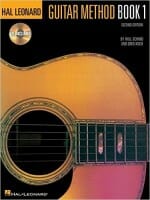
The second edition of this world-famous method by Will Schmid and Greg Koch is preferred by teachers because it makes them more effective while making their job easier. Students enjoy its easy-to-follow format that gives them a solid music education while letting them play songs right away. Book 1 provides beginning instruction including tuning, 1st position melody playing, C, G, G7, D7, and Em chords, rhythms through eighth notes, solos and ensembles and strumming.
Four Star Sight Reading and Ear Tests