
Guitarist Gergely Szabo has an Advanced Diploma in Music Performance from Cambrian College where he majored in the classical guitar. Over his time there, he completed 2 years of comprehensive pedagogy courses. He also gained well grounded vocal skills, as well as basic knowledge on the piano. Outside of classical music, he exhibits a repertoire of skills and knowledge in playing the genres of rock, blues, and heavy metal music. He has experience in teaching the guitar and the ukulele to a range of people aged 6 to 54.
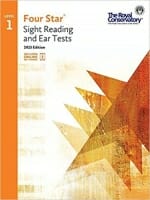
Gergely’s teaching methods include both the use of books and digital methods. The three main books he uses to teach guitar are as follows: “Guitar Method Book 1 by Will Schmid and Greg Koch,” “Four Star Sight Reading and Ear Tests RCM Level 1,” and “Classical Guitar Repertoire and Etudes RCM Level 1.” For teaching ukulele, he uses the book “Ukulele Songs for 1, 2, or 3 players by Elizabeth Ragsdale.” Aside from these, he frequently uses the Muse Score application as a play-along practicing tool.
Gergely’s passion for music and his dedication to growing the love of music in others are the biggest reasons why he teaches guitar and ukulele. His approach to teaching involves learning through play. The material he covers with his students is always delivered in a way that is highly interactive. Most of the assigned exercises he gives involve the elements of play that students can enjoy both in class and as homework.
Get to know Gergely…Beyond the Bio!
Coming soon!
Hobbies:
Musical influences:
Favourite food:
Least favourite food:
Favourite music:
Favourite album:
Favourite movie:
Favourite musical theatre/opera:
Best quote from your teacher:
Favourite quote:
Favourite book:
Latest Homework from Gergely
Is Gergely Your Teacher?
Sign up now to get your weekly assignments delivered, and never lose your homework sheet again!
Assignments from May 10th
Hello!
I have a few reminders and updates for you all. First, Berke has informed me that he does not have access to his chrome book this week! So if you could kindly remember to share this email with him that will be super helpful for Berke’s practice this week. Second, while I know the in person recital was cancelled, we are still going ahead with the digital concert! Berke and I record Minuet in F today to be added to the concert! Thank you Berke for your hard work on this piece, I am very much looking forward to seeing everyone’s performances!
Berke:
For this week please review Moonlight Sonata and practice the first 8 bars of Clair de Lune. Practice the fingerings as follows for the 3 alternating eighth note “motifs”. Eighth note group 1: 3/5 – 1/4 – 3/5 – 1/4. Eighth note group 2: 2/4 – 1/5 – 2/4. Eighth note group 3: 1/3 – 2/4 – 1/3. Please practice these bars slowly. This requires meticulous fine motor skills in the hand and fingers so pay attention to how this feel in your hand when you play these 3 bars. Use the metronome to help you stay in time, but start at 45BPM, switching chords with each tick of the metronome. Once your hands feel comfortable with this technique, you can slowly speed up to your desired tempo. Please review the upper notes only of the melody in bars 5 and 6 and continue to sight-read the second chunk of that melody in bars 7 and 8 on your own. Practice the eighth note groups and melody separately, put the two sections together only when both feel comfortable in your hands. Review what we have learned in Moonlight Sonata (bars 1-9). Review the chords in bars focusing specifically on bars 7-9 as this is newer material. Play these bars hands separate until you can confidently build and play the chords in the left hand. Review bars 5 and 6 slowly, playing close attention to which notes are played together and when. We will review and learn more Moonlight Sonata next week.
Excellent work today! I look forward to hearing more next week.
Assignments from May 8th
Hello!
I just wanted to say thank you to everyone who submitted a video for the digital concert! I’m very much looking forward to seeing everyone’s performances!
Vida:
Great progress with Under the Sea! Continue to review the melody in the right hand. Read and play through bars 29-35 on their own this week. Encourage Vida to use all of her fingers when playing the passage in bars 31-32; dancing her fingers around the notes instead of moving her whole hand and wrist. Try the following fingering for that passage: 2/4-3-4-3/5. We can review this in class next week. When Vida is confident with these 7 bars, put them back into the whole song! Try playing the piece start to finish without stopping. You can also record the whole song for Vida to hear. Once Vida has mastered the right hand, go back and encourage her to sight-read the left hand! Read in small chunks and practice both hands separately this week. When practicing Mr. McGill’s Boop Sha Bop, make sure Vida’s eighth notes are twice as fast as her quarter notes. You can use the tapping exercise provided in the google drive as a visual aid; Vida will be able to see that the hand tapping the eighth notes is moving faster than the hand tapping quarter notes. In the context of the song, encourage Vida to think of the first eighth note of the pair as a trampoline or a springboard to the next note in the pair. Jump up to the next note quickly. You can also practice this song with a metronome to help Vida hear the macro beat of the song. Let Vida choose the tempo. Encourage her to choose a quick but manageable speed.
Eva:
Today we learned the last phrase of Sailing in the Sun! When practicing have Eva start with this phrase. Ask her to show you what she learned in class. Once she has reviewed the last phrase, she can go back and play the first 3 phrases for you. Help Eva become more familiar with the last phrase by drawing comparisons to bars that are similar or identical to bars in the first 3 phrases. Eva can circle identical bars with the same colour pencil if she would like. (Red for 2 matching bars and Green for 2 different matching bars). This will help Eva learn the “map” of the song and help her feel more confident when playing the whole song start to finish. You can also help Eva connect each phrase by asking her to play the last bar of the previous line and the first bar of the next line back to back. Do this for each phrase to help Eva hear and feel how each line flows into the next. You can then ask her to “perform” the whole song for you! You can also record Eva playing the song start to finish so that she can hear herself play! When listening back, ask Eva what she likes about what she hears and if there is anything she wants to review and polish.
Christian:
For this week when practicing How Long Will I Love You, focus on the left hand. Practice the large, broken chords slowly as you read each chord practice the stretch from your 5th finger to your 1st finger. Remember that most of the chords written are the same I, IV, and V (C, F, and G) chords from the intro of the song. This should make reading each individual note easier. Should you review the intro this week, remember that every other chord should be played twice as fast as written. We will review this in class when you return from Mexico. Continue to practice the melody in the right hand. Identify and review the larger intervals that appear in the melody to help you “map” the song. This will help your memory as it offers a landmark for where you are in the song and whats coming up (like that Major 6th that introduces the main melody in the descending eighth notes). Practice as much as you can between now and when you leave. Have a safe flight and a great time at the wedding!
Thank you everyone! Looking forward to more great lessons next week!
Preferred Books for Gergely’s Students
Click to buy them here, and they’ll come right to your house! What could be easier?
Hal Leonard Guitar Method
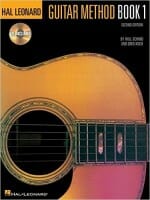
The second edition of this world-famous method by Will Schmid and Greg Koch is preferred by teachers because it makes them more effective while making their job easier. Students enjoy its easy-to-follow format that gives them a solid music education while letting them play songs right away. Book 1 provides beginning instruction including tuning, 1st position melody playing, C, G, G7, D7, and Em chords, rhythms through eighth notes, solos and ensembles and strumming.
Four Star Sight Reading and Ear Tests