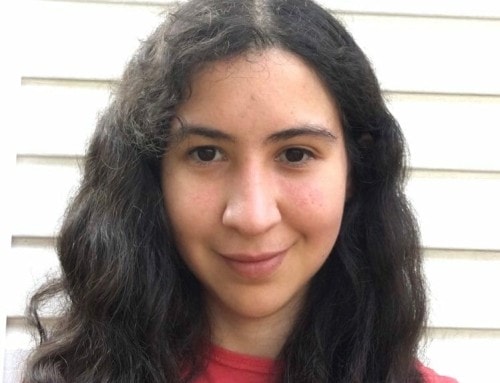
Luciano Espin is a music producer, composer, and music teacher whose work focuses on multi-instrumental performance and education. With a deep interest in technological instruments and new forms of expression using sound design tools, Luciano integrates his expertise in guitar performance and electric bass into his innovative work.
He holds a B.A. in Music Composition and Performance from Universidad San Francisco de Quito, as well as a B.A. in Liberal Arts with a focus on Philosophy and Education. Recently, he completed a graduate program in Arts Education and Community Engagement at Centennial College.
Luciano’s professional journey includes teaching for the Ministry of Public Education of Ecuador in rural and indigenous communities as part of a national intensive education project. He also completed an internship in the education department of the Corporation of Massey Hall and Roy Thomson Hall, where he developed teacher resources and assisted in various workshops at the Allied Music Centre.
Get to know Luciano…Beyond the Bio!
Hobbies: Philosophy and literature, soccer, food, films, and agriculture.
Musical influences: Latin American music (Jorge Drexler, Gustavo Cerati, Mercedes Sosa, Caetano Veloso, Natalia Lafourcade), Electronic music (Daft Punk, Kaytranada, Disclosure, Bizarrap), R&B (Daniel Caesar, Hiatus Kaiyote, Jungle, Erykah Badu), Rock (Tool, System of a Down, Jimi Hendrix, Led Zeppelin, The Doors), Pop (Rosalía, Dua Lipa, The Weeknd, Michael Jackson), Salsa (Hector Lavoe, Ruben Blades, Alexander Abreu).
Favorite food: Encebollado, a traditional albacore soup from Ecuador.
Least favorite food: Sweet Pepino (Solanum muricatum).
Favorite movie: “Interstellar” by Christopher Nolan
Favorite music movie: “Sweet and Lowdown” by Woody Allen.
Best quote from a music teacher: “Each instrument has a Spirit. Part of the Battle is to get that spirit to accept you as a mate, as a friend.” Zakir Hussain
Favorite book: “One Hundred Years of Solitude” by Gabriel Garcia Marquez.
Best thing about teaching at ABC: I find great joy in sharing my lifelong love for music with my students. I believe teaching is also a learning experience and my goal is to provide tools for individuals to know and express themselves through music and songwriting. My eagerness is to share methods for developing music practice in daily life.
Latest Homework from Luciano
Is Luciano Your Teacher?
Sign up now to get your weekly assignments delivered, and never lose your homework sheet again!
Assignments from Thursday May 28th
Hello Everybody!
I hope you’re all enjoying the warm weather we’ve been having!
Noreet:
This week please have Noreet listen to different recordings of the Ode to Joy so that she can compare the style of each. Practice more energized playing through the finger tip to enhance the celebratory feel of the song. Use softer articulation in the fingers by pressing lightly on the keys to help the line feel lighter and flow more freely. Lean into the build up towards the end during the ottava section (8va), then pull back to build the anticipation for that final chord! Pay close attention to the dynamics of the piece to help build the excitement of the song – specifically phrases that crescendo/decrescendo!
Review the notes in the first two phrases of Our Detective Agency! The unfamiliar notes are written in for you and I’ve divided the phrase where the left hand takes over for the right in the eighth note group. We will add onto this next week.
Clara:
Warm up with B flat Major hands separately.
For the Andante, practice with lighter articulation when playing at faster tempos to allow for quick, precise eighth notes – specifically in the left hand. Review both the right hand and left hand of the song at a slow tempo while counting out loud to ensure your rhythms are precise.
When practicing Ukrainian Folk Song, use lighter articulation during the first phrase to help you play faster eighth notes. Lighter pressure, not more, will help the notes sound faster. Use the first note of your thumb to help your hand launch into the upper eighth notes. Play the B section under tempo and count out loud while playing the dotted eighth note/sixteenth note groups. These should be counted as one – e- and – a with the sixteenth note sounding on the “a”. Just like the tied triplets in Pink Panther, the sixteenth note comes in at the very last second of the bar.
Andrew:
The recordings for your vocal warm up have been uploaded to the google drive here. You can use the recording with the reference voice as a starting point for specific exercises we tried in class. Feel free to use the solo piano recordings to warm up with other words and vowels. Play with this, choose a vowel you like and apply it to the scale. You can also add voiced consonances (M, N, V) to help you pitch the note on the scale creating sounds like “M-Uh” “V-Aw” or “N-ee”. Apply these to both the 5-tone scale and the Triad scale.
To practice a more speech-like placement for the beginning of the song, sing the melody of the first verse on “May”. Emphasize the “M” to help bring out a more speech-like tone. For the first chorus part, to play with the lighter, breathy placement, try this on a “wee”. Use the “w” to help find that light head voice placement. Finally, when practicing the bigger belter parts of the song, use words like “N’yeah” “No” and “Nee”. The N sound should help provide a more whiny, nasal placement that will allow for a resonant belt sound.
Thank you everyone!
Happy practicing!
Assignments from April 30th
Hello Everybody!
This semester’s progress reports have gone out! Please review these and let me know if you have any questions. Also, just a reminder that our recital has been postponed to June! Official date TBD, but all students should be reviewing their chosen piece over the next few weeks so they’re ready to play in June!
Georgia
Georgia has chosen the Minuet and Trio for the recital in June! She should continue to practice playing this song in the next coming weeks. We reviewed the C Major and G Major triads this week as well. Georgia should use these as a warm up, playing the root/first inversion/second inversion/root pattern both broken and solid. Georgia’s dedication to practicing this week was evident! Keep it up!
Noreet
Noreet has chosen Ode to Joy for the recital in June! When practicing this song, please encourage Noreet to watch the notes on the page and not her hands. She can glance to double check her hand positioning, but her eyeline should be on the page, not the keys. For warm up this week Noreet can continue to use the chromatic scale, starting on C. She should also start practicing her scales hands together! Start with C Major and G Major hands together, we will add more next week.
Clara
This week we reviewed Ukrainian Folk song, which is a contender for the recital in June! When practicing this song this week, Clara should review each hand separately. She should focus specifically on the left hand and the contour of the line to make sure Clara can confidently navigate the bass notes while playing hands together. Ask her to identify the interval of any large jumps and to circle the passing or neighboring tones she sees in the bass line to help deepen Clara’s understanding of the components of the phrase. When practicing the whole song hands together, Clara should focus on bringing the song up to tempo. She can start under, at 80BPM, and slowly increase from there. Should she start to drag as the tempo increases, remind her to go back and review individual bars slowly, hands together, before trying the whole phrase again up to tempo.
Thank you everyone!
See you all next week.
Homework for April 23-30
Great work today everybody! I enjoyed teaching you. Here is this week’s homework:
Georgia
Recommended mins to practice: 15-20 min per day
What to practice: Minuet/Trio
How to practice: Slow, hands separate until you’re very comfortable, then try hands together. Pay attention to the 3/4 timing. Continue to count out loud like you did in the lesson, it will help. You improved drastically from the beginning of the lesson to the end.
How parents can support practice: Listen and guide her with rhythm. Give positive encouragement.
Noreet
Recommended mins to practice: 15-20 min per day
What to practice: The Daydream, kitchki
How to practice:
The Daydream- use piano dynamics as written when playing the major version. Practice the minor version more so that you are prepared to play it without stumbling, since you don’t have music to look at for that part.
Kitchki- play the chromatic scale the same speed as you play the chords, even if that means you have to slow down the chromatic scale to accommodate the chords.
How parents can support practice: Listen and guide as needed.
Clara
Recommended mins to practice: 15-20 minutes per day
What to practice: Pink Panther, Ukrainian Folk Song
How to practice:
Pink Panther- play more with dynamics. Start quiet and then play loud at the climax.
Ukrainian song- review the two spots we discussed in line 2. Practice lines 3 and 4 hands separate, then once very comfortable try hands together.
How parents can support practice: Listen and guide as needed.
Andrew
Recommended minutes to practice: 15-30 minutes a day
What to practice: On My Own, breathing exercises
How to practice:
To warm up, inhale for 4 and exhale for 4, then inhale for 4, hold for 4, and exhale for 4, and finally inhale for 4, hold for 4, and exhale for 8. Place your hand on your diaphragm to feel it rising and falling.
On My Own (this can also be applied to any song or technique), practice opening your throat, lifting the soft palate, and relaxing facial muscles. This will help ease the tension when hitting high notes and overall healthier singing. With any song, it takes practice to get used to the amount of energy you need to get through the whole piece. Pace yourself; follow the emotional arc of the song and save singing at full volume for the moments you really need to.
Assignments from Thursday April 9th
Hello Everybody!
I hope you all had a great Easter weekend!
Georgia
Because of Georgia’s busy schedule, please encourage her to practice at least 5 minutes everyday. Even briefly reading over the notes on the page should help Georgia’s memory throughout the week and ensure she feels confident with the material for our next lesson. For this week Georgia should warm up by reviewing her C Major and G Major chords both broken and solid and all their inversions. She has a sheet that shows her how to do this. We will add more chords next week. She should practice “The Rainbow” hands together, and both “Good Morning to You” and “Happy Birthday to You”. These two new songs are very similar, but Georgia should make a note of any differences between the two songs. We will look at these more next week.
Noreet
For this week Noreet should practice her scales out of key order. She likes to play each scale one after the other, adding sharps and flats as she goes. This week, to help her memorize each key signature she should play scales randomly from the list to challenge her and to make sure she knows which sharps and flats specifically belong to which key signature. You can help quiz her. Refer to the sheet of scales and randomly choose one for her to practice. If she needs to refer to the Circle of 5ths to double check the key signature of the chosen scale before she plays, she should do so. She can also practice Kitch-iti-Kippi hands together. She should pay close attention to which chords are Major and which chords are minor in the B section of the song.
Andrew
This week keep singing Empty Chairs at Empty tables. Focus specifically on the end, making note of any part in the song you would like to look at together. You can warm up with the 5 tone scales ascending and descending. Also try the faster repeated 5 tone scale (5 tones ascending and descending 3 times) to train some agility in the voice. This scale will work best on forward, narrow vowels like an E or A. This scale will be easier to sing in your lower range. As you ascend, you might find that your throat starts to grip at the notes and might feel more tension the higher the notes get. Your singing straws should help alleviate this tension. Finally, make a list of songs you would like to work on so we can start something new next class!
Thank you Everyone!
Enjoy the fresh spring weather and I will see you all next week!
Assignments from March 5th
Hello Everyone!
Georgia:
When practicing The Rainbow this week Georgia is to play hands separate while counting out loud. She should focus on the last line specifically and ensure she observes the rests written in both lines. Georgia should count through the rests to help her understand when her left hand takes over for the right, as the right hand starts before the left in this phrase. In the first two bars of the phrase Georgia’s left hand is to play on beat 3, and in the third bar of the phrase the left hand comes in on beat 2. Georgia should count out lout when reviewing the previous three phrases as well as this will help her understand how the right and left hands fit together when she is ready to try playing hands together. When she has reviewed all phrases hands separately, Georgia can try playing hands together while still counting out loud very, very slowly. Please encourage Georgia to count out loud as she plays as the audiation of beat will provide her structure, especially when trying to play hands together.
Noreet:
Welcome back! Today we reviewed Moonlight Melody! For this week Noreet should practice this song hands separate so that she can focus on the rhythms of the song. She can use a metronome to help her hear the beat, but please encourage her to count out loud, and please make sure she is counting in 3/4 time not 4/4 time. For the sequence in the second phrase, please remind Noreet that the last interval of the pattern is a 3rd! Noreet should also use the pointer finger of the hand that is not playing to trace the line as she plays to help her watch the sheet music as she reads and to help keep her on track. Once she has reviewed the whole song hands separately she can try playing the song hands together slowly if she feels comfortable doing so. She should continue to count out loud as she attempts hands together.
Benji:
When practicing Young Hunter this week, encourage Benji to practice the song in small chunks. Specifically, have him review bars 5-8 hands separately, counting out loud, before he tries to play the 4 bars together. When practicing this phrase, encourage him to use his 5th and 3rd fingers on both hands to help him as the phrase alternates between the same a G and an E in the right hand and an C and an A in the left hand. He will be using the same fingers to play different notes. Please encourage him to count out loud when trying to do this hands together so he can see how the two lines move together. Benji can then go back and review the first and last phrases of the song (they’re the same notes). Please remind him that the left hand of these phrases descend from C to A to G as he sometimes likes to play these ascending from the C.
Clara:
When practicing the Pink Panther theme this week, Clara should focus on mimicking that “swing” feel heard in the song. Use a recording of the song as reference so that she can hear the loose and smooth quality of the eighth notes specifically. Clara should also continue to practice the B section of the Musette. Challenge her by asking her to play the right hand with her eyes closed. If she can navigate the right hand without needing to look, she can then focus on lining up her octave jumps. She can also practice the timing of the B section by eliminating the octave jump entirely and simply play the eighth notes all on the upper or lower E. This exercise is purely to be used to practice the rhythm of the two hands, we will add the octave jump back in when she is more confident in the right hand. Finally, we have started Marry Had a Little Lamb in the RCM Level 1 book! Clara can play the whole song hands separate to practice the map of the song, but when playing hands together she needs to take it one bar at a time as the song is in canon between the two hands. She should practice hands together very slowly while counting out loud to help her navigate the dotted syncopated rhythms.
Thank you everyone!
Looking forward to more great lessons this March!
Assignments from Thursday February 26th
Hello Everyone!
I hope you’re all enjoying the early spring weather!
Georgia
Georgia can continue to practice The Rainbow hands separate. Please have her practice the Andante and Adagio parts separately. She should play slowly, watching the sheet music as she plays, and count out loud to help ensure rhythmic accuracy. She should practice the left hand of the Andante twice before practicing the right hand as we are less familiar with the left hand. Once Georgia has reviewed both the right and left hand of the Andante, encourage her to go back and start piecing the song together with both hands. She does not have to play in time as she does this, instead encourage her to name the notes out loud so that she can see how the two lines match up. Do the same for the Adagio section.
Benji
For this week, Benji can continue to warm up with the C Major and G Major scales. He should play both of these hands together. Benji has also been given the D Major scale this week. The fingering for this scale is the same as C and G, but with 2 sharps (F sharp and C sharp). Benji should continue to practice Young Hunter hands separate. Please have Benji review all three lines and should he get stuck or forget the name of a note, help guide him to the answer by asking him if the next note is higher or lower than the one he just played, and by how many steps. Most of the song is in 3rds! Please also help Benji by reminding him that the left hand part in the first and third line descends at the end.
Eva
Please help Eva this week as she continues to practice Young Hunter. Help her read the notes by reminding her of the silly pneumonic phrases “Every Good Boy Deserves Fudge” “FACE in the Space” “Green Bugs Dont Fly Away” and “All Cows Eat Grass”. If she wants to make up new silly pneumonic phrases to help her remember she can, but the first letter of each word should match the notes on the staff!
Clara
This week when practicing the Musette, Clara should focus on the B section of the piece. Practice playing this section hands together, slowly, so that Clara can focus on lining up her octave jumps overtop of the right hand. Clara can also start to practice the Pink Panther theme! She should review the left hand, but focus on the right hand. This song has triplets! Clara learned that she can count these by saying or thinking “Tri-pl-et”. The first triplet is tied to the eighth note before hand so she should use her knowledge of the theme song so gauge how to play these for this week. We will review how to count this accurately next week. Clara can also bring in the other arrangement of Pink Panther you found online next week so that we can compare the two.
Thank you everyone!
Looking forward to seeing you all in class next week!
Assignments from May 2nd
Hello Everybody!
Student progress reports have gone out! Please review these and let me know if you have any questions. Also, just a reminder that the recital has been postponed to June! The official date is TBD, but all students should be reviewing their chosen recital piece in the next coming weeks.
Berke
Today we finished the Andante in g minor! Berke should continue to practice this song if it is the piece he would be willing to play at the recital! When practicing this week, Berke should try different tempos. Start very slow to help connect each bar and each phrase smoothly. When practicing at such a slow tempo the focus should be transitioning the hands from one note to the next, the melody is not the priority. Start at 60BPM, then slowly increase the tempo to see how fast Berke can play the song without falling behind. If he starts to drag, he should review the phrase slowly again before returning to the faster tempo. Berke also has a sheet of all the technical requirements for level 1! This week for warm up Berke should continue to use the contrary motion scale and the chromatic scale before practicing the C Major and G Major triads both solid and broken. Use a metronome when you do this. Broken triads are to be played like triplets at 50BPM and solid triads are to be played at 100BPM with rests between chords.
Thank you!
See you next week!
Assignments from March 7th
Hello Everyone!
Berke:
When warming up this week please review your C Major, A Natural Minor, and A Harmonic minor scales (two octaves) hands separately. Please also practice the C Major and G Major triads both broken and solid, one octave each. When playing the triads, use your 1st, 3rd, and 5th fingers to ensure effective and comfortable technique. You can find the technical requirements here. When practicing the Andante this week please ensure you are reviewing the two hands in tempo. This does not need to be a quick tempo, but you should tap your foot or use a metronome to help make the beat clear. You could also count out loud to help you hear how the eighth notes line up with the macro beat. When practicing playing the B section hands together, do so in small chunks, starting at the end of the last phrase and working backwards from there. When you feel comfortable playing the last two bars hands together, try the previous two bars. Practice playing just those two bars before adding on the last two bars. Repeat this process. When practicing hands together pay close attention to the fingerings to help guide your hands through the phrase.
Thank you!
Happy Practicing!
Assignments from February 7th
Hello Everyone!
I hope you’re all staying warm this week!
Euan:
For warm up this week please use a metronome when playing your C Major scale. Review the scale playing hands separately first before trying to play hands together. When playing hands together, try your best to line up each note with the click of the metronome as this dictates where the beat falls at the given tempo. Start at 60 beats per minute and slowly increase the speed from there as you get more comfortable. You can also continue to practice the G Major scale hands separately this week. Please find the melody and chords for “We Will Rock You” here. Please note that the rhythms in the melody are complicated. We will discuss these in class but for now Euan is encouraged to use the sheet music to reference the notes he is to play while using his ear to match the rhythm of the song as he knows it. When practicing “We Will Rock you” please also practice building the e minor, G Major, and D Major chords with the fifth, third, and first finger of the left hand. Remember; triads are built with an interval of a 3rd and a 5th stacked on top of your root note! I’ve provided chord figures below the melody line of We Will Rock you with the proper fingerings. The chords are as follows: e minor (E G B) G Major (G, B, D) D Major (D, F#, A). If you have any questions about the notation and sheet music we can discuss these in class next week.
Berke:
I have provided a new homework sheet for this week. It is similar to the note book from last week but focuses on Major keys with flats and their key signatures. It also asks Berke to identify and write out the key signatures for minor keys. Remember; to find the relative minor of a major key, find the 6th scale degree of that major key (C Major = a minor). Please complete this sheet and bring it back next week so we can discuss this further. When practicing the andante in g minor this week Berke can practice the A section hands together. Focus on any spot where there is a pause between notes or bars. Isolate these spots and review them on their own before adding them back into the full phrase. For the B Section, please review the left hand. Make note of any parts in the B section that are repetitive to help you learn the structure of the song. Review the right hand of the B section and ensure you are using the proper fingerings to help you navigate the contour of the line. When you feel confident navigating the left hand of the B section you can slowly try playing this hands together. We will try this in class next week.
Thank you Everyone!
Happy Practicing!
Assignments from January 17th
Hello Everybody!
Great lesson today!
Berke:
For practice this week please continue to work on Telemann’s Andante in G minor. Berke is to review the right and left hand of the A section before attempting to play them hands together. Count out loud to help rhythmic accuracy and pay close attention to the designated fingerings of the left hand specifically as this will help Berke when putting both hands together. When playing hands together please do so slowly and focus on when the hands line up on the beat. Berke can also practice the right hand of the B section. Again, please pay close attention to the designated fingerings to ensure an easy and smooth playing technique for these phrases. To help encourage proper fingerings, Berke can name his fingers out loud like we did in class to help him remember the pattern (5, 4, 3, 2, 1, 2, 3, 1). Please also encourage Berke to check in with you at the end of his practice sessions. Giving him the opportunity to explain what he is learning and working towards will help solidify some of these techniques and concepts in his learning. It may also point out any areas Berke might still have questions. It is also a great way to keep you informed of his progress! We will look at the left hand of the B section in class together next week and try the A section hands together.
Thank you!
Happy practicing!
Assignments from January 10th
Hello Everybody!
Happy New Year and welcome back!
Berke:
Today we started Andante in G minor. When Berke is practicing this song at home he should pay close attention to the labelled fingerings as these techniques will help Berke play more smoothly and efficiently. For this week Berke can review the first phrase hands separate. The goal this week is not memorization, but accurate technique. Berke should continue to practice the last 2 bars and the first bar of the second line together to help the one phrase flow into the next. He can also practice playing the eighth note figures in the B section. Pay close attention to the fingerings for these as well. Also, this week, please check in on Berke after his practice sessions and ask him to summarize what he worked on. Explaining the material to someone else should help foster a better understanding of what we are working on in class. Finally, Berke should make a list this week of music he wants to look at and learn this semester. We will look over the list together next week.
Thank you!
Looking forward to what we will learn in class this semester!
Assignments from October 25th
Hello Everyone!
We saw some good progress this week, thank you!
Vida:
Today we reviewed Rocky Mountain Train! Play with the metronome this week, you can set it to various tempos (especially slow tempos) to help promote a consistent tempo between all phrases in the song. To help Vida practice you can also try walking to the beat like we did in class. Again, set the metronome to difference speeds to help Vida feel the difference between a quick and slow tempo. Encourage her to count out loud when walking to ensure her feet line up with the macro beat; her steps should line up with the numbers as she counts. Resist the urge to step on “and”. Finally, continue to play with the cards in order to build chords. We will be adding onto the Ed Sheeran song next week, the first two chords of this song are C Major and G Major in first inversion. Remind Vida that when she is practicing transitioning between these two chords that she only needs to change 2 notes as one note is common between both chords. You can play with chord progressions and inversions this way with the cards as well. Ask Vida to build a chord, then give her another chord with a common note between the two and see how she navigates between the two. You can write these down and we can talk about them next week.
Berke:
Today we started playing Ecossaise hands together! When practicing at home this week, Berke should review both the right and left hands separately and then very slowly play the two lines together. Please help Berke by reminding him that the B flat in his left hand lines up with the eighth notes in his right hand. This alignment should help anchor Berke while he navigates the song hands together. Please note; the goal for this week is not to play the song from start to finish perfectly with both hands, instead concentrate on how both hands fit together. Berke can also review Moonlight Sonata. When practicing this song, start from bar 7. Resist the urge to play the whole song from the top. Instead, use the sheet with the labelled staff to read the notes in all 3 lines (one by one) to see if you can put this phrase together without relying on muscle memory and your ear. Bring the sheet back next week as we will correct the fill in the blank section together.
Thank you Everyone!
And Happy Halloween! I’ll see you all in November!
Preferred Books for Luciano’s Students
Click to buy them here, and they’ll come right to your house! What could be easier?
Hal Leonard Guitar Method COMPLETE
The Hal Leonard Guitar Method is designed for anyone just learning to play acoustic or electric guitar. It is based on years of teaching guitar students of all ages, and reflects some of the best teaching ideas from around the world. This super-convenient Complete Edition features the new and improved method books 1, 2 and 3 spiral-bound together.