
B.Mus (Western)
Mezzo-Soprano Emma Berube (she/her) showcases a range of repertoire in art song, opera, and music theatre. From Bach to Debussy and Sondheim to Schwartz, she has an appreciation and expertise for a wide range of music that tells a story.
Emma achieved her Bachelor of Music from the Don Wright Faculty of Music at Western University in 2023. During her time at Western she was involved in several theatrical, music theatre, and choral productions. Emma’s goal during her time at ABC is to connect with students through music and help them become proficient and confident musicians and humans.
Get to know Emma…Beyond the Bio!
Hobbies: Reading, Writing, Spending time with friends and family
Musical Influences: Stephen Sondheim, Jason Robert Brown, Taylor Swift
Favourite Food: Strawberries
Least Favourite Food: Olives
Favourite Song: Evermore – Taylor Swift
Favourite Movie: Little Women – Greta Gerwig
Favourite Movie Music: Peter Pan – James Newton Howard
Favourite Musical Theatre/Opera: Company – Stephen Sondheim
Best Quote from your Teacher: “Run as Fast as You Can”
Favourite Book: The Secret to Superhuman Strength – Alison Bechdel
Latest Homework from Emma
Is Emma Your Teacher?
Sign up now to get your weekly assignments delivered, and never lose your homework sheet again!
Assignments from October 23rd
Hello Everyone!
Great lessons all around this week!!
Georgia:
Today, without Georgia’s piano method book, we took the opportunity to have a dictation lesson! We started Sally’s Song from the Nightmare Before Christmas. Georgia was able to plunk out the notes for the first three phrases of the song by focusing on the contour of the melody line, and using the recording of the song for reference. We also talked about how to determine the rhythm of the song by listening to where the words line up with the beat of the song. For this week, Georgia can continue to practice the first phrase of Purple Cow in her method book as well as the first three phrases we have written from Sally’s Song so far. If she would like, Georgia can use the reverse side of “Sally’s Song” to continue dictating the song at home. If she gets stuck, please help her by asking her leading questions: does it sound like the notes get higher or lower? Which words are held for longer than others? We can correct this work next week when we finish dictating Sally’s Song.
Noreet:
Today we reviewed the difference between Parallel and Contrary Motion. There are bars in Ode to Joy that flip between these two directions. Noreet should review these bars carefully to ensure her hands are moving in the correct direction and playing the correct notes together. We also reviewed what tension and resolution mean in music. Noreet knows where these moments of tension are in the music – they’re also marked in her book. When practicing, she should isolate these bars and play them on their own so that she can hear them out of context of the full song/phrase. Practicing this way will help her recognize and become familiar with these tense moments when playing the full song. Noreet also mentioned an interest in conducting! We reviewed different time signatures and discussed the role of the conductor in an ensemble. I then showed her how to conduct in 4/4 time. She can play with this at home by conducting as she listens to music at home. When reviewing Ode to Joy hands separately, challenge Noreet to conduct with the hand that is not playing!
Eva:
Today we reviewed the Haunted Mouse! In class Eva read the first two phrases with minimal assistance. Please review these two lines at home, use the flashcards if necessary. I played the third line for Eva at the end of class to point out how the third line is just the beginning of the first and second line combined! Encourage her to play all three lines at home. Please also help her sight read the final line of the song. To do this, Eva can plunk out the notes on the piano, or you can use the flashcard game. I’ve also given Eva a replacement notebook to be filled in and coloured at home. If you are able, please also review Classic Dance as we will continue with both Haunted Mouse and Classic Dance next week!
Benji:
Today Benji played Sailing in the Sun! For this week when practicing this song, encourage Benji to play along to the metronome to ensure he does not speed up or slow down between phrases. The metronome can be set between 80-120 beats per minute. Start at a slower pace (80BPM) and with each repetition increase the speed a little. The goal for next week is for Benji to play the whole song at 120BPM. We also started Ferris Wheel! We learned the first two phrases in class. We also talked about why these two phrases sound very similar to each other by discussing scale degrees and intervals. The first phrase of Ferris Wheel starts on an E, but the second phrase starts on a C. The second phrase starts a third lower than the first phrase. With pencil we labelled other thirds that appear in the first two phrases. Please help Benji review the notes for Ferris Wheel at home, and when playing the song ensure the notes are held for their full written value. If necessary, flip to the “Get Ready for Take Off” page of the book to review note values. Finally, Benji learned the C Major scale! He can use this scale to warm up his fingers before practicing Sailing in the Sun and Ferris Wheel. Make sure Benji starts this scale with his thumb and uses all of his fingers to walk up and down the keys. The fingering for this scale is as follows (1,2,3,1,2,3,4,5) with 1 being the thumb and 5 being the pinky finger. Reverse this order when descending the scale.
Clara:
Today Clara played Owl in the Night! Please continue to practice this song at home and ensure Clara focuses on the dynamic markings in the piece! When reviewing Owl in the Night we also talked about minor keys! Clara now knows that the relative minor of a major key can be found by identifying the 6th scale degree of the Major scale! I’ve given her a sheet that shows this with C Major and A minor as well as E flat Major and c minor. Clara can practice all four of these scales for warm up. We started to talk about Major 7th chords as the cadence for Owl in the Night uses a V7 chord. This is labelled in her sheet music. We will review 7th chords next week. Finally, Clara sight read Skating Waltz! She can continue to review these notes at home, paying close attention to when she plays 3rds in the left hand and when she plays 4ths – the 4ths are marked in her sheet music.
Thank you everyone!
Looking forward to more great lessons next week!
Assignments from Thursday October 16th
Hello Everybody!
I hope you all had a great long weekend, and a Happy Thanksgiving to those who got together with loved ones!
Georgia:
Today Georgia finished learning the Clown! Now that Georgia is comfortable playing all the notes in the song, we discussed the structure of the piece. We learned how music has different sections within songs and can be labeled differently based on the notes in each section. Georgia now understands that The Clown is in ABA format. For this week, Georgia is to continue practicing The Clown, but she is encouraged to use a metronome when playing to ensure a steady beat and even tempo when playing. Each click of the metronome equals one beat, or one quarter note. You can use google to access a free metronome. Remind Georgia to set it to a speed between 100-120 beats per minute when playing. She is encouraged to practice at different speeds within this range. Georgia can also start to practice Purple Cow! This week Georgia should write in the notes of this song only in the designated boxes. She should try sight-reading the rest of the first line of Purple Cow on her own at home. We will continue learning this song and make any necessary corrections next week.
Noreet:
Today we took a break from Ode to Joy and learned the first two lines of I Am the King. Noreet should continue practicing these two lines at home in between her practice of Ode to Joy. When practicing Ode to Joy, Noreet should practice line by line reviewing the right hand, then the left hand, then slowly putting both hands together. Encourage her to go back and review any mistakes before she moves onto the next line. She is to use this method to practice the first 4 lines and the last 2 lines of the song. We will review the fifth and sixth lines in class next week. Also, I have highlighted spots in the music where Noreet plays in contrary motion. Noreet should pay close attention to these spots as this means her hands will move in opposite directions to each other.
Eva:
Today in class Eva wanted to review Sailing in the Sun. We focused on the last line of the song and Eva can now confidently play the whole song! We also reviewed the first line of Classic Dance. I played the second line for Eva and explained that this line simply alternates notes and gets a little higher with every bar. She has a colouring/worksheet at home that shows her this. Please encourage Eva to practice Classic Dance at home. Remind her to start in C positon! Focus on the second line at home. You can use the colouring/worksheet to remind her of the notes. Help Eva connect the worksheet to the sheet music by pointing out that the notes she is being asked to play are the same notes she has coloured. She can play from the colouring sheet for now if the colour-coded notes are easier for her to understand. Finally, Eva was given a new notebook! The notebook uses the same concept as the flashcards, but it is up to Eva to fill in the answers! There are still blank pages so I will add some questions next week.
Benji:
This week, when reviewing Sailing in the Sun, Benji was able to read all of the notes by himself with minimal guidance. We played the whole song with both hands and reviewed the dynamic markings in the song. When practicing at home, should Benji get stuck, remind him that the first note of the song is a C, then ask him if the next note is higher or lower than C. Using this method, Benji should be able to play all of the notes in the song. Most of the notes in Sailing in the Sun are in alphabetical order, there are not any big jumps. If there are any problem areas while practicing at home, we can review them in class next week. Once you have reviewed the notes, encourage Benji to play the whole song with the dynamic markings! These dynamic markings are indicated by the mf, p, and f written under specific lines of the song. Should he forget what these mean, they are written in the review page of at the beginning of his book. I’ve also recorded a video of myself playing the song for reference. You can find that video here. Please encourage Benji to try reading the notes before using the video as I do not want him to merely copy what I am doing. You can help him by asking guiding questions about what he sees on the page. Allowing Benji to find the answer on his own will better his musical understanding.
Clara:
Today we reviewed Bumper Cars and used this song to discuss song structure! Clara now understands that Bumper Cars is in ABA format. We also reviewed Melody in G to compare structure and Clara identified that this song is in AA prime format. Clara also learned what a Cadence is! The difference between the A and A prime sections of Melody in G is the Cadence at the end. We will continue discussing song structure and Cadences over the next few weeks. Finally, we started Owl in the Night! For this week, Clara is to practice at least the A section of this song, but can play the whole song if she wishes. We will review Owl in the Night next week and learn more about minor keys!
Christian:
Great to see you! Thank you for your work on the scientist in your absence. For this week continue practicing the new chords we reviewed in class. Focus on transitioning from chord to chord. You can use a metronome to push yourself – start slow and increase the metronome with each repetition until you can comfortable transition from chord to chord at a quick tempo. If you can find the video you referenced the other week, please bring that to our next lesson and we can break down more of the concepts that creator mentions in the video. I will draft the right hand of the melody for you to sight-read over the next week, we will review this in class.
Great lessons all around this week everyone!
Looking forward to seeing you all again next Thursday!
Assignments from October 2nd
Hello Everyone!
Happy October! Thank you for the great first month of the school year!
Georgia:
This week we discussed how Georgia should approach practicing at home. While she is encouraged to play the whole song from start to finish when she begins her practice for the day, she should be keeping an eye out for any spots that need extra attention. Georgia should isolate and review these areas on their own without playing the song to ensure she can focus on improving just those spots. At home this week, Georgia should review The Clown. Please help Georgia by reminding her that the song starts in her left hand. Encourage Georgia to play the first two lines hands together. She can then practice the last two lines hands separate. She will need to sight-read the right hand of the last two lines on her own. Please help her by reminding her that the starting note of the third line is a B. She can figure our the rest of the notes on her own. Remember, Georgia should resist the urge to write in the notes to help challenge her memory and sight-reading skills.
Noreet:
Today we reviewed more of Ode to Joy! At home Noreet can continue to practice the first 3 lines hands together. Challenge her by asking her to play the following 3 phrases hands together this week. (6 lines hands together total). Please help her by reminding her that the 5th phrase is to be played a whole octave higher! We also reviewed intervals today and identified parts in the song where Noreet has to play a large interval (big jump between notes). She can continue to analyze intervals between any notes she is less confident in. Finally, we reviewed the pattern of the song, specifically difference between the ends of each phrase and listened to parts of Ode to Joy played by a symphony!
Eva:
Today we reviewed Classic Dance. When practicing at home, help Eva get started by asking her to show you C Position on the keyboard (both her 5th finger of her left hand and thumb of her right hand should be on C, one octave apart). Please encourage Eva to play the second phrase as well. We read the notes together in class using the flashcard game. She can review the notes with the flashcard game as well as with the fill in the blank colouring sheet for Classic Dance. We will correct this next week. If Eva is feeling really confident, once she has played the second phrase, you can tell her the third phrase is identical to the first phrase. So she already knows how to play it! We will look at both the second and the third phrase together next week.
Benji:
Today we reviewed Little River and started Sailing in the Sun! We didn’t play any of the notes today, we just read them. Encourage Benji to play the notes at home by taking turns at the piano. The first note of the song is middle C, from here Benji can figure out the rest of the notes in the song. If he gets stuck, ask him if the next note is higher or lower than the previous note. This song alternates hands within the same bar. The right hand starts then the left hand takes over. Please remind Benji of this at home, and clarify this by reminding him that all notes in the staff with the treble clef (the tall swirly clef) are played in the right hand, and all notes written on the staff with the bass clef (the backwards C clef) are played in the left hand. Finally, to help Benji with his sight-reading I’ve sent home a new fill in the blank work sheet! Under each note in each bar Benji needs to write in the letter name for that note.
Clara:
Today we reviewed Criss Cross. To help Clara visualize the contour of the line (the overall direction) we wrote out the whole song in the treble clef. This helps Clara see how close each note is even though they are played in different hands, and helps her see when her left hand finishes a phrase her left hand started. She is not to practice with this sheet. This worksheet was a visual exercise only. When playing the song, Clara is to continue practicing Criss Cross from the RCM book to ensure she plays each note with the correct hand. Clara also learned how to draw a treble clef! Finally, we tried more sight-reading this week with Bumper Cars. Clara was given 5 minutes to look at the whole piece before being asked to play it as best as she could given what she saw. We will continue this sight-reading exercise when starting new pieces. Clara can start to practice Bumper Cars at home. We will review this next week.
Thank you everyone!
Looking forward to seeing everyone’s progress in October!
Assignments from Thursday September 18th
Hello Everyone!
Thank you for all your hard work this past week! We’re making some great progress!
Georgia
Today we looked at page 26 of the Alfred’s piano method book. We reviewed note values and time signatures and discussed how many beats can fit in each bar as dictated by the time signature given for the specific song. We also learned what D.C al Fine and Fine mean in music. These are Italian terms that will help guide Georgia through the “map” of the song. D.C al fine (Da Capo al fine) is used to indicate that the pianist should return to the beginning of the song and play until the bar marked “fine”, this is the “end” of the song. When practicing the song on page 26, please remind Georgia of these markings! Georgia has also been given a new worksheet to fill out this week. The worksheet reviews notes written in the bass clef. Using the mnemonic phrases “Green Bugs Don’t Fly Away” and “All Cows Eat Grass” Georgia should fill in the letter name for each note in her worksheet. We will correct this next week in class. Please also remind Georgia to practice “The Clown”. She can use her new mnemonic sayings to read the notes in the left hand. Remember, please do not write the letters in the book to help challenge Georgia’s sight-reading skills!
Noreet:
Today we reviewed the Elf’s Silver Hammer and talked more about how to tell a story with music based on certain musical choices like which octave to play in and how soft or loud to play a song. We also reviewed the left hand of Ode to Joy and sight-read the left hand. Noreet’s focus this week should be the left hand as it varied between to patterns of notes. When she has played the whole song start to finish with the left hand, encourage challenge her by isolating one phrase in the left hand and asking her to play it for you! Please help Noreet by reminding her that the left hand starts with descending notes before jumping back up. Noreet can start to play the first 3 lines of Ode to Joy hands together! Review the left and right hands separately before practicing these lines hands together. When practicing hands together, encourage Noreet to play slowly so that she can take note of when her left and right hand move in contrary motion (opposite directions) and when they play in parallel motion (same direction).
Benji:
We used Benji’s new Piano Adventures Lesson book in class today! Thank you for picking this up! In the book, we reviewed Little River. When practicing this song at home this week, try using a metronome! You can find this for free via google. The metronome taps the beat of the song to help reinforce a steady tempo (speed). Set the metronome to 85BPM (beats per minute) and encourage Benji to play the notes in time with the metronome. Each quarter note should be the same length as 1 click of the metronome, while each half note is worth 2 clicks. Use the metronome to ensure each quarter note is played for an equal amount of time (1 beat, no more no less). Please help Benji practice Little River by reminding him that the entire first phrase should be played with his right hand as dictated by the treble clef (the tall curly symbol) written at the start of the line, and the entire second phrase is played in his left hand as dictated by the bass clef (the backwards C symbol) written at the start of the second phrase. We will review this next week.
Eva:
Today we learned the first phrase of “Classic Dance”. When practicing Classic Dance, remind Eva that her hands should be in C-Position with the thumb of her right hand, and the 5th finger of her left hand both on a C (they should be one octave apart C-C). Her other 4 fingers should line up with the 4 notes above C (D,E,F,G) with the thumb of her left hand, and 5th finger of her right hand both on a G. When practicing, encourage Eva to not move her fingers from their designated note! She can play the opening two chords in her left and right hands with her 1st, 3rd, and 5th fingers, then step down the scale at the end of the phrase with her 4th finger, 3rd finger, 2nd finger, and 1st finger (thumb). We will review these fingerings next week in class. Please note, the first and last lines of this song are identical! Encourage by reminding her that she already know two thirds of the song! Have Eva read both lines this week. We can learn the middle line in class together.
Clara:
Today we played The Giraffe! We recorded both The Giraffe and Ladybug today so that Clara could hear her performance for herself. Continue to encourage this listening activity at home so that Clara can decide what she likes about playing a song and where she might want to improve. When reviewing Ladybug, Clara pointed out that her favourie part of the song is the phrase with the F# in it. She likes that this part sounds a little odd compared to the rest of the song. We then learned why it sounds odd by reviewing some scales and key signatures. Clara has a worksheet with the scales C-B Major, she knows these scales up to A, E Major and B Major are new. On the back of this sheet is a Circle of 5ths. We learned that the circle works like a clock to tell us how many sharps or flats a specific key signature has. Clara knows that if you move one space to the right, you add one sharp to the key signature. Using the circle, please have Clara fill in the missing sharps in the E Major and B Major scale of the worksheet. Finally, we started the Haunted Mouse! This is review for Clara as this song appears in the Piano Adventures Level 1 book. Encourage her to practice this song hands together at home and let her record herself when she feels ready.
Christian:
I’ve uploaded a copy of the Scientist for you! You can find that here. For this week, practice forming the chords hands separately. Once you can confidently identify and play the notes used in each chord, you can then practice switching from chord to chord with both hands together – play each chord only once. Pay attention to which inversion of the chord you play and where your fingers have to move to from chord to chord. When you fee confident in building the chords and the chord progression, you can refer back to the sheet music and practice alternating hands – remember, you always start the new chord with your right hand!
Thank you everyone!
Have a great week!
Assignments from Thursday, September 11th
Hello Everyone!
Excellent start to the school year so far!
Georgia:
The last two weeks we have been reviewing Georgia’s progress in the Alfred’s Method Book so far. Georgia has been explaining and demonstrating concepts she is familiar and comfortable with, and together we have reviewed any unfamiliar notes, symbols, and concepts we’ve come across. Today we reviewed Time Signatures – including 4/4, 3/4, and 2/4 time, the difference between Legato and Staccato markings and playing technique, and the symbols for sharp and flat notes. We have started “The Clown” in the Alfred Piano Method book. We learned the first phrase together in class. Georgia’s challenge this week is to not write the note names in the book. This will take more time, but when given the starting note Georgia can assess the distance between each note and find the answer without having to read the letter names. Should she get stuck when sight-reading, ask her if the next note is higher or lower than the previous note and by how many steps on the staff/piano. Encourage Georgia to review the first phrase we learned in class (her starting notes are D in the left hand and G in the right hand) and to try reading the second phrase on her own at home. Remember; this song has a B flat! We will review and learn more of “The Clown” next class.
Noreet:
Noreet is starting Unit 3 of her Piano Adventures 2A method book! She can continue to warm up with “My Daydream” from Unit 2. Unit 3 starts with “Ode to Joy”! In class we learned both the right and left hand for the first two lines. Encourage Noreet to review these hands separate before practicing hands together. For the rest of the song Noreet can practice hands separate. We read the right hand in class together. Challenge her to sight-read the left hand at home on her own! We also reviewed the concept of “The Phrase” as indicated by the legato markings in “Ode to Joy”. When practicing the first two phrases hands together, Noreet should pay attention to where each Phrase starts and ends in the song, making sure all notes are fluid and connected from start to end of the Phrase. We will continue more of “Ode to Joy” next class.
Eva:
I’m sorry we missed you today! Continue to encourage Eva to practice “The Haunted Mouse” at home. You can remind her that this would be an awesome song to play around Halloween!
Benji:
Today we reviewed the notes on the staff and corrected Benji’s Notes on the Staff worksheet! We also learned more about Time Signatures, Note Values, and Rhythms. Benji has been given a new fill in the blank worksheet this week that covers these concepts. Paying close attention to the Time Signature (4/4, 3/4, or 2/4) Benji needs to fill in the missing note, or notes, in each bar using either a quarter note (1 beat), a half note (2 beats), a dotted half note (3 beats), or a whole note (4 beats). Remember, the top number of the time signature tells you how many beats belong in each bar (4, 3, or 2). We also reviewed “Little River” from the Piano Adventures Song book. I’ve uploaded “Little River” to the google drive, here! When practicing “Little River” this week, encourage Benji to use all 5 of his fingers as the notes walk up and down the staff/piano. “Little River” is in C Position on the piano. Please help Benji find C Position by asking him to put his thumb on Middle C and line up the rest of his fingers with the next 5 notes on the piano (D, E, F, G). Each finger should have its own note to play! The first note of “Little River” is Middle C! Benji should play this note with his thumb and use his index, middle, ring, and pinky fingers (his 2nd, 3rd, 4th, and 5th fingers) as the notes get higher on the staff/piano. Use the same technique for the second phrase in the left hand; start on G with the thumb and walk down the keys to C, which should be played with Benji’s 5th finger. Focus on pressing one note down at a time with each finger! We will review playing in C position and “Little River” next class.
Please also note; the piano method book Benji currently has is a theory book. We can still use this in class as it is a companion book for all the songs, but it would be helpful if Benji also had the lesson book. Here is link to the Piano Adventures 1 Lesson book.
Clara:
Today we reviewed “The Ladybug Waltz”. Clara demonstrated that she can play this song hands together at a manageable tempo with accurate notes and consistent rhythms! We then recorded this song so that Clara could focus on listening to her own performance. She was encouraged to listen for one thing she liked about how she plays “The Ladybug Waltz” and one thing that may benefit from more practice. When practicing songs at home, encourage Clara to record herself so that she can appreciate her efforts and maybe identify areas where she wishes to improve. We also reviewed “The Giraffe” together. As this song has large leaps, we examined the Intervals in the piece to help make it more clear how big each jump is from note to note. Using the C Major scale as an example, Clara learned all Major and Perfect intervals including a Perfect 1st, Major 2nd, Major 3rd, Perfect 4th, Perfect 5th, Major 6th, Major 7th, and a Perfect Octave. We then compared these Intervals to their Solfege syllables (Do, Re, Mi, Fa, So, La, Ti, Do). For this week, Clara is encouraged to not play this song with the pedal for now and to continue identifying the intervals between each note. We will review the use of the pedal in “The Giraffe” next week when Clara is feeling more confident with the notes in the song.
Thank you everyone for a great start to the school season!
I look forward to seeing how everyone improves in the next coming weeks!
Homework August 21
Hi Eva and Christian, it was lovely to meet you and work with you today! Here is your homework:
Eva
Sailing in the Sun
How long to practice- 10-15 min per day
What to practice- Slurred phrases and line 4
How to practice:
-Pay attention to notes that are connected by slurs and play them legato- meaning they are played straight through with no space between them
-Remember that line 4 is almost the same as line 2- except for the second bar.
How parents can support practice- Listen to her play and encourage her with positive feedback.
Great work :)
Christian
How Long Will I Love You
How long to practice: 10-15 min per day
What to practice- Opening chords of the song
How to practice:
-Start with just the right hand, and when that’s solid, add left hand.
-Repeat positions of fingers for the chord progressions until it becomes muscle memory.
-Count in your head while playing.
Great work :)
Assignments from April 26th
Hello!
Friendly reminder that our recital is next Sunday, May 4th at 1:30pm! It would be so great if you could attend, even if you are not performing!
Berke:
For this week, I challenge you to play Minuet in F Major for other people; friends, family, anyone who will listen. This will help you practice performing! When playing the Minuet, practice pushing through even if a mistake happens! Persevere to the end, then you can go back an address any errors. You can also record yourself so that you can listen back to what you just played. When listening back, ask yourself what you like about the performance and what you want to improve for next time, if anything. Also, when listening to yourself play, please be sure to follow along in the sheet music; this will help highlight any areas that need improvement. When practicing Moonlight Sonata this week, focus on bars 5 and 6. Practice the triads in the right hand and the melody of the right hand separately. Make sure to practice playing those triads with your first, third, and fourth finger as you will need the fifth finger to play the melody. Only when you are confident with the chords on their own should you add in the upper melody on the G#. When putting the two ideas together, practice at half the speed you can play the res of the song. Pay close attention to how each note fits together like a puzzle. When your fingers are comfortable playing both bars 5 and 6 all together, go back and play the all 6 bars together start to finish.
Great lesson today! I look forward to hearing you play more Moonlight Sonata next week.
Assignments from April 19th
Hello! Happy Easter!
I have a few updates and reminders for this week. First, progress reports have gone out this week! Please review thee with your child and let me know if you have any questions next week. Also, please see the note on the bottom of the reverse side of the report for information about summer lessons and fall registration.
Second, our student recital is in two weeks! It will be 1:30pm on May 4th! While not everyone will be performing, we do consider attendance mandatory as we find this is an important opportunity for students to meet their peers, and for students and families to experience and hear live music together. If we have talked about possibly participating in the recital, feel free to continue this discussion with your child. Have them choose one of the songs we have learned and encourage them to perform it for you for practice.
Berke:
When practicing the Minuet this week, please use a metronome. Start at 85BPM (beats per minute) and increase the metronome by 5BPM each time you play the song through. Try to keep up with the metronome and ensure there is no pauses where there shouldn’t be. If you need to start slower in order to do this then do so. Remember to play the whole piece with the repeat! Should any mistakes happen, push through to the end of the phrase! At the end of the phrase you can go back to the bar where the mistake occurred and iron this out. Break down these errors into smaller chunks; practice the bar hands separate before trying the bar again with both hands. When reviewing mistakes hands together play these slowly and focus on how things line up in your hands and against the macro beat. Please circle the 3rd note of bar 3 and the first note of bar 8 as these can be challenging spots. Finally, use the recording we listened to in class as a tool and a reference. Challenge yourself to play along with the recording, but resist the urge to mimic the performer. Play along, but play the way Berke would – not Mozart. You can find that recording here.
Practice the chord progression in bars 5-9 of Moonlight Sonata in your left hand. When you feel confident playing these 4 bars, play the song start to finish, connecting bars 1-4 and 5-9. You can play hands together during the first 4 bars of music if you wish, do not play bars 5-9 hands together until you feel confident in the right hand. On your own, sight-read the right hand from bars 5-9.
Great class this week! I look forward to hearing you play more music next week!
Assignments from April 12th
Hello Berke!
Great progress today!
At home, please continue to practice Mozart’s Minuet in F. Play thought the whole song once or twice in both hands while focusing on the rhythm and timing of the music before going back and playing the song hands separate. When playing the song separate, focus on the musicality of the piece. The goal is to play both phrases smoothly. Play around with it, feel free to play louder or softer, pressing harder or gently on the keys. If you can, record yourself playing the song so that you can listen back, then decide if you want to play certain bars a specific way (louder, softer, faster, slower etc.). We will review this and talk more about musicality next week. On your own, please try to sight read the next 4 bars of Moonlight Sonata; build the chords slowly from the bottom up, make note of anything you are unsure of and we will correct any mistakes next week. Finally, please fill in the chord worksheet I gave you at the end of class. Using the two examples above (C and D Major) determine which chords in G major are Major and which are Minor. Remember to make note of any sharps in G major. Then, using the sheet you filled in, play through all if the chords in G Major.
Happy practicing!
Assignments from March 29th
Hello!
Great work this week!
Berke:
For Mozart’s Minuet in F, please ensure Berke labels the Macro beat for the bars he finds difficult to play hands together. We did an example of this in class today. I’ve uploaded a new piece, Ecossaise in E flat Major by Beethoven, for Berke to sight read at home, please have him read the right and left hands separately. For Moonlight Sonata, this week please review the first 4 bars of the song as we made some corrections to the chords in measure 3. Please encourage Berke to play this slowly to ensure he has time to play the correct notes. Measure 4 is to be played VERY slowly as this bar has 4 different chords played in a row. Encourage Berke to practicing building these chords slowly so that his fingers get used to playing the different keys in each chord. Once Berke is familiar and comfortable with the notes in each chord he can slowly speed up the tempo. If he feels confident Berke can also sight read the next 4 bars and we can correct them in class if need be. The new Beethoven piece can be found here!
Happy Practicing!
Looking forward to more great work in April.
Assignments from March 22nd
Hello!
I hope you all had a good March Break!
Berke:
For this week, please have Berke warm up with Mozart’s minuet in F so that he can continue to practice playing hands together. Remind him that there is an octave jump in the left hand in measure 3. Please ask Berke to play the full 8 bars as smoothly and as accurately as possible without stopping. Challenge him to resist going back in the music to correct any mistakes; play each bar once and move on to the next bar – even if its not perfect. Play the piece this way 3-5 times then put it away. Today we started learning Beethoven’s Moonlight Sonata! This piece is in C# minor and has 4 sharps F#, C#, G#, and D#. When practicing, Berke must remember that these notes are always to be played sharp, unless otherwise indicated in the sheet music. There is also a B# in this piece. We talked about it today in class, but if Berke forgets, please help remind him that B# and C are the same note. We also learned that in musical notation, should an accidental (a sharp, a flat, or a natural) appear with a specific note in a bar, this accidental is implied every time that same note appears within the same bar, regardless of whether the accidental is rewritten or not. There is an example of this in measure 4 of the sonata. Berke is to practice the chords in the right hand as well as the octave figures in the left hand for the first 8 bars of the piece. When he feels confident playing the notes of the chords accurately, he can play the 8 bars hands together. The sheet music for “Moonlight Sonata” can be found here.
Happy Practicing!
Assignments from March 1st
Hello!
We had a really fun lesson this week!
Berke:
We learned a new scale today! Berke can move on from G and D Major and focus on playing A Major. Start by practicing this scale hands separately until Berke is confident with the 3 sharps and fingering for A Major, then practice hands together. We did some more sight reading. I’ve uploaded a new piece for Berke to Sight Read, its called “Andante in G Major”. Please have him read the right hand and left hand separately. Remember, the purpose of sight-reading isn’t to memorize and perfect the song, but to practice reading the notes and playing them accurately on the keyboard. Have Berke read bars 1-5, bars 6-9, and bars 10-14 of this song throughout the week to brush up on his reading. Have him play them 2-3 time maximum. We will review these small phrases in class next week. “Andante in G Major” can be found here. Finally, Berke is to continue practicing Mozart’s Minuet in F Major. Please make sure he puts more time into practicing the left hand than the right as he is more confident with the right hand. We also were able to play the full 2 phrases we have been working on together! I played the left hand while Berke played the right hand, then traded parts. Practicing this way helps Berke hear how these two lines fit together. I’ve uploaded several recordings of the song so that Berke can practice this way at home. There are 9 recordings in total, please play these for Berke so he can hear them. Have him follow along on the sheet music while he listens. He can choose which recording he feels will be most helpful in his practice this week and which ones he wants to try playing along with. These recordings can be found here.
Really great work these past few weeks! Looking forward to what we will accomplish in March.
Happy Practicing!
Preferred Books for Emma’s Students
Click to buy them here, and they’ll come right to your house! What could be easier?
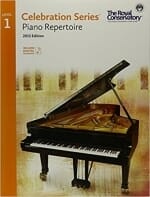
RCM Piano Repertoire
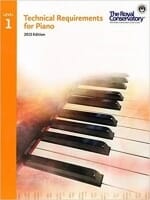
RCM Technical Requirements for Piano
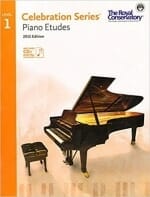
RCM Celebration Series Piano Etudes
Faber & Faber Piano Adventures

The 2nd Edition Primer Lesson Book introduces the keyboard, note values, and the grand staff. Students play in C 5-finger scale patterns, develop recognition of steps and skips, and learn letter names independent of finger number. Musicianship is built through the use of dynamics and coloristic experimentation with the pedal. The book is organized into units which represent the major concepts and skills. As new units are introduced, earlier concepts and skills are constantly reviewed.
Faber Piano Adventures

The 2nd Edition Level 1 Lesson Book introduces all the notes of the grand staff, elementary chord playing, and the concept of tonic and dominant notes. Students play in varied positions, reinforcing reading skills and recognizing intervals through the 5th. Musicianship is built with the introduction of legato and staccato touches. This level continues the interval orientation to reading across the full range of the Grand Staff. The 5-finger approach is presented here in a fresh, musically appealing way.
Belting - A

Written for ages 5 and 6, My First Piano Adventure captures the child’s playful spirit. Fun-filled songs, rhythm games and technique activities develop beginning keyboard skills.
The Brown Scale Book
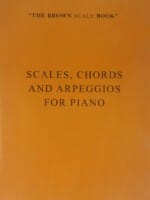
This essential resource includes all major and minor scales, triads, arpeggios, dominant sevenths, and chromatic scales organized by key. A favorite for decades, The Brown Scale Book belongs in every student’s library.

