
B.Mus (Western)
Mezzo-Soprano Emma Berube (she/her) showcases a range of repertoire in art song, opera, and music theatre. From Bach to Debussy and Sondheim to Schwartz, she has an appreciation and expertise for a wide range of music that tells a story.
Emma achieved her Bachelor of Music from the Don Wright Faculty of Music at Western University in 2023. During her time at Western she was involved in several theatrical, music theatre, and choral productions. Emma’s goal during her time at ABC is to connect with students through music and help them become proficient and confident musicians and humans.
Get to know Emma…Beyond the Bio!
Hobbies: Reading, Writing, Spending time with friends and family
Musical Influences: Stephen Sondheim, Jason Robert Brown, Taylor Swift
Favourite Food: Strawberries
Least Favourite Food: Olives
Favourite Song: Evermore – Taylor Swift
Favourite Movie: Little Women – Greta Gerwig
Favourite Movie Music: Peter Pan – James Newton Howard
Favourite Musical Theatre/Opera: Company – Stephen Sondheim
Best Quote from your Teacher: “Run as Fast as You Can”
Favourite Book: The Secret to Superhuman Strength – Alison Bechdel
Latest Homework from Emma
Is Emma Your Teacher?
Sign up now to get your weekly assignments delivered, and never lose your homework sheet again!
Assignments from June 19th
Hello Everyone!
Reminder: Next week is our last week of lessons before the summer semester! If you are interested in continuing lessons through the summer months and have not already registered, do so ASAP to secure a summer lesson slot!
Noreet:
Today we reviewed The Clock Strikes Thirteen! Noreet can start practice playing this song hands together. Pay close attention to the eighth note groups at the end of both phrases, specifically review the contour of the phrase (the direction the notes are going in, ascending or descending). Noreet should also follow the dynamic markings indicated in the song. Practice gradually getting louder and softer as indicated with the crescendo and diminuendo markings! We also sight-read The Elve’s Silver Hammer! Have Noreet review this song hands separate while also paying attention to any dynamic markings (forte, piano, crescendo etc.) or articulation markings (legato lines, staccato markings, accent marks) in the sheet music. We will try playing this hands together in class next week!
Eva:
Today we reviewed the first two phrases of Ferris Wheel! When practicing these phrases at home, encourage Eva to use both hands and all fingers to play the notes more smoothly. This will also help her read the notes as they ascend and descend both on the sheet music and in her hands! We also identified all the notes in the third phrase using the flashcards. Have Eva review these notes at home with the flashcards and encourage her to play them for you once this is finished. On a separate piece of paper Eva can also write out the notes in the third phrase if she would like. Use the flashcards to assist this process.
Thank you Everyone!
I’m looking forward to our last class of the spring season next week!
Happy Practicing!
Assignments from June 12th:
Hello Everyone!
Friendly reminder as we approach the end of the spring term, if you are interested in continuing lessons through the summer please reach out to Barnaby to claim a time slot. You can also renew for the fall semester as well. If you would like to keep your current time slot reach out to Barnaby ASAP.
Noreet:
Today we reviewed The Clock Strikes Thirteen! The song is short and straight forward, so when practicing, Noreet should focus on playing accurate rhythms and ensuring the right and left hands line up properly. Pay close attention to the half notes and eighth notes in the piece. Remember, the half note (2 beats) is twice as long as the quarter note (1 beat) and the eighth note (1/2 beat) is half as long as the quarter note. Use the metronome when practicing this song to help Noreet hear the Macro beat of the song. Please play the metronome at 85 Beats per Minute. I’ve also uploaded a rhythm worksheet for Noreet to complete. The sheet asks her to identify the eighth notes, quarter notes, and half notes on the page. She can circle these or colour them in. She then needs to write in where the macro beat and micro beat line up. See the first bar as an example. Finally, have Noreet play the 6 phrases hands separate and hands together. We will review this next week in class. You can find the rhythm worksheet here.
Christian:
Continue to practice Home on the Range. Isolate any bars that have gaps between them and practice playing through both to the end. When you can play these parts without hesitating, go back and play the whole phrase together. We also started Ode to Joy! When practicing, play this hands together. The left hand consists of sustained notes or phrases either a 3rd, 5th, or an octave below the melody line in the right hand. Other than that, the phrases in the two hands are identical. See if you can play this whole song start to finish hands together for next class. Finally, please remember to upload the sheet music of How Long Will I Love you for me to review. You can upload this to Student Uploads or to the Christian folder on google drive.
Thank you everyone!
I look forward to hearing how you all progress in our final few spring classes together!
Happy Practicing!
Assignments from Thursday May 29th
Hello Everyone!
Noreet:
Continue to practice Daydream hands together slowly. Review the third phrase hands separately when necessary. Remember the 4th phrase is identical to the first phrase! The last part has similar parts to the beginning of the song, just remember to play one octave up! When in doubt, re-read the sheet music and go back to practicing hands separate before trying hands together again. Noreet can also practice “The clock strikes thirteen”. We read this together in class together. Re-read this at home and review the song hands separately. The left hand plays the same chord for the whole song, so when Noreet feels confident with the right hand she can try to play the whole song hands together. We also learned what Crescendo and Diminuendo mean. When practicing “the clock strikes thirteen”, encourage Noreet to try playing louder and softer when the crescendo and diminuendo symbols appear in the music. We will review this in class next week.
Eva:
Continue to practice Sailing in the Sun hands together! If Eva forgets the final phrase of the song, remind her that most of the line is made of bars written in the song earlier – she’s already played them in the previous phrases! When she is ready to play the full song, encourage her to do so with as few pauses between phrases as possible. Challenge her to play as fast as she can. Review the first 2 phrases of Ferris Wheel together. If Eva gets stuck or forgets the notes, pull out the flashcards! Ask her to identify each note she sees in the phrase and to put them in order. Then go back to the sheet music and encourage her to play the full phrase hands together. Challenge Eva to read the 3rd phrase of Ferris Wheel with the flashcards as well.
Christian:
I’ve uploaded Homeward bound for you to the google drive. Review this hands separately to start. When you feel familiar with the sheet music, try playing hands together to fill in the gaps in the melody. You can also continue to practice Morning. Focus on consistency in this piece; each note is played with the same amount of pressure and played legato. You can find Home on the Range here.
Great work this month everyone! I look forward to hearing more progress in June!
Happy practicing!
Assignments from May 15th
Hello Everyone!
Noreet:
Welcome back! We were talking about the student recital before you left for Europe, it was supposed to be May 4th in person but unfortunately we had to cancel. However we are offering a digital recital instead! Today Noreet recorded “Ice Cream” and “More Ice Cream” to be added to the digital recital. Barnaby will be compiling all the submitted student performance videos for families to watch and enjoy at home! We also reviewed Daydream. Noreet can slowly start to play this song hands together. Warm up with the 3-5-4 exercise at the top of the page. When practicing, review the right and left hand separately to start, then try playing the first phrase hands together slowly. Once you feel confident with how to two parts line up musically and how they feel together in your hands, you can practice the second phrase hands together. Repeat the process until you can navigate the whole song hands together. We can review any challenging areas next week.
Vida:
(Assignments from our make-up class, May 17th)
It was great to see you at Lawrence Park today! Now that you are confident with both the right and left hands of “Under the Sea” work towards playing the whole song hands together. Play slowly to allow your hands the time to line up in the music. Pay close attention to the macro beat of the song. Write this in like we did with the first bar if the visual helps you to see which hand moves first. Remember that the left hand is twice as slow as it is mostly half notes – your right hand will move faster than your left. Once you can confidently play the whole song with both hands, we can learn Ed Sheeran’s “Under the Tree” or another song from your list. Focus on playing the first phrase hands together, reviewing the song hands separate in between if necessary. Once you feel confident playing the first phrase hands together, you can work on the second phrase hands together. Repeat this process for the whole song. For Mr. McGill’s Boop Sha Bop, focus on the highlighted bars (sticky notes). Isolate these bars, follow the instructions on the sticky note (faster eighth notes, slower quarter notes, play through the bar to the next bar), then go back and play the song again with these corrections in mind. Practicing with the metronome will help highlight some of these challenges. Aim for a tempo of 100BPM. Finally, sight read Loch Ness! We will review this together in class next week.
Eva:
Sorry we missed you this week! I look forward to hearing you play “Sailing in the Sun” next week!
Christian:
I hope you had a safe flight and are enjoying the wedding in Mexico!
Thank you everyone!
I look forward to learning more music next week!
Have a great long weekend!
Assignments from May 8th
Hello!
I just wanted to say thank you to everyone who submitted a video for the digital concert! I’m very much looking forward to seeing everyone’s performances!
Vida:
Great progress with Under the Sea! Continue to review the melody in the right hand. Read and play through bars 29-35 on their own this week. Encourage Vida to use all of her fingers when playing the passage in bars 31-32; dancing her fingers around the notes instead of moving her whole hand and wrist. Try the following fingering for that passage: 2/4-3-4-3/5. We can review this in class next week. When Vida is confident with these 7 bars, put them back into the whole song! Try playing the piece start to finish without stopping. You can also record the whole song for Vida to hear. Once Vida has mastered the right hand, go back and encourage her to sight-read the left hand! Read in small chunks and practice both hands separately this week. When practicing Mr. McGill’s Boop Sha Bop, make sure Vida’s eighth notes are twice as fast as her quarter notes. You can use the tapping exercise provided in the google drive as a visual aid; Vida will be able to see that the hand tapping the eighth notes is moving faster than the hand tapping quarter notes. In the context of the song, encourage Vida to think of the first eighth note of the pair as a trampoline or a springboard to the next note in the pair. Jump up to the next note quickly. You can also practice this song with a metronome to help Vida hear the macro beat of the song. Let Vida choose the tempo. Encourage her to choose a quick but manageable speed.
Eva:
Today we learned the last phrase of Sailing in the Sun! When practicing have Eva start with this phrase. Ask her to show you what she learned in class. Once she has reviewed the last phrase, she can go back and play the first 3 phrases for you. Help Eva become more familiar with the last phrase by drawing comparisons to bars that are similar or identical to bars in the first 3 phrases. Eva can circle identical bars with the same colour pencil if she would like. (Red for 2 matching bars and Green for 2 different matching bars). This will help Eva learn the “map” of the song and help her feel more confident when playing the whole song start to finish. You can also help Eva connect each phrase by asking her to play the last bar of the previous line and the first bar of the next line back to back. Do this for each phrase to help Eva hear and feel how each line flows into the next. You can then ask her to “perform” the whole song for you! You can also record Eva playing the song start to finish so that she can hear herself play! When listening back, ask Eva what she likes about what she hears and if there is anything she wants to review and polish.
Christian:
For this week when practicing How Long Will I Love You, focus on the left hand. Practice the large, broken chords slowly as you read each chord practice the stretch from your 5th finger to your 1st finger. Remember that most of the chords written are the same I, IV, and V (C, F, and G) chords from the intro of the song. This should make reading each individual note easier. Should you review the intro this week, remember that every other chord should be played twice as fast as written. We will review this in class when you return from Mexico. Continue to practice the melody in the right hand. Identify and review the larger intervals that appear in the melody to help you “map” the song. This will help your memory as it offers a landmark for where you are in the song and whats coming up (like that Major 6th that introduces the main melody in the descending eighth notes). Practice as much as you can between now and when you leave. Have a safe flight and a great time at the wedding!
Thank you everyone! Looking forward to more great lessons next week!
Assignments from April 24th
Hello Everyone!
Friendly reminder that our student recital is scheduled for next Sunday, May 4th at 1:30pm. It would be so great if all of you could attend even if you are not performing!
Noreet:
I hope you are having a fabulous time in Europe!
Vida:
For this week, please have Vida practice Rhino in the Mud! This is a great option for the recital. Help Vida record herself playing the song so she can hear, then ask her what specifically she likes about what she is doing and if there are any areas she wants to improve upon or change. Also, talk to her about the recital. Please remind her that “performance” is a skill on its own and requires practice as well. The recital would be a great chance to practice performing for an audience. The deadline to sign up is this Tuesday, if Vida does decide she want to perform, feel free to reach out to me via opus and I will add her name to the list. Continue to practice Mr. McGill’s Boop Sha Bop. Encourage Vida to use the metronome to ensure her eighth notes are “balanced” and stay in tempo. Vida should also use the second note in bars 10-12 and 14 as a “launchpad” to the next set of eighth notes. We will talk more about this in class next week. I’ve also uploaded a video of a rhythm exercise to the google drive for Vida to practice. With one hand, Vida is to tap quarter notes and with her left hand tap eighth notes at the same time. We tried this in class together, (its very much like rubbing your tummy and patting your head at the same time). Try this at different tempos so Vida can feel how the eighth notes fit into the quarter note. Please help Vida to sight-read more of Under the Sea before reviewing the material she played for me in class. Aim to read and practice at least 4 new bars so that Vida can add on to what she has already learned. You can find the video of the rhythm exercise here.
Eva:
This week we sight-read the second phrase of Sailing in the Sun! Please help Eva review these notes at home and encourage her to play this phrase for you! You can also take turns reading and playing. Have Eva name the notes as you play them then switch and help Eva name the notes as she plays. When she feels confident playing the second phrase, challenge her to play both the first phrase and second phrase together. Eva can also finish the colouring sheet I sent home. Have her assign a colour to each note, then ask her to find that specific note for that chosen colour e.x colour each F Green! The notes on the colouring sheet are identical to Sailing in the Sun, feel free to use the music in the book for reference and clarification if needed as I know Emma’s writing can be messy.
Christian:
This week please practice forming and playing the chords in your left hand for the first 8 bars of How Long Will I Love You. Also, sight-read as much as of the right hand in the 3rd phrase as you can on your own. When practicing the chords in the right hand at the beginning, focus on connecting each chord, with or without the roll. Use the metronome to ensure you are holing the chords for their full length. When practicing Morning, isolate any areas where you are pausing or are unsure of the notes. Practice these areas and bars on their own before connecting them back into the rest of the song. Work towards playing the whole song smoothly from start to finish by practicing at a slow tempo and slowly getting faster with each repetition. You can use the metronome for this if you find that helpful.
Thank you everyone for your hard work this week! I’ve seen some exciting improvements across all lessons. Keep up the great work!
Assignments from February 22nd
Happy Saturday Everyone!
Berke:
Please continue to warm up with both the G Major and D Major scale, playing them both hands together. Today we did some sight reading! I’ve uploaded a few more sight reading sheets to the google drive for Berke to warm up with. These exercises test how well Berke can read the notes on the staff. Please have him read “sight reading sheets 1, 2, and 3” when practicing this week. Remember, the goal of sight reading is to play the phrase from start to finish as accurately as possible. Have Berke play through these no more than 3 times, even if they’re not perfect. We will review them in class together next week. We also reviewed Mozart’s Minuet, playing hands together from measures 3-6. When practicing this piece, Berke can review both the right and and the left hand separately before practicing measures 3-6 hands together. For this week he is to slowly add on measures 2 and 7, playing both hands together. Isolate these measures, play them on their own to practice until confident then play measures 2-7 all together. You can find the sight reading pages here.
Great lesson today! I’m excited to see your progress next week!
Assignments from February 15th
Hello! We saw some really great progress this week!
Berke:
We reviewed and warmed up with our scales. Practice G Major hands together, focus on the fingering particularly in the descent of the scale. We learned D Major, this scale has 2 sharps F# and C#, this can be practiced slowly hands separately this week. We played through Mozart’s minuet in F Major. We’ve started playing parts of this hands together slowly. When practicing this piece, please remind Berke that both the right hand and the left hand start on F. Continue to practice both the right and and left hand separately, specifically the left hand as this is not the melody. Remind Berke that the B in measure 2 is to be played flat. When practicing this piece hands together, start with measures 4, 5, and 6. We practiced these in the lesson. Playing these three bars hands together smoothly, accurately, and confidently is the primary goal for this week. When Berke is confident with this he add on measure 3 or measure 7 (Berke’s choice). Practice either of these bars hands together on their own until comfortable and confident add on measures 4-6. Also, we discussed the importance of accurate fingerings when playing the minuet. Please print Mozart’s minuet for Berke as he would like to write in the fingerings under the notes. Have him bring this to class next week and we will correct it together. Finally, I’ve uploaded a sheet titled “Notes on the Staff” to the drive to help Berke with sight-reading. The sheet labels the notes on the staff and where they are on the keyboard. He can use this to help read if he gets stuck. You can find both the minuet and the sheet here.
Great class today! Some really great progress, I look forward to seeing how we improve next week.
Assignments from February 1st
Hello Saturday Friends!
Great lesson today!
Berke:
We learned a new scale today! Berke can now practice G Major, one octave, hands separately. He can also practice C Major with two octaves! Please help Berke by reminding him that both of his thumbs should be on C when he finishes the first octave before he starts the second. This anchor point will ensure proper fingering. We sight read more of Mozart’s Minuet in F Major. Our focus today was proper hand placement and fingerings to allow for efficient playing. Continue to read and practice this at home. Make sure Berke is practicing both the right hand melody as well as the left hand base line. Proper hand placement and fingering are imperative with this piece, please make sure Berke is starting the right hand with his 3rd finger and that the second note in the first 3 bars is played with the 5th finger. This will ensure Berke has enough fingers left to come back down the keyboard as the melody descends. For the bass line, Berke should start with his 5th finger so that he has room to climb with the keyboard. Ensure the C in the 3rd bar of the bass line is played with his 1st finger (thumb) so that he can reach the octave below with his 5th finger. Finally please make sure Berke plays the Cadential Movement at the end of both the first and second phrase in the bass line with his 1st, 3rd, and 5th fingers as practiced in class.
Cadential Movement: Acts a musical period at the end of a phrase. Creates resolution in the phrase.
Great progress this week! I’m looking forward to hearing Berke play more next week.
Assignments from January 25th
Hello!
What a great Saturday full of lessons!
Berke:
Today we reviewed our scales. Please continue practicing C Major hands together, paying close attention to the fingerings of the descent of the scale. Start to practice G Major hands together slowly. When practicing the triads at the end of the scale please ensure Berke plays these with his first, third, fourth, and fifth fingers. The chord should always start with the first finger (thumb) in the right hand, and fifth finger in the left hand. Practicing proper fingerings will help to ensure Berke’s fingers do not get tangled in ascending and descending scales. We also started to sight-read a new piece today! Berke expressed an interest in playing Mozart, so I have chosen Mozart’s Minuet in F Major. This is a selection in the Level One Royal Conservatory Repertoire book. Please help Berke to sight-read this at home up to the end of the second phrase. Should he get stuck, ask if the next note moves up or down and by how many lines and spaces. This will help guide Berke to the answer as we continue to learn how to sight read. You can also rely on the note names sheet I sent home the first week. A copy of this sheet as well as the Minuet and the C Major triads has been uploaded to the google drive. You can find these in the link below.
https://drive.google.com/drive/folders/1bJUyXO3FeNBIdhir_V72u45oNlDvneD1?usp=sharing
Thank you for the great lesson today! Happy practicing!
Homework from January 18th 2025
Hello! We had a very productive class today!
Berke:
We reviewed the C Major and D Major scales. For this week please practice with a metronome. This is available online for free via google. For the D Major scale please practice these hands separately at 75BPM (75 beats per minute). We also reviewed the C Major scale and tried playing it hands together today. Continue to practice the C Major scale playing both hands together at home slowly. Use the metronome and play at 60BPM. We also discussed intervals, triads, and chords. I’ve sent Berke home with a sheet with information on intervals and triads, this will also be uploaded to the google drive in Berke’s file for reference if need be. Practice playing all 8 intervals on the piano with both hands. Berke can also continue to practice the C Major chord “broken” (all three notes played individually) and “whole” (all 3 notes played at the same time). Finally, Berke has expressed interest in learning Mozart’s Turkish Waltz. I think this is a great goal to work towards. Please check online if there is sheet music available to download or purchase online and I will do the same so we can work on it next week.
Great lesson today! Happy practicing!
Preferred Books for Emma’s Students
Click to buy them here, and they’ll come right to your house! What could be easier?
RCM Piano Repertoire
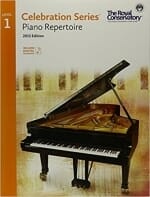
RCM Technical Requirements for Piano
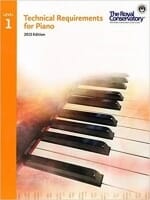
RCM Celebration Series Piano Etudes
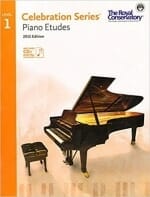
Faber & Faber Piano Adventures

The 2nd Edition Primer Lesson Book introduces the keyboard, note values, and the grand staff. Students play in C 5-finger scale patterns, develop recognition of steps and skips, and learn letter names independent of finger number. Musicianship is built through the use of dynamics and coloristic experimentation with the pedal. The book is organized into units which represent the major concepts and skills. As new units are introduced, earlier concepts and skills are constantly reviewed.
Faber Piano Adventures

The 2nd Edition Level 1 Lesson Book introduces all the notes of the grand staff, elementary chord playing, and the concept of tonic and dominant notes. Students play in varied positions, reinforcing reading skills and recognizing intervals through the 5th. Musicianship is built with the introduction of legato and staccato touches. This level continues the interval orientation to reading across the full range of the Grand Staff. The 5-finger approach is presented here in a fresh, musically appealing way.
Belting - A

Written for ages 5 and 6, My First Piano Adventure captures the child’s playful spirit. Fun-filled songs, rhythm games and technique activities develop beginning keyboard skills.
The Brown Scale Book
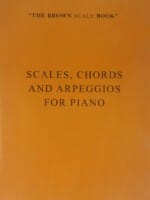
This essential resource includes all major and minor scales, triads, arpeggios, dominant sevenths, and chromatic scales organized by key. A favorite for decades, The Brown Scale Book belongs in every student’s library.

