M.Mus (U of T)
B.Mus (Oberlin)
Guitarist Gergely Szabo has an Advanced Diploma in Music Performance from Cambrian College where he majored in the classical guitar. Over his time there, he completed 2 years of comprehensive pedagogy courses. He also gained well grounded vocal skills, as well as basic knowledge on the piano. Outside of classical music, he exhibits a repertoire of skills and knowledge in playing the genres of rock, blues, and heavy metal music. He has experience in teaching the guitar and the ukulele to a range of people aged 6 to 54.
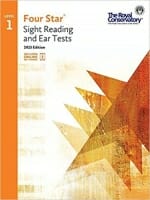
Gergely’s teaching methods include both the use of books and digital methods. The three main books he uses to teach guitar are as follows: “Guitar Method Book 1 by Will Schmid and Greg Koch,” “Four Star Sight Reading and Ear Tests RCM Level 1,” and “Classical Guitar Repertoire and Etudes RCM Level 1.” For teaching ukulele, he uses the book “Ukulele Songs for 1, 2, or 3 players by Elizabeth Ragsdale.” Aside from these, he frequently uses the Muse Score application as a play-along practicing tool.
Gergely’s passion for music and his dedication to growing the love of music in others are the biggest reasons why he teaches guitar and ukulele. His approach to teaching involves learning through play. The material he covers with his students is always delivered in a way that is highly interactive. Most of the assigned exercises he gives involve the elements of play that students can enjoy both in class and as homework.
Get to know Gergely…Beyond the Bio!
Coming soon!
Hobbies:
Musical influences:
Favourite food:
Least favourite food:
Favourite music:
Favourite album:
Favourite movie:
Favourite musical theatre/opera:
Best quote from your teacher:
Favourite quote:
Favourite book:
Latest Homework from Gergely
Is Gergely Your Teacher?
Sign up now to get your weekly assignments delivered, and never lose your homework sheet again!
Assignments for the Week of November 16th, 2024
Shakira
Technical Exercises
- Finding and playing 5 finger major scales in a C, G, and D position. (Watching out for F# in D Major!)
- Practicing a C Major 1 octave scale, hands separately – practicing as solid blocked hand positions (groups of 3 and 5 fingers), as well as stepping through the whole scale.
Bartok – Practicing reading exercises #1-3 hands separately and together.
- Finding starting notes (FACE in the space for Treble clef, All Cows Eat Grass for Bass clef) and watching for steps up or down as you play through first hands separately, then together.
Lunar Eclipse – Continuing work hands together in our first section.
- Practicing Left Hand on its own so you know where it will be leaping. Double check and write in notes if you need to.
- When adding hands together, remember that we are passing the idea back and forth between our LH melody and RH C minor triad pattern.
Assignments for week of November 14, 2024
Hello all! Your practice notes are as follows
Eva
What we learned/reviewed in lesson:
- We have officially learned all the white notes on the keyboard (ABCDEFG)
- Composed a piece in 4/4 time; practiced using quarter notes, half notes, and whole notes.
- Discussed the different qualities of sounds on the piano:
- Very very high notes are twinkly and bright, reminding us of mice.
- Very very low notes are rumbly, like a dragon
- Played through Balloons, and Merrily We Roll Along
- Work towards Men from Mars for next week
Recommended minutes to practice:
- 10-15 minutes, 4 to 5 days a week
What to practice:
- Men from Mars
- Finger patterns on a flat surface
How to practice efficiently:
- Bringing back the pizza analogy from last week: instead of trying to “digest” the whole pizza (piano piece) at once, isolate one of these things to practice:
- Can you say all the finger numbers of the piece?
- Can you name all the notes you’re playing?
- Can you clap the rhythm on its own?
How can caregivers support practice:
- When Eva is at the keyboard, keep an eye on hand positioning — are we still trying to maintain the soft ‘c’ shape? (see previous lesson notes). It will take time to develop the muscles/fine motor control but gentle reminders throughout practice will help.
Chris
What we learned/reviewed in lesson:
- Reviewed roman trumpets
- Highlight spot of practice — how to approach and break down. Can isolate 1-2 measures and break them down into fundamentals: clapping or saying the rhythm, saying/singing the finger numbers or notes, hand positioning and when to shift.
- Played through duet
- Planetarium — introducing the pedal; creating atmosphere on the piano
- Minuet
- Introduced the dotted quarter note
- Broke down time signature and how they work
- See attached image for notes on above
- 5 note scales
- Good work on them this week! It will continue to take time and practice to get the non-dominant hand doing what we want it to do. Keep it up!
- Can practice them in many different ways; musical skills that we practice with scales will transfer over to pieces (dynamics, articulation, phrasing).
- Note: achieving a wide dynamic range on a keyboard can be difficult due to the limitations of the structure (in contrast to an upright piano or a grand piano). For this week, see if you can play through the scales in these ways:
- Forte (try playing the scale with just your arm as well, reinforce how the power and volume come with using larger muscle groups)
- Accenting every second beat and vice versa (see attached image)
- Staccato all notes (can use the imagery of the keys being very hot to touch — the fingers/hands will release from the piano key very quickly
Recommended time to practice:
- 20-30 minutes 4 or 5 days of the week
What to practice:
- Continue working through Minuet and Russian Sailor dance.
- Additional piece if interested: Midnight Ride
- 5 note scales and ending chords; try practicing these with the variations mentioned above
- These can be practiced hands separately and then together
- C position and G position. If you’re feeling bold, you can try the scale in an “A” position — note some differences you hear between a 5 note scale played on C versus on A
How to practice efficiently:
- If we’re noticing a lot of resistance with our non-dominant hand while playing, try leading some of your practice starting with your left hand (ex: if you’re sitting down to do scales, start with a left hand scale. Or if you’re learning a new piece, start by reading just the left hand)
- Often, we become reliant on our dominant hand for everyday tasks, causing it to feel bizarre trying to have our non-dominant hand mirror/play along with our right hand. Don’t put the pressure on yourself to have the left hand play exactly like the right hand by your next lesson, this will take time.
- If you want to try something fun, try doing an activity (like eating or brushing your teeth) with your non-dominant hand — it really highlights how much we rely on our dominant hand.
Happy practicing! See you all next week
Preferred Books for Gergely’s Students
Click to buy them here, and they’ll come right to your house! What could be easier?
Hal Leonard Guitar Method
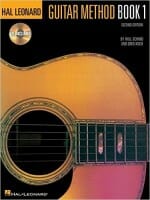
The second edition of this world-famous method by Will Schmid and Greg Koch is preferred by teachers because it makes them more effective while making their job easier. Students enjoy its easy-to-follow format that gives them a solid music education while letting them play songs right away. Book 1 provides beginning instruction including tuning, 1st position melody playing, C, G, G7, D7, and Em chords, rhythms through eighth notes, solos and ensembles and strumming.
Four Star Sight Reading and Ear Tests