M.Mus (U of T)
B.Mus (Oberlin)
Guitarist Gergely Szabo has an Advanced Diploma in Music Performance from Cambrian College where he majored in the classical guitar. Over his time there, he completed 2 years of comprehensive pedagogy courses. He also gained well grounded vocal skills, as well as basic knowledge on the piano. Outside of classical music, he exhibits a repertoire of skills and knowledge in playing the genres of rock, blues, and heavy metal music. He has experience in teaching the guitar and the ukulele to a range of people aged 6 to 54.
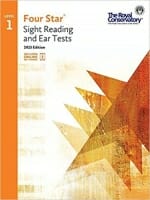
Gergely’s teaching methods include both the use of books and digital methods. The three main books he uses to teach guitar are as follows: “Guitar Method Book 1 by Will Schmid and Greg Koch,” “Four Star Sight Reading and Ear Tests RCM Level 1,” and “Classical Guitar Repertoire and Etudes RCM Level 1.” For teaching ukulele, he uses the book “Ukulele Songs for 1, 2, or 3 players by Elizabeth Ragsdale.” Aside from these, he frequently uses the Muse Score application as a play-along practicing tool.
Gergely’s passion for music and his dedication to growing the love of music in others are the biggest reasons why he teaches guitar and ukulele. His approach to teaching involves learning through play. The material he covers with his students is always delivered in a way that is highly interactive. Most of the assigned exercises he gives involve the elements of play that students can enjoy both in class and as homework.
Get to know Gergely…Beyond the Bio!
Coming soon!
Hobbies:
Musical influences:
Favourite food:
Least favourite food:
Favourite music:
Favourite album:
Favourite movie:
Favourite musical theatre/opera:
Best quote from your teacher:
Favourite quote:
Favourite book:
Latest Homework from Gergely
Is Gergely Your Teacher?
Sign up now to get your weekly assignments delivered, and never lose your homework sheet again!
Assignments for the Week of June 22-28
Hi everyone,
By now you have all heard that I won’t be returning as a regular teacher at ABC in the Fall of 2023. June will be my last month as I don’t have any students continuing through the summer. I wanted to let you all know that I have really enjoyed having each one of you as a student and I will miss seeing you every week very much! If you have any questions or concerns about next year, please feel free to reach out to me at [email protected] I’d be happy to chat with you!
Here are your assignments for this week:
Elliot
Recommended minutes to practice: 15-20 minutes per day
What to practice: Practice the Intro, Verse, and Chorus from “Smells Like Teen Spirit” by Nirvana.
How to practice it most effectively: Review the fill at the beginning of the intro and make sure the bass drum doesn’t hold you back. You want to make sure that your hands drive the rhythm forward. Also, review the different transitions throughout the verse: moving from a tightly closed hi-hat to a splashy hi-hat, and then adding the extra bass drum notes a few measures later. Finally, look at the new bar in the chorus and practice playing it together with the regular chorus beat. Before you try to play it quickly, practice playing it slow and making sure the transition is solid.
Jared
Recommended minutes to practice: 15-20 minutes per day
What to practice: Practice the beats and fills from the first three sections of “Oh Darlin’.”
How to practice it most effectively: The most important thing about playing this song is that it should have a triplet-based feel, also known as a 6/8 feel. When you’re counting the rhythms, make sure that you’re going up to 6, not 4, and that each of the rhythms that you play fit with the groove of the song. Once you feel comfortable with each of the sections, then practice playing them together with the recording of the song. Listen carefully to make sure everything matches up.
Jude
Recommended minutes to practice: 10-15 minutes per day
What to practice: Practice playing through Seven Nation Army with the recording of the song.
How to practice it most effectively: You can play all the parts of the song now! So the next step is get really familiar with the song so that you can anticipate when to make the transitions between different sections of the song. Remember that there are 3 main sections, and each of those sections has the verse, the build-up, and the chorus. Sections 1 and 2 repeat the build-up after the chorus, but section 3 doesn’t. Also, the chorus is twice as long in section 2 compared to the other sections. After you play through the song a few times with the recording, you’ll start to recognize the transitions and remember the changes.
Noah
Recommended minutes to practice: 15-20 minutes per day
What to practice: Keep reviewing “Good Times Bad Times” in preparation for the talent show.
How to practice it most effectively: Try out what we did in your lesson this week: practice playing a few parts of the song with your eyes closed. Obviously you’re not going to perform this way at the talent show, but closing our eyes often helps us to listen better and this can help you to lock in even more with the recording of the song when you’re practicing at home. It really works! You’ll hear the song better and you’ll even hear yourself better so you can tell where are the sections that you’re not 100% locked in. This will help you with “fine-tuning” the song in preparation for the talent show.
Koel
Recommended minutes to practice: 15-20 minutes per day
What to practice: Practice the full chorus section of “Smells Like Teen Spirit” this week and review the other sections.
How to practice it most effectively: Take a close look at the four new bars on the second page of the song. Work through them slowly and see if you can connect them to one another without stopping or pausing. Once you feel comfortable doing this, then back up to the last line on page 1 and see if you can play the full chorus all together without stopping. After that, review the intro and verse and see how it feels to play everything together.
Tuesday, June 20th
JOSH
OZZIE
ROBBIE
LEO
THEA & RACHEL
Preferred Books for Gergely’s Students
Click to buy them here, and they’ll come right to your house! What could be easier?
Hal Leonard Guitar Method
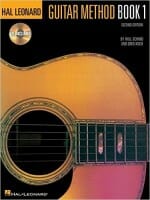
The second edition of this world-famous method by Will Schmid and Greg Koch is preferred by teachers because it makes them more effective while making their job easier. Students enjoy its easy-to-follow format that gives them a solid music education while letting them play songs right away. Book 1 provides beginning instruction including tuning, 1st position melody playing, C, G, G7, D7, and Em chords, rhythms through eighth notes, solos and ensembles and strumming.
Four Star Sight Reading and Ear Tests