
Guitarist Gergely Szabo has an Advanced Diploma in Music Performance from Cambrian College where he majored in the classical guitar. Over his time there, he completed 2 years of comprehensive pedagogy courses. He also gained well grounded vocal skills, as well as basic knowledge on the piano. Outside of classical music, he exhibits a repertoire of skills and knowledge in playing the genres of rock, blues, and heavy metal music. He has experience in teaching the guitar and the ukulele to a range of people aged 6 to 54.
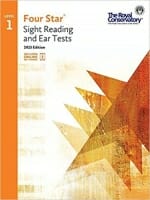
Gergely’s teaching methods include both the use of books and digital methods. The three main books he uses to teach guitar are as follows: “Guitar Method Book 1 by Will Schmid and Greg Koch,” “Four Star Sight Reading and Ear Tests RCM Level 1,” and “Classical Guitar Repertoire and Etudes RCM Level 1.” For teaching ukulele, he uses the book “Ukulele Songs for 1, 2, or 3 players by Elizabeth Ragsdale.” Aside from these, he frequently uses the Muse Score application as a play-along practicing tool.
Gergely’s passion for music and his dedication to growing the love of music in others are the biggest reasons why he teaches guitar and ukulele. His approach to teaching involves learning through play. The material he covers with his students is always delivered in a way that is highly interactive. Most of the assigned exercises he gives involve the elements of play that students can enjoy both in class and as homework.
Get to know Gergely…Beyond the Bio!
Coming soon!
Hobbies:
Musical influences:
Favourite food:
Least favourite food:
Favourite music:
Favourite album:
Favourite movie:
Favourite musical theatre/opera:
Best quote from your teacher:
Favourite quote:
Favourite book:
Latest Homework from Gergely
Is Gergely Your Teacher?
Sign up now to get your weekly assignments delivered, and never lose your homework sheet again!
Assignments from October 23rd
Hello Everyone!
Great lessons all around this week!!
Georgia:
Today, without Georgia’s piano method book, we took the opportunity to have a dictation lesson! We started Sally’s Song from the Nightmare Before Christmas. Georgia was able to plunk out the notes for the first three phrases of the song by focusing on the contour of the melody line, and using the recording of the song for reference. We also talked about how to determine the rhythm of the song by listening to where the words line up with the beat of the song. For this week, Georgia can continue to practice the first phrase of Purple Cow in her method book as well as the first three phrases we have written from Sally’s Song so far. If she would like, Georgia can use the reverse side of “Sally’s Song” to continue dictating the song at home. If she gets stuck, please help her by asking her leading questions: does it sound like the notes get higher or lower? Which words are held for longer than others? We can correct this work next week when we finish dictating Sally’s Song.
Noreet:
Today we reviewed the difference between Parallel and Contrary Motion. There are bars in Ode to Joy that flip between these two directions. Noreet should review these bars carefully to ensure her hands are moving in the correct direction and playing the correct notes together. We also reviewed what tension and resolution mean in music. Noreet knows where these moments of tension are in the music – they’re also marked in her book. When practicing, she should isolate these bars and play them on their own so that she can hear them out of context of the full song/phrase. Practicing this way will help her recognize and become familiar with these tense moments when playing the full song. Noreet also mentioned an interest in conducting! We reviewed different time signatures and discussed the role of the conductor in an ensemble. I then showed her how to conduct in 4/4 time. She can play with this at home by conducting as she listens to music at home. When reviewing Ode to Joy hands separately, challenge Noreet to conduct with the hand that is not playing!
Eva:
Today we reviewed the Haunted Mouse! In class Eva read the first two phrases with minimal assistance. Please review these two lines at home, use the flashcards if necessary. I played the third line for Eva at the end of class to point out how the third line is just the beginning of the first and second line combined! Encourage her to play all three lines at home. Please also help her sight read the final line of the song. To do this, Eva can plunk out the notes on the piano, or you can use the flashcard game. I’ve also given Eva a replacement notebook to be filled in and coloured at home. If you are able, please also review Classic Dance as we will continue with both Haunted Mouse and Classic Dance next week!
Benji:
Today Benji played Sailing in the Sun! For this week when practicing this song, encourage Benji to play along to the metronome to ensure he does not speed up or slow down between phrases. The metronome can be set between 80-120 beats per minute. Start at a slower pace (80BPM) and with each repetition increase the speed a little. The goal for next week is for Benji to play the whole song at 120BPM. We also started Ferris Wheel! We learned the first two phrases in class. We also talked about why these two phrases sound very similar to each other by discussing scale degrees and intervals. The first phrase of Ferris Wheel starts on an E, but the second phrase starts on a C. The second phrase starts a third lower than the first phrase. With pencil we labelled other thirds that appear in the first two phrases. Please help Benji review the notes for Ferris Wheel at home, and when playing the song ensure the notes are held for their full written value. If necessary, flip to the “Get Ready for Take Off” page of the book to review note values. Finally, Benji learned the C Major scale! He can use this scale to warm up his fingers before practicing Sailing in the Sun and Ferris Wheel. Make sure Benji starts this scale with his thumb and uses all of his fingers to walk up and down the keys. The fingering for this scale is as follows (1,2,3,1,2,3,4,5) with 1 being the thumb and 5 being the pinky finger. Reverse this order when descending the scale.
Clara:
Today Clara played Owl in the Night! Please continue to practice this song at home and ensure Clara focuses on the dynamic markings in the piece! When reviewing Owl in the Night we also talked about minor keys! Clara now knows that the relative minor of a major key can be found by identifying the 6th scale degree of the Major scale! I’ve given her a sheet that shows this with C Major and A minor as well as E flat Major and c minor. Clara can practice all four of these scales for warm up. We started to talk about Major 7th chords as the cadence for Owl in the Night uses a V7 chord. This is labelled in her sheet music. We will review 7th chords next week. Finally, Clara sight read Skating Waltz! She can continue to review these notes at home, paying close attention to when she plays 3rds in the left hand and when she plays 4ths – the 4ths are marked in her sheet music.
Thank you everyone!
Looking forward to more great lessons next week!
Homework for October 22-29
Nova
Hi Nova, it was great meeting you today! Here is this week’s homework:
Recommended minutes to practice: 10-15 min per day
What to practice: Faber 1 C scale (page 10), Sailing in the Sun (page 11)
How to practice:
-Follow fingering that is on the page
-Keep in mind note values (quarter=one beat, half= two beats, etc.), count out loud while practicing
– practice playing legato (smooth); lift finger off the note just as the next finger is ready to play so that they connect
How parents can support practice:
Listen and guide
See you next week :)
Preferred Books for Gergely’s Students
Click to buy them here, and they’ll come right to your house! What could be easier?
Hal Leonard Guitar Method
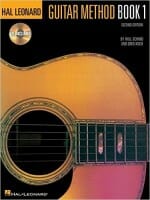
The second edition of this world-famous method by Will Schmid and Greg Koch is preferred by teachers because it makes them more effective while making their job easier. Students enjoy its easy-to-follow format that gives them a solid music education while letting them play songs right away. Book 1 provides beginning instruction including tuning, 1st position melody playing, C, G, G7, D7, and Em chords, rhythms through eighth notes, solos and ensembles and strumming.
Four Star Sight Reading and Ear Tests