
Guitarist Gergely Szabo has an Advanced Diploma in Music Performance from Cambrian College where he majored in the classical guitar. Over his time there, he completed 2 years of comprehensive pedagogy courses. He also gained well grounded vocal skills, as well as basic knowledge on the piano. Outside of classical music, he exhibits a repertoire of skills and knowledge in playing the genres of rock, blues, and heavy metal music. He has experience in teaching the guitar and the ukulele to a range of people aged 6 to 54.
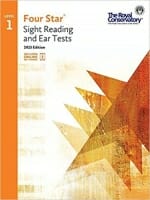
Gergely’s teaching methods include both the use of books and digital methods. The three main books he uses to teach guitar are as follows: “Guitar Method Book 1 by Will Schmid and Greg Koch,” “Four Star Sight Reading and Ear Tests RCM Level 1,” and “Classical Guitar Repertoire and Etudes RCM Level 1.” For teaching ukulele, he uses the book “Ukulele Songs for 1, 2, or 3 players by Elizabeth Ragsdale.” Aside from these, he frequently uses the Muse Score application as a play-along practicing tool.
Gergely’s passion for music and his dedication to growing the love of music in others are the biggest reasons why he teaches guitar and ukulele. His approach to teaching involves learning through play. The material he covers with his students is always delivered in a way that is highly interactive. Most of the assigned exercises he gives involve the elements of play that students can enjoy both in class and as homework.
Get to know Gergely…Beyond the Bio!
Coming soon!
Hobbies:
Musical influences:
Favourite food:
Least favourite food:
Favourite music:
Favourite album:
Favourite movie:
Favourite musical theatre/opera:
Best quote from your teacher:
Favourite quote:
Favourite book:
Latest Homework from Gergely
Is Gergely Your Teacher?
Sign up now to get your weekly assignments delivered, and never lose your homework sheet again!
Efe – October 18th
Hi Efe and family! Below is the homework for this week. The lower section covers the piece we went over in class today. The higher section describes some important practicing principles that go for all of the work we’ll be doing going forward, as well as a great amount of the music practice you will do later in your life.
Principles to be mindful of
- 30 minutes a day is a great amount. I’m very pleased to hear that this is what you often do, Efe. If it isn’t possible for one week here or there, it’s okay. It happens. But in those cases, I would like you to still try and practice for at least 5 minutes everyday. As we discussed, it is better to do 5 minutes of practice everyday leading up to our lesson than to do only one day for a much longer time.
- For the harder parts of any piece I give you, make sure you practice those separately. Spend time only on those bars, if that’s all you have time for in one day. Then once they’re comfortable (that is, without any mistakes and you know exactly what you’re doing), you may attempt to play them as part of the whole song played from start to finish. So: this week, start by working on those hard parts that I circled in Ode to Joy.
Ode to Joy – Page 10, song number 17
- Be mindful of the picking directions. I’m strict with this, because it is an important technique that I want you to start learning. It’s called alternate picking. I circled the hard parts in the Guitar Method 1 book. Like I said, practice these separately.
- Economy picking is also an important technique on the guitar. This is the technique wherein we don’t just pick up and down, but rather we also include two consecutive down picks or two consecutive up picks as we play. We will look at this more in later lessons, but for now, it is important that you start to get into the habit of alternate picking. Hence, I’m giving you pieces that require only this picking technique for now.
- Go no faster than 57bpm. For everything in this piece. One quarter note per beat.
I can see that you’re absorbing the concepts I’ve been teaching in class. I’m pleased to see it and I’m proud of you, Efe. I know you’ll be busy, but like I said: if the 30 minute practice goal is not realistic, then please just do a minimum of 5 minutes a day.
Thank you! See you in a week!
Assignments from Thursday October 16th
Hello Everybody!
I hope you all had a great long weekend, and a Happy Thanksgiving to those who got together with loved ones!
Georgia:
Today Georgia finished learning the Clown! Now that Georgia is comfortable playing all the notes in the song, we discussed the structure of the piece. We learned how music has different sections within songs and can be labeled differently based on the notes in each section. Georgia now understands that The Clown is in ABA format. For this week, Georgia is to continue practicing The Clown, but she is encouraged to use a metronome when playing to ensure a steady beat and even tempo when playing. Each click of the metronome equals one beat, or one quarter note. You can use google to access a free metronome. Remind Georgia to set it to a speed between 100-120 beats per minute when playing. She is encouraged to practice at different speeds within this range. Georgia can also start to practice Purple Cow! This week Georgia should write in the notes of this song only in the designated boxes. She should try sight-reading the rest of the first line of Purple Cow on her own at home. We will continue learning this song and make any necessary corrections next week.
Noreet:
Today we took a break from Ode to Joy and learned the first two lines of I Am the King. Noreet should continue practicing these two lines at home in between her practice of Ode to Joy. When practicing Ode to Joy, Noreet should practice line by line reviewing the right hand, then the left hand, then slowly putting both hands together. Encourage her to go back and review any mistakes before she moves onto the next line. She is to use this method to practice the first 4 lines and the last 2 lines of the song. We will review the fifth and sixth lines in class next week. Also, I have highlighted spots in the music where Noreet plays in contrary motion. Noreet should pay close attention to these spots as this means her hands will move in opposite directions to each other.
Eva:
Today in class Eva wanted to review Sailing in the Sun. We focused on the last line of the song and Eva can now confidently play the whole song! We also reviewed the first line of Classic Dance. I played the second line for Eva and explained that this line simply alternates notes and gets a little higher with every bar. She has a colouring/worksheet at home that shows her this. Please encourage Eva to practice Classic Dance at home. Remind her to start in C positon! Focus on the second line at home. You can use the colouring/worksheet to remind her of the notes. Help Eva connect the worksheet to the sheet music by pointing out that the notes she is being asked to play are the same notes she has coloured. She can play from the colouring sheet for now if the colour-coded notes are easier for her to understand. Finally, Eva was given a new notebook! The notebook uses the same concept as the flashcards, but it is up to Eva to fill in the answers! There are still blank pages so I will add some questions next week.
Benji:
This week, when reviewing Sailing in the Sun, Benji was able to read all of the notes by himself with minimal guidance. We played the whole song with both hands and reviewed the dynamic markings in the song. When practicing at home, should Benji get stuck, remind him that the first note of the song is a C, then ask him if the next note is higher or lower than C. Using this method, Benji should be able to play all of the notes in the song. Most of the notes in Sailing in the Sun are in alphabetical order, there are not any big jumps. If there are any problem areas while practicing at home, we can review them in class next week. Once you have reviewed the notes, encourage Benji to play the whole song with the dynamic markings! These dynamic markings are indicated by the mf, p, and f written under specific lines of the song. Should he forget what these mean, they are written in the review page of at the beginning of his book. I’ve also recorded a video of myself playing the song for reference. You can find that video here. Please encourage Benji to try reading the notes before using the video as I do not want him to merely copy what I am doing. You can help him by asking guiding questions about what he sees on the page. Allowing Benji to find the answer on his own will better his musical understanding.
Clara:
Today we reviewed Bumper Cars and used this song to discuss song structure! Clara now understands that Bumper Cars is in ABA format. We also reviewed Melody in G to compare structure and Clara identified that this song is in AA prime format. Clara also learned what a Cadence is! The difference between the A and A prime sections of Melody in G is the Cadence at the end. We will continue discussing song structure and Cadences over the next few weeks. Finally, we started Owl in the Night! For this week, Clara is to practice at least the A section of this song, but can play the whole song if she wishes. We will review Owl in the Night next week and learn more about minor keys!
Christian:
Great to see you! Thank you for your work on the scientist in your absence. For this week continue practicing the new chords we reviewed in class. Focus on transitioning from chord to chord. You can use a metronome to push yourself – start slow and increase the metronome with each repetition until you can comfortable transition from chord to chord at a quick tempo. If you can find the video you referenced the other week, please bring that to our next lesson and we can break down more of the concepts that creator mentions in the video. I will draft the right hand of the melody for you to sight-read over the next week, we will review this in class.
Great lessons all around this week everyone!
Looking forward to seeing you all again next Thursday!
Preferred Books for Gergely’s Students
Click to buy them here, and they’ll come right to your house! What could be easier?
Hal Leonard Guitar Method
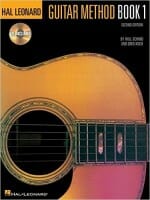
The second edition of this world-famous method by Will Schmid and Greg Koch is preferred by teachers because it makes them more effective while making their job easier. Students enjoy its easy-to-follow format that gives them a solid music education while letting them play songs right away. Book 1 provides beginning instruction including tuning, 1st position melody playing, C, G, G7, D7, and Em chords, rhythms through eighth notes, solos and ensembles and strumming.
Four Star Sight Reading and Ear Tests