
Guitarist Gergely Szabo has an Advanced Diploma in Music Performance from Cambrian College where he majored in the classical guitar. Over his time there, he completed 2 years of comprehensive pedagogy courses. He also gained well grounded vocal skills, as well as basic knowledge on the piano. Outside of classical music, he exhibits a repertoire of skills and knowledge in playing the genres of rock, blues, and heavy metal music. He has experience in teaching the guitar and the ukulele to a range of people aged 6 to 54.
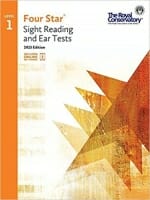
Gergely’s teaching methods include both the use of books and digital methods. The three main books he uses to teach guitar are as follows: “Guitar Method Book 1 by Will Schmid and Greg Koch,” “Four Star Sight Reading and Ear Tests RCM Level 1,” and “Classical Guitar Repertoire and Etudes RCM Level 1.” For teaching ukulele, he uses the book “Ukulele Songs for 1, 2, or 3 players by Elizabeth Ragsdale.” Aside from these, he frequently uses the Muse Score application as a play-along practicing tool.
Gergely’s passion for music and his dedication to growing the love of music in others are the biggest reasons why he teaches guitar and ukulele. His approach to teaching involves learning through play. The material he covers with his students is always delivered in a way that is highly interactive. Most of the assigned exercises he gives involve the elements of play that students can enjoy both in class and as homework.
Get to know Gergely…Beyond the Bio!
Coming soon!
Hobbies:
Musical influences:
Favourite food:
Least favourite food:
Favourite music:
Favourite album:
Favourite movie:
Favourite musical theatre/opera:
Best quote from your teacher:
Favourite quote:
Favourite book:
Latest Homework from Gergely
Is Gergely Your Teacher?
Sign up now to get your weekly assignments delivered, and never lose your homework sheet again!
Assignments from May 2nd
Hello Everybody!
Student progress reports have gone out! Please review these and let me know if you have any questions. Also, just a reminder that the recital has been postponed to June! The official date is TBD, but all students should be reviewing their chosen recital piece in the next coming weeks.
Berke
Today we finished the Andante in g minor! Berke should continue to practice this song if it is the piece he would be willing to play at the recital! When practicing this week, Berke should try different tempos. Start very slow to help connect each bar and each phrase smoothly. When practicing at such a slow tempo the focus should be transitioning the hands from one note to the next, the melody is not the priority. Start at 60BPM, then slowly increase the tempo to see how fast Berke can play the song without falling behind. If he starts to drag, he should review the phrase slowly again before returning to the faster tempo. Berke also has a sheet of all the technical requirements for level 1! This week for warm up Berke should continue to use the contrary motion scale and the chromatic scale before practicing the C Major and G Major triads both solid and broken. Use a metronome when you do this. Broken triads are to be played like triplets at 50BPM and solid triads are to be played at 100BPM with rests between chords.
Thank you!
See you next week!
Assignments from April 30th
Hello Everybody!
This semester’s progress reports have gone out! Please review these and let me know if you have any questions. Also, just a reminder that our recital has been postponed to June! Official date TBD, but all students should be reviewing their chosen piece over the next few weeks so they’re ready to play in June!
Georgia
Georgia has chosen the Minuet and Trio for the recital in June! She should continue to practice playing this song in the next coming weeks. We reviewed the C Major and G Major triads this week as well. Georgia should use these as a warm up, playing the root/first inversion/second inversion/root pattern both broken and solid. Georgia’s dedication to practicing this week was evident! Keep it up!
Noreet
Noreet has chosen Ode to Joy for the recital in June! When practicing this song, please encourage Noreet to watch the notes on the page and not her hands. She can glance to double check her hand positioning, but her eyeline should be on the page, not the keys. For warm up this week Noreet can continue to use the chromatic scale, starting on C. She should also start practicing her scales hands together! Start with C Major and G Major hands together, we will add more next week.
Clara
This week we reviewed Ukrainian Folk song, which is a contender for the recital in June! When practicing this song this week, Clara should review each hand separately. She should focus specifically on the left hand and the contour of the line to make sure Clara can confidently navigate the bass notes while playing hands together. Ask her to identify the interval of any large jumps and to circle the passing or neighboring tones she sees in the bass line to help deepen Clara’s understanding of the components of the phrase. When practicing the whole song hands together, Clara should focus on bringing the song up to tempo. She can start under, at 80BPM, and slowly increase from there. Should she start to drag as the tempo increases, remind her to go back and review individual bars slowly, hands together, before trying the whole phrase again up to tempo.
Thank you everyone!
See you all next week.
Efe – Jan 10th
Hi Efe!
Here’s the rundown of what to do for this week.
Chords
Reacquaint yourself with the E, Em (E minor), G, and B chords.
- The Google Drive provided on December 6th shows you how to play the E chord. https://drive.google.com/drive/u/0/folders/1cURXZdyFoL_6FZX5V4COTxCljwXKq8wO
- The B chord is played on frets 7, 9, 9, and 8 going from the low E string up to the G string. The fingerings are 5 (the thumb), 3, 4, and 2, respectively. Feel free to be nice and tough with gripping this. If it gets painful, rest your hand. Do some stretches (you’ll see some below), then get right back to it.
- Spend 5 minutes holding down the correct frets with the correct fingerings, and strumming them with proper posture.
- Try playing those four chords over the following backing track. Spend 5 minutes doing your best with this. Remember: no need to play fast. Em slow blues backing track
Scale
The Em pentatonic scale.
- This Google Drive has pictures of the fretboard with this scale. https://drive.google.com/drive/folders/1GMsYAiDXsew5x_4fByy4cQp8O6KXeq_6?usp=drive_link
- Please memorize this scale for next class. The shape of this scale is used all over the guitar neck for countless songs in many genres. This scale is an essential tool for most of the guitar music in the world. — Spend 5 minutes a day this week to work on memorizing this. My hope is that by next class you’ll be able to improvise on this scale without needing to look at the provided pictures.
- Experiment with playing any of this scale’s notes over this backing track. Take it as a creative game to keep getting better at. Em slow blues backing track
— Do this once a day; 10-12 minutes everyday.
— Try things like vibratos (you once called them wiggles, haha) and bends.
Song choices
Listen to the following 3 songs. Then choose the one you like best. We’ll work on that one for the spring recital.
- Boulevard of Broken Dreams by Green Day
- Smells Like Teen Spirit by Nirvana
- Rumble by Link Wray
Stretching
- Watch this video. In under 10 minutes, this famous guitarist clearly describes the types of stretching he does for his guitar playing sessions.
- What I’d like you to do with this, Efe, is to do these stretches during and after your practice sessions. He does them before his; I don’t think that’s necessary.
Additional notes
- Please get a new guitar strap.
- Please find your pick again. If you can’t then you’ll have to get a new one. My guitar lessons require the student to have a pick.
- Regarding the pain of the hand, there are 2 things to acknowledge.
— 1, this is normal. As with any physical exercise, the body and its muscles will tire and get sore. Don’t give up when this happens. But you also don’t want to overdo this, so make sure to rest during practice sessions.
— 2, everything in this practice plan can be done without days of 0 playing. I.e., no need to rest for an entire day. The aim is to keep exercising the hands so that these pains no longer occur. The day this happens will come once enough consistent practicing has been done.
Final note
I’m sorry I didn’t bring the teacher’s report today. I’ll bring it next class. One recommendation I made going forward is to practice a half hour a day, only. This should make it easier to find time to practice the guitar.
- Notice that I made today’s practice instructions so that they should span a half hour, at maximum. Most of this week’s practice should take no more than a half hour. Including the stretching I’m assigning.
- Going over a half hour this week may only happen because you must listen to each song fully and also see the full stretching video.
Good to see you again today, Efe. I’m looking forward to this new term! See you in a week!
Efe Homework Jan 3rd
Hi Efe! It’s too bad you weren’t at today’s lesson! But it does happen.
Over this week, I’d like you to do the following things.
Listen to these 3 songs:
- Rumble, by Link Wray
- Smells Like Teen Spirit, by Nirvana
- Boulevard of Broken Dream, by Green Day
See which one you like best. Then we’ll use that one as your song for this spring’s recital.
Do what you can from last time’s homework. If you didn’t do much guitar over the holidays then this should help get your hands back into the swing of things again. Otherwise, I hope what you can do from last time’s homework will continue to sharpen your skills in that material.
See you in a week!
Preferred Books for Gergely’s Students
Click to buy them here, and they’ll come right to your house! What could be easier?
Hal Leonard Guitar Method
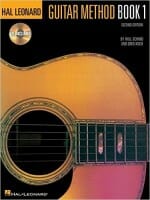
The second edition of this world-famous method by Will Schmid and Greg Koch is preferred by teachers because it makes them more effective while making their job easier. Students enjoy its easy-to-follow format that gives them a solid music education while letting them play songs right away. Book 1 provides beginning instruction including tuning, 1st position melody playing, C, G, G7, D7, and Em chords, rhythms through eighth notes, solos and ensembles and strumming.
Four Star Sight Reading and Ear Tests