M.Mus (U of T)
B.Mus (Oberlin)
Guitarist Gergely Szabo has an Advanced Diploma in Music Performance from Cambrian College where he majored in the classical guitar. Over his time there, he completed 2 years of comprehensive pedagogy courses. He also gained well grounded vocal skills, as well as basic knowledge on the piano. Outside of classical music, he exhibits a repertoire of skills and knowledge in playing the genres of rock, blues, and heavy metal music. He has experience in teaching the guitar and the ukulele to a range of people aged 6 to 54.
Gergely’s teaching methods include both the use of books and digital methods. The three main books he uses to teach guitar are as follows: “Guitar Method Book 1 by Will Schmid and Greg Koch,” “Four Star Sight Reading and Ear Tests RCM Level 1,” and “Classical Guitar Repertoire and Etudes RCM Level 1.” For teaching ukulele, he uses the book “Ukulele Songs for 1, 2, or 3 players by Elizabeth Ragsdale.” Aside from these, he frequently uses the Muse Score application as a play-along practicing tool.
Gergely’s passion for music and his dedication to growing the love of music in others are the biggest reasons why he teaches guitar and ukulele. His approach to teaching involves learning through play. The material he covers with his students is always delivered in a way that is highly interactive. Most of the assigned exercises he gives involve the elements of play that students can enjoy both in class and as homework.
Get to know Gergely…Beyond the Bio!
Coming soon!
Hobbies:
Musical influences:
Favourite food:
Least favourite food:
Favourite music:
Favourite album:
Favourite movie:
Favourite musical theatre/opera:
Best quote from your teacher:
Favourite quote:
Favourite book:
Latest Homework from Gergely
Is Gergely Your Teacher?
Sign up now to get your weekly assignments delivered, and never lose your homework sheet again!
Tuesday, March 19th
Myles
ACDC: Back in Black–DONE!!!
***NEW SONG: Livin’ On A Prayer by Bon Jovi
–Opening fill (“3e&a 4 & “)
**Please bring a binder/duotang for handouts on this one. I’ll be writing it out for you by hand
Jonah
Warmups (1min/ea)
–Triplet Exercise (Goal tempo=120)
–Sixteenth-note exercise (goal tempo=100)
–Stick Control: ex. 57-64 (160bpm)
Joel Rothman Book: Lesson 17**
Dance, Dance by Fall Out Boy: everything up until Chorus
Josh
Say It Ain’t So main beat–four times in a row
Alfred Lesson 6: exercise 1
Noah
Warmups:
–New triplet choreography worksheet (on the google drive)**
–Double-stroke progression: Natural rebound–>”pick it up” after 2 bounces–>drags/ruffs–>double-strokes
–Flams, Flam accents (careful that the LH flam doesn’t get reversed!), Flam Taps, Flam Paradiddles**
No One Knows by Queens of the Stone Age
–Keep working on the Chorus, add everything up until the coda
Robbie
Warmups (30sec/ea):
–8 on a hand exercise
–Single Stroke Roll (L-R-L-R….) playing smooth, even, controlled strokes
–Double Stroke Roll (L-L-R-R…)
–Paradiddles (L-R-L-L R-L-R-R…)
AC/DC: Back in Black
–Being learning four-on-the-snare groove from worksheet
Will
Pad Exercises (1min/ea):
–Triplet Exercise (goal tempo=135)
–Sixteenth-note exercise (goal tempo=110)
–Roll Exercises (90bpm)
–Flams, Flam Accents, Flam Taps
–Rhythm exercise 40bpm
Syncopation Ex. 2 lines 1-5
Spanish Joint by D’Angelo: full song
Saturday March 9 Lessons – Erin P
Have an amazing March break everyone!
*I WILL BE AWAY FOR EASTER WEEKEND. At our next lesson, PLEASE CONFIRM if you would like a lesson that day (saturday March 30) so we can line up a substitute if necessary.*
Hakim
*New* Dummy! – Notice the Bb and Eb, creating a G minor key signature. RH. Once you feel confident you can start adding in the LH walking bass line. It’s a lot like the Pumpkin Boogie one, just starting on G instead. These rhythms are more complex than we’ve studied, so use your ear, and know that the More beams (lines) there is on a note the shorter it is. (for example 16th notes have two beams, and 8th notes only have one)
Steampunk – Nice work!!! Keep practicing and counting steadily to get it fluent.
Science Blaster – play around with this using the Musescore copy if you like! You are certainly capable of reading it. I will learn some too and we can combine for a duet eventually.
Maria
Viva La Vida – Sounding awesome!! Now start thinking dynamics! Chorus should be louder than the rest. See if you can dimuendo at the end of phrases to add drama. I am happy with ANY dynamic plan you create if it feels musical to you, as long as the entire piece is not monotune :)
Shakira
Skylore – this piece is in D minor position (minor because it only uses white keys). This is what it will sound like when we play together, your part is the high part.
Noreet
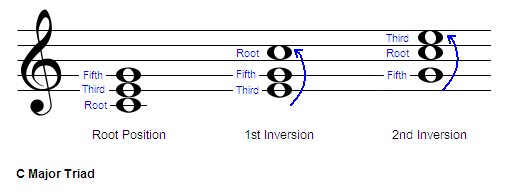
*New* Kites in the Sky. This piece uses C major root position triads in both hands, then the LH crosses over to play a higher note. At the end you will use one hand after another, playing every single white key on the keyboard beginning on low C and continuing upwards to create a beautiful ending. You can listen and look here if you need help.
C Major Contrary motion scale – today you played a RH C scale with perfect fingering with your scarf as a blindfold! Great job!
C Major triads – Watch here.
Preferred Books for Gergely’s Students
Click to buy them here, and they’ll come right to your house! What could be easier?
Hal Leonard Guitar Method
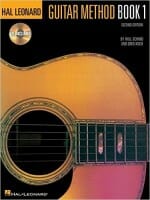
The second edition of this world-famous method by Will Schmid and Greg Koch is preferred by teachers because it makes them more effective while making their job easier. Students enjoy its easy-to-follow format that gives them a solid music education while letting them play songs right away. Book 1 provides beginning instruction including tuning, 1st position melody playing, C, G, G7, D7, and Em chords, rhythms through eighth notes, solos and ensembles and strumming.
Four Star Sight Reading and Ear Tests