M.Mus (U of T)
B.Mus (Oberlin)
Guitarist Gergely Szabo has an Advanced Diploma in Music Performance from Cambrian College where he majored in the classical guitar. Over his time there, he completed 2 years of comprehensive pedagogy courses. He also gained well grounded vocal skills, as well as basic knowledge on the piano. Outside of classical music, he exhibits a repertoire of skills and knowledge in playing the genres of rock, blues, and heavy metal music. He has experience in teaching the guitar and the ukulele to a range of people aged 6 to 54.
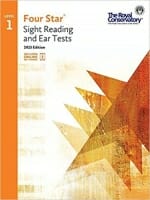
Gergely’s teaching methods include both the use of books and digital methods. The three main books he uses to teach guitar are as follows: “Guitar Method Book 1 by Will Schmid and Greg Koch,” “Four Star Sight Reading and Ear Tests RCM Level 1,” and “Classical Guitar Repertoire and Etudes RCM Level 1.” For teaching ukulele, he uses the book “Ukulele Songs for 1, 2, or 3 players by Elizabeth Ragsdale.” Aside from these, he frequently uses the Muse Score application as a play-along practicing tool.
Gergely’s passion for music and his dedication to growing the love of music in others are the biggest reasons why he teaches guitar and ukulele. His approach to teaching involves learning through play. The material he covers with his students is always delivered in a way that is highly interactive. Most of the assigned exercises he gives involve the elements of play that students can enjoy both in class and as homework.
Get to know Gergely…Beyond the Bio!
Coming soon!
Hobbies:
Musical influences:
Favourite food:
Least favourite food:
Favourite music:
Favourite album:
Favourite movie:
Favourite musical theatre/opera:
Best quote from your teacher:
Favourite quote:
Favourite book:
Latest Homework from Gergely
Is Gergely Your Teacher?
Sign up now to get your weekly assignments delivered, and never lose your homework sheet again!
Saturday February 3 Lessons – Erin P
Hakim
Owl in the Night – C minor position. F# is often used as well. Refer to this video to confirm you’re on the right path. You still need to use the book to learn.
C Major triad pattern – ascending and descending with proper fingering. Always fingers 1 and 5 for outside notes.
Happy Birthday lead sheet – see video. Last time you played this, you got all the F and C chords perfect. Let’s add in the Bb chord now.
*New* G major scale – this uses the same standard fingering as C major does. The notes are G A B C D E F# G.
Maria
Tattoo – Both pages. You can start thinking about adding dynamics to suit your version of this!
Viva La Vida – 4 bar groove HT. Great job counting carefully! On page 2, learn the RH chorus playing just the top notes.
Warmup before Coldplay with your Ab Major scale. It has 4 black keys, Bb Eb Ab and Db. Fingering is RH: 231 2312 3. LH is 321 4321 2. Thumbs always on white keys.
Noreet
Mozart’s Five Names – This piece the LH moves positions in the 3rd line. Be sure to count 3 beats for the opening dotted half note. Notice how the second line uses the same melody as the first line, but everything is just one note higher.
C Major contrary motion scale hands together as a warmup. Parents, watch the video, and then ask Noreet to show you. The goal is a steady even tempo, and both notes being put down at the same without “splitting” (uneven sound).
C Major triads and inversions hands seperate as a warmup. Parents, watch the video, and then ask Noreet to show you. You will notice that they are called inversions because the bottom note becomes the top note of the next chord. CEG then EGC then GCE then back to CEG.
Grace
3rd line 1st measure of the Andante movement in Sonatina Bureaucratique. LH take both inner voices, RH take top line.
Here is a simple video explaining 9/8 feel.
Thursday February 1 Lessons – Erin P
You are all progressing amazing. I am a lucky teacher! If you need to register for exams, here’s the link.
Liam – please register for exam. Teacher code 130747
Harlequinade – excellent attention to detail this week!! Keep on keeping on. Your fingering seemed accurate too.
Practice solid triads by doing every inversion broken and then solid before before to the next inversion. For example, C E G CEG. Then the next inversion.
*New* Witches and Wizards – D minor. Notice the clef changes and the accidentals. The accents are very helpful to feel the pulse properly, remember in 6/8 we want to feel 2 main beats. Listen here.
Jadon
Canon x Beautiful in White – Yeah!! Nice progress. Today we made connections between the Beautiful in White melody, to the chord being played in the LH to notice that is alost entirely notes found in each triad.
Great reading today!!!
Katarina
Quarter Rest Rock – you CRUSHED this in lesson today! Next week I’m so excited to hear you play the RH while the LH drums again. I’m very impressed. Show your parents!
C major scales – Keep at it. Next week I will reach you a minor scale with the same fingering.
Sara
Think about adding dynamic shaping to all your technical requirements. Crescendo until the top, and then dimuendo back to the bottom, taking care not to “bump” the final note too loudly.
*New* Take the A Train – articulation will really help bring the playful nature alive. Listen to a few recordings of this tune so you can decide what instruments or voices you want to imitate in your version. Here is an amazing video by Randall Faber (the arranger of this piece, and creator of Piano Adventures) talking about this exact arrangement.
*New* March in D major by CPE Bach. Listen here. Prepare without trills this week. As this is Baroque, LH should be entirely detached. RH you can play the 8th notes that are moving by steps legato, but seperate everything else.
Ear training link for the specific intervals you need.
Maple Leaf Rag – I didn’t hear this today, but I want to record this soon.
Marco – please register for exam. Teacher code 130747
Minuet in C – all HT. I love the tempo you chose today. Keep it nice and slow and controlled like that.
Indiana Jones – now add on bridge chords to hands together. Same half note rhythm as before.
E minor natural and harmonic scale – the relative major is G.
Daniel – please register for exam. Teacher code 130747
*New* Pierrot Skipping – M1-8. Notice the mostly staccato articulation and carefully read the many accidentals. Listen here for the vibe, but obviously begin at a slow consistent tempo.
C and G major formulas. I didn’t hear these today, but I will first thing next week. Careful fingering is all I’m looking for.
Atacama Dessert – measures 1-16. Nice work. Remember that the RH mostly starts after an 8th beat rest. Beat 1 is usually not hands together. Great job with the tied LH notes.
Marita
River Dance – We played through everything but the final line today. Have fun with the syncopation and parallel harmonies, this song sounds so fun and is equally fun to play.
Arpeggios in C – this is an extended version of a triad. It has one big thumb under motion per two octaves. RH use fingers 1231235 and then come back down the same way. LH uses fingers 5321321 and goes down the same way.
Greta – please register for exam. Teacher code 130747.
Natural and Harmonic Minor scales – A, D and E. Natural Minor is only notes borrowed from the relative major. Harmonic minor is that PLUS a raised 7th.
Minuet in A minor – great work with rhythms! Your practice habits clearly paid off here. Be sure you are not rushing the quarter notes. Remember your 8th notes must be double the speed of your quarter notes. Keep it up!
*New* Red Satin Jazz – m1-12. This is based on a 12 bar blues form that uses the I, IV, and V chords from a particular key in a certain order. Count carefully to get that jazzy syncopation. Listen here.
Preferred Books for Gergely’s Students
Click to buy them here, and they’ll come right to your house! What could be easier?
Hal Leonard Guitar Method
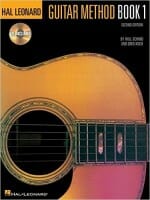
The second edition of this world-famous method by Will Schmid and Greg Koch is preferred by teachers because it makes them more effective while making their job easier. Students enjoy its easy-to-follow format that gives them a solid music education while letting them play songs right away. Book 1 provides beginning instruction including tuning, 1st position melody playing, C, G, G7, D7, and Em chords, rhythms through eighth notes, solos and ensembles and strumming.
Four Star Sight Reading and Ear Tests