M.Mus (U of T)
B.Mus (Oberlin)
Guitarist Gergely Szabo has an Advanced Diploma in Music Performance from Cambrian College where he majored in the classical guitar. Over his time there, he completed 2 years of comprehensive pedagogy courses. He also gained well grounded vocal skills, as well as basic knowledge on the piano. Outside of classical music, he exhibits a repertoire of skills and knowledge in playing the genres of rock, blues, and heavy metal music. He has experience in teaching the guitar and the ukulele to a range of people aged 6 to 54.
Gergely’s teaching methods include both the use of books and digital methods. The three main books he uses to teach guitar are as follows: “Guitar Method Book 1 by Will Schmid and Greg Koch,” “Four Star Sight Reading and Ear Tests RCM Level 1,” and “Classical Guitar Repertoire and Etudes RCM Level 1.” For teaching ukulele, he uses the book “Ukulele Songs for 1, 2, or 3 players by Elizabeth Ragsdale.” Aside from these, he frequently uses the Muse Score application as a play-along practicing tool.
Gergely’s passion for music and his dedication to growing the love of music in others are the biggest reasons why he teaches guitar and ukulele. His approach to teaching involves learning through play. The material he covers with his students is always delivered in a way that is highly interactive. Most of the assigned exercises he gives involve the elements of play that students can enjoy both in class and as homework.
Get to know Gergely…Beyond the Bio!
Coming soon!
Hobbies:
Musical influences:
Favourite food:
Least favourite food:
Favourite music:
Favourite album:
Favourite movie:
Favourite musical theatre/opera:
Best quote from your teacher:
Favourite quote:
Favourite book:
Latest Homework from Gergely
Is Gergely Your Teacher?
Sign up now to get your weekly assignments delivered, and never lose your homework sheet again!
Ronan — Sep 26th
Hi Ronan!
Here’s what to focus on this week. Spend a minimum of 15 minutes doing each of these things a day. — Remember to rest and to stretch in the ways described in my last week’s homework notes.
- Also: If you spend a day just working on one of these things for 15 minutes, that’s fine too. That counts towards your progress on your instrument.
Posture
Here is the order of things to pay attention to when positioning yourself in good guitar posture.
- Sit down with your body slightly slanted; that is, your knees pointing left
- Put the guitar with the body on your right thigh
- Have the guitar head pushed somewhat forward from your left side — The idea here: have your wrists as straight and as free as possible to be able to move around and play things with plenty of space for both arms to do so
It’s fine to tilt the guitar body onto yourself & check where your LH fingers must go. But then tilt it back upright.
- Keep the LH fingers nice and curled. That shape is stronger than straight fingers
- Have your LH thumb go close to your LH fingers holding down frets; as if there was a rod going through your guitar between the thumb and the fingers — This, too, will ensure that you can hold the frets down strongly
G chord from last time

We looked at this chord a little bit today, too. Keep trying to hold it properly and strum only the top 4 strings. — Remember, we speak upside down in guitar; High E string means closer to the floor but higher in pitch.
Em chord

- Based on the previous diagram, you can infer what exactly is meant by this one
- The numbers there are the LH fingerings
- The white dots are the open strings
- So: Hit all 6 strings for this one :)
Try the E chord too — bonus challenge

- You struck this chord pretty nicely in class today
- Though I think holding down these frets and playing them properly every single time might be a super big challenge right now. So this I’m not going to be strict about you getting this chord right
- Hit all 6 strings here, too
Open strings — D DUD DUD DUD
- D = Down, U = Up
- Have a metronome playing at a speed of 50BPM (50 beats per minute). Play this SP (strumming pattern) with this beat. — Remember to count yourself in at the start of this. Say “One, Two, Three, Four” with the beat
- If that’s^ a big struggle, just play one strum every 4 beats
- I like your nice and loud playing on these. But also try to strum these SP’s lightly
- Try it on the above mentioned chords, too
Frets 0, 1 & 3 of the High E string
- Play each fret individually. One by one. — Strumming a full chord like above needs more of a swing in your hand and arm. For single notes like this, you need a smaller push down with your thumb. Think of it not as a strum, but rather as an instant push-down through the string; like your pick is already on the other side of the string the moment you start your plucking motion. — It sounds ridiculous, but this is a way to start getting the feeling for picking (that is, plucking with the guitar pick) single notes
- Fret zero just means play an open string. You don’t hold down any frets. And only that string, in this case
- Have the fingers directly to the left of the frets — For certain chords, that won’t be possible. The idea is just to have the fingers on left of your fret somewhere. Never directly on top of the fret
Additional notes
In the coming days, I may add a Google Drive link to this homework post. There will be additional resources like videos and PDF’s that will be needed for a lot of the homework I give.
Thank you, Ronan. See you next weekend!
Homework for September 23-30
Liga
Great work today Liga! Here’s this week’s homework:
Recommended minutes to practice: up to 30 minutes a day
What to practice: Breathing exercises, breathing followed by a laugh or a vowel, warmup exercises, You’ll be Back
How to practice: When producing a sound from your voice, make sure to always connect your voice to the breath. Breathe through the diaphragm, then as you exhale, laugh or just say a sustained “aaaah”, making sure the vocal comes from your diaphragm as well as your breath.
You’ll be Back- be sure to apply the connection on the voice to the breath when singing as well. Practice acting out King George’s character as well as the singing. King George’s OBJECTIVE is to prevent America from leaving the British empire. He uses different TACTICS to achieve that objective, and he uses certain tactics because he is a character of high STATUS.
Tactics we came up with:
I gloat to you
I coerce you
I beg you
I guilt you
I convince you
I threaten you
Also, spitting out consonants is great for this character. As you apply the tactics, let those impulses tell you how to sing it.
Play around more with how to move when performing the song. Think about intention behind each movement.
How parents can support practice: Watch her sing, give feedback, and act as a scene partner for her to play off of.
Good luck with your audition. It was a pleasure teaching you for a couple of lessons :)
Preferred Books for Gergely’s Students
Click to buy them here, and they’ll come right to your house! What could be easier?
Hal Leonard Guitar Method
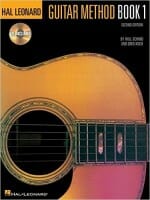
The second edition of this world-famous method by Will Schmid and Greg Koch is preferred by teachers because it makes them more effective while making their job easier. Students enjoy its easy-to-follow format that gives them a solid music education while letting them play songs right away. Book 1 provides beginning instruction including tuning, 1st position melody playing, C, G, G7, D7, and Em chords, rhythms through eighth notes, solos and ensembles and strumming.
Four Star Sight Reading and Ear Tests