M.Mus (U of T)
B.Mus (Oberlin)
Guitarist Gergely Szabo has an Advanced Diploma in Music Performance from Cambrian College where he majored in the classical guitar. Over his time there, he completed 2 years of comprehensive pedagogy courses. He also gained well grounded vocal skills, as well as basic knowledge on the piano. Outside of classical music, he exhibits a repertoire of skills and knowledge in playing the genres of rock, blues, and heavy metal music. He has experience in teaching the guitar and the ukulele to a range of people aged 6 to 54.
Gergely’s teaching methods include both the use of books and digital methods. The three main books he uses to teach guitar are as follows: “Guitar Method Book 1 by Will Schmid and Greg Koch,” “Four Star Sight Reading and Ear Tests RCM Level 1,” and “Classical Guitar Repertoire and Etudes RCM Level 1.” For teaching ukulele, he uses the book “Ukulele Songs for 1, 2, or 3 players by Elizabeth Ragsdale.” Aside from these, he frequently uses the Muse Score application as a play-along practicing tool.
Gergely’s passion for music and his dedication to growing the love of music in others are the biggest reasons why he teaches guitar and ukulele. His approach to teaching involves learning through play. The material he covers with his students is always delivered in a way that is highly interactive. Most of the assigned exercises he gives involve the elements of play that students can enjoy both in class and as homework.
Get to know Gergely…Beyond the Bio!
Coming soon!
Hobbies:
Musical influences:
Favourite food:
Least favourite food:
Favourite music:
Favourite album:
Favourite movie:
Favourite musical theatre/opera:
Best quote from your teacher:
Favourite quote:
Favourite book:
Latest Homework from Gergely
Is Gergely Your Teacher?
Sign up now to get your weekly assignments delivered, and never lose your homework sheet again!

Maori Haka – Wedding Warrior Music
Maori Haka – Warrior Music at a Wedding
It’s easy to forget – in our very popularity based culture – that music comes from within, from all of us.
In this very interesting clip, a traditional warrior chant and dance used to intimidate enemies, is presented at a wedding as a sign of respect.
The Traditional Haka
Below is a more traditional video, with traditional dress and tribal tattooing. This is a good one to watch with kids, to broaden some cultural horizons, and to show that music isn’t just singing behind a microphone!
Exposing your kids and friends to different music culturally, historically, rhythmically, and tonally is a subtle, but excellent way to teach the embracing of new things in general.
For a good overview of Haka in general, the Wikipedia article on Haka is excellent. Of particular interest is the role of women in the traditional Haka, which is reserved for extra special events, and the evolving role for women and children in Haka in modern times. It is extraordinary and inspiring that a traditional musical form is evolving with what is a pretty quick speed.

11 Year Old Piano Player Will Blow Your Socks Off
Music for Life
As a Music School, we aren’t looking to create prodigies or to get kids into a career in music. We are certainly open to these things, but our goals are more life-skills oriented.
What is real about Music Education?
There is a lot of cultural acceptance of Music Education and lessons as a strong foundation for children in life, but the benefits are seldom articulated in a way that we can understand in the modern world. We know the standard lines that we refer to, such as “Music is good for the brain”, or “Music helps to develop hand-eye coordination”. All of that is true, and we love referring to this video, which explains what the act of playing does to the brain:
That being said (and watched), there are the other specific things about music that we don’t describe well, but should. Some of these things include and lead (=) to:
- Playing in front of people or in concert = effective presentation skills for educational and professional settings (think interviews, seminars, presentations, etc.)
- Communicating in a musical group = learning to listen, communicate, and lead effectively in social and professional settings (think peaceful, progressive, constructive, and successful approaches to working with others in any setting/environment, including home)
- Developing and expanding confidence in the process of personal growth and exploration = confidence as an adult to pursue goals
- Goal setting and achievement = Goal setting and achievement!
This really scratches the surface, but you can see that music lesson skills are truly life lesson skills.
The 11 year-old that is a natural
All of this notwithstanding, a little inspiration and watching for the sake of enjoyment is to be embraced whenever we can. For some reason we revel in the magic of skilled youth, particularly prodigies. And why not? The brain and body are so complex, and through the miracle of randomness, some people do indeed find themselves with an astonishing and unexpected aptitude for not just a particular instrument, but a particular style.
Here’s a young gentleman playing jazz at the piano. His playing is so natural, that you’d swear he’d not only been doing it since birth, but for decades. You might want to protect your jaw, it’s going to drop!
Preferred Books for Gergely’s Students
Click to buy them here, and they’ll come right to your house! What could be easier?
Hal Leonard Guitar Method
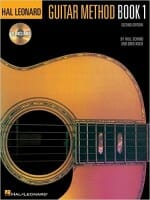
The second edition of this world-famous method by Will Schmid and Greg Koch is preferred by teachers because it makes them more effective while making their job easier. Students enjoy its easy-to-follow format that gives them a solid music education while letting them play songs right away. Book 1 provides beginning instruction including tuning, 1st position melody playing, C, G, G7, D7, and Em chords, rhythms through eighth notes, solos and ensembles and strumming.
Four Star Sight Reading and Ear Tests